• HOME
  • NEWS
  • EXPLORE
    • CAREER
      • Companies
      • Jobs
    • EVENTS
    • iGEM
      • News
      • Team
    • PHOTOS
    • VIDEO
    • WIKI
  • BLOG
  • COMMUNITY
    • FACEBOOK
    • INSTAGRAM
    • TWITTER
Tuesday, July 7, 2026
BIOENGINEER.ORG
No Result
View All Result
  • Login
  • HOME
  • NEWS
  • EXPLORE
    • CAREER
      • Companies
      • Jobs
        • Lecturer
        • PhD Studentship
        • Postdoc
        • Research Assistant
    • EVENTS
    • iGEM
      • News
      • Team
    • PHOTOS
    • VIDEO
    • WIKI
  • BLOG
  • COMMUNITY
    • FACEBOOK
    • INSTAGRAM
    • TWITTER
  • HOME
  • NEWS
  • EXPLORE
    • CAREER
      • Companies
      • Jobs
        • Lecturer
        • PhD Studentship
        • Postdoc
        • Research Assistant
    • EVENTS
    • iGEM
      • News
      • Team
    • PHOTOS
    • VIDEO
    • WIKI
  • BLOG
  • COMMUNITY
    • FACEBOOK
    • INSTAGRAM
    • TWITTER
No Result
View All Result
Bioengineer.org
No Result
View All Result
Home NEWS Science News Health

One-stop implementation from signal detection to processing

Bioengineer by Bioengineer
September 22, 2023
in Health
Reading Time: 2 mins read
0
inside cover image
Share on FacebookShare on TwitterShare on LinkedinShare on RedditShare on Telegram

In order to explore brain disorders and discover potential treatments, it is crucial to analyze and interpret the signals transmitted by the brain.  Although neural probes attached to the brain can effectively detect subtle bio- signals, they lack the ability to amplify and process these signals, necessitating the use of a separate amplifier. The research team identified a solution in common household “inkjet printers” that have been widely available for a long time.
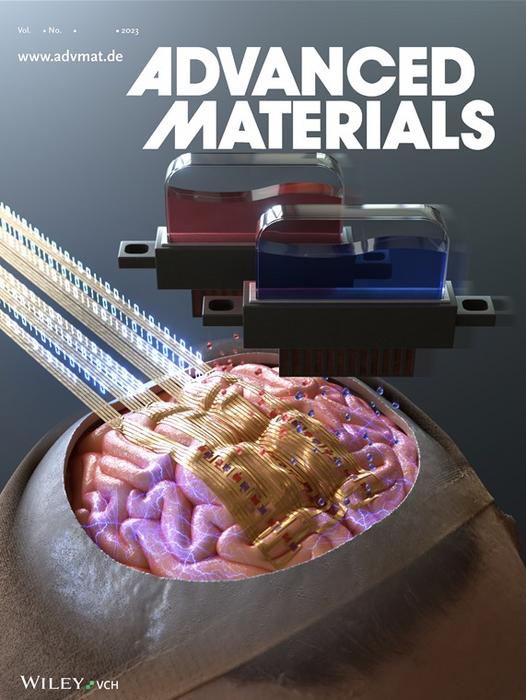
inside cover image

Credit: POSTECH

In order to explore brain disorders and discover potential treatments, it is crucial to analyze and interpret the signals transmitted by the brain.  Although neural probes attached to the brain can effectively detect subtle bio- signals, they lack the ability to amplify and process these signals, necessitating the use of a separate amplifier. The research team identified a solution in common household “inkjet printers” that have been widely available for a long time.


A collaborative research team led by Professor Sungjune Jung (Department of Materials Science and Engineering, Department of Convergence IT Engineering) with PhD candidate Yongwoo Lee (Department of Convergence IT Engineering) at Pohang University of Science and Technology (POSTECH), Professor Eun-Hee Kim  from Chungnam National University Sejong Hospital, and Professor George Malliaras from University of Cambridge has developed an integrated sensor capable of both capturing bio-signals and enhancing their amplification and processing. In recognition of the team’s groundbreaking work, the findings from the study will be published as the inside cover of Advanced Materials, a prestigious journal in the field of materials science,


Inkjet printing is a technology that generates patterns by ejecting minuscule ink droplets, each on the scale of picoliter (10-12), onto either paper or a substrate. The initial step taken by the research team involved crafting an ultra-thin substrate, which is only one-hundredth the thickness of a human hair. This was achieved by employing an exceptionally flexible material that easily adheres to the brain’s surface. Subsequently, the team harnessed inkjet technology to imprint a sensor onto this substrate, one that possesses the unique capability of detecting, amplifying and processing bio-signals. In essence, they developed a sensor for brain signal amplification.


Following the sensor’s development, the research team conducted experiments involving mice. The results showcased the sensor’s swift recording of high-resolution brain-originating signals upon attachment to the rats’ cerebral cortex.


Professor Sungjune Jung who led the research explained, “This technology empowers the seamless creation of patterns in desired areas, paving the way for future manufacturing of customized bio-signal measurement devices.”


The study was conducted with the support from the Basic Research Program of the National Research Foundation of Korea and the Regional Future Science and Technology Program by the Ministry of Science and ICT.


Journal

Advanced Materials

DOI

10.1002/adma.202301782

Article Title

Tunable Organic Active Neural Probe Enabling Near-Sensor Signal Processing

Article Publication Date

21-Sep-2023

Share12Tweet8Share2ShareShareShare2

Related Posts

Flame retardant BDE-209 targets molecularly linked to ulcerative colitis

July 6, 2026

Kidney transplant outcomes in older adults studied by German researchers

July 6, 2026

Salmonella protein SopB curbs early inflammation to slow disease progression

July 6, 2026

Multi-metal cooperation drives lung cancer chemoresistance, reversed by MiADMSA

July 6, 2026

POPULAR NEWS

  • Detection of EDCs in Breast Milk and Infant Urine Up to Six Months Highlights Early Exposure Risks

    77 shares
    Share 31 Tweet 19
  • New Drug Candidate Developed at McMaster Shows Potential for Treating Brain Cancer

    58 shares
    Share 23 Tweet 15
  • Saying Goodbye to PGY-6: Pediatric Fellowship Realities

    103 shares
    Share 41 Tweet 26
  • KTU Researchers Explore Ultrasound’s Role in Enhancing Blood Flow Beyond Diagnostics

    53 shares
    Share 21 Tweet 13

About

We bring you the latest biotechnology news from best research centers and universities around the world. Check our website.

Follow us

Recent News

Flame retardant BDE-209 targets molecularly linked to ulcerative colitis

Ultra-high frequency particle impacts mimic rockbursts to shatter hard rock

Kidney transplant outcomes in older adults studied by German researchers

Subscribe to Blog via Email

Enter your email address to subscribe to this blog and receive notifications of new posts by email.

Join 83 other subscribers
  • Contact Us

Bioengineer.org © Copyright 2023 All Rights Reserved.

Welcome Back!

Login to your account below

Forgotten Password?

Retrieve your password

Please enter your username or email address to reset your password.

Log In
No Result
View All Result
  • Homepages
    • Home Page 1
    • Home Page 2
  • News
  • National
  • Business
  • Health
  • Lifestyle
  • Science

Bioengineer.org © Copyright 2023 All Rights Reserved.