October 27, 2021
For immediate release
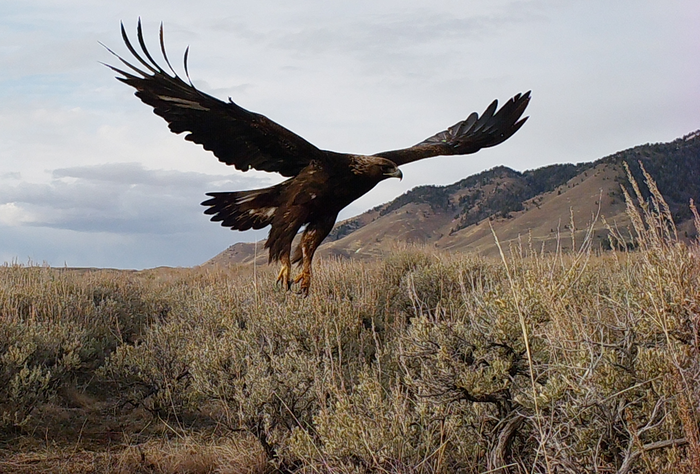
Credit: U.S. Geological Survey
October 27, 2021
For immediate release
Contact: Heidi Swanson, (202) 833-8773 ext. 211, [email protected]
From Frontiers in Ecology and the Environment :
The numbers are in: over half of the world’s vertebrate species call the tropics home
Author contact: Rajeev Pillay ([email protected])
Everyone knows that when it comes to sheer biodiversity, the tropics reign supreme. But exactly how many of the world’s species reside there? For land-dwelling vertebrates (the most well-documented group), a new study uses range maps and known habitat associations to provide an answer: 62%. In other words, despite making up less than one-fifth of global land, tropical latitudes contain a solid majority of the mammal, bird, reptile, and amphibian species found on Earth. Impressively, nearly one in three terrestrial vertebrate species are found in the tropics and nowhere else, a fact that both illustrates the singularity of tropical biodiversity and highlights what can be lost if tropical deforestation continues.
Why it matters: Putting numbers on tropical biodiversity helps researchers understand global ecological and evolutionary patterns, and also clarifies what is at risk as natural habitat is lost.
Read the article: Tropical forests are home to over half of the world’s vertebrate species
Country mice and social butterflies: animal personalities can shape ecosystems
Author contact: Malcolm Hunter Jr. ([email protected])
Research shows that bees are not all equally busy, and this fact has big implications for how ecosystems function. Different animals of the same species can behave in consistently different ways; scientists have measured variation in traits like boldness, aggressiveness, and docility in everything from bottlenose dolphins to earthworms. This recent article explores the idea that the distinct personalities that animals exhibit can shape the ecosystem services those animals provide. The authors summarize evidence linking animal personalities to ecosystem services like pollination, pest suppression, and ecotourism, and they offer a roadmap for future research exploring these linkages.
Why it matters: If animals’ personalities influence the ecological roles they play, this fact can be harnessed to maximize desired ecosystem services.
Read the article: Modulation of ecosystem services by animal personalities
From Ecosphere :
Coyotes, eagles, and other scavengers protect cattle from disease
Author contacts: Kimberly Szcodronski ([email protected]) & Paul Cross ([email protected])
In the Yellowstone region, scavengers like coyotes, foxes, and eagles are unwittingly helping both wildlife and ranchers, by keeping disease at bay. Brucellosis, a bacterial disease that causes female bison, elk, and cattle to abort their calves, is highly contagious and the bane of cattle producers. Both wild animals and livestock contract the disease when they come into contact with abortion remains, which can stay infectious for weeks or even months. However, a new study uses remote cameras to show that scavengers typically remove abortion remains in a matter of days. What’s more, at sites where scavengers are targeted by hunters, it takes substantially longer for infected tissues to disappear. By reducing the risk of disease on rangelands, scavengers are providing an important (and, until now, overlooked) ecosystem service.
Why it matters: Recreational hunting and targeted coyote and fox removal may be inadvertently harming cattle producers, by increasing livestock exposure to contagious disease.
Read the article: Scavengers reduce potential brucellosis transmission risk in the Greater Yellowstone Ecosystem
Natural methane seeps offer a footing for deep-sea life
Author contact: Olívia Pereira ([email protected])
New research examines the communities of otherworldly organisms that inhabit a particular type of seafloor feature: methane seeps. These seeps emerge at continental margins around the world, and like desert oases they offer a life-giving resource on the otherwise inhospitable seafloor, where light is absent and solid ground is in extremely short supply. Thanks to microbial activity and carbonate rocks that accumulate there, a diverse array of animals make their homes in these settings, some of them highly specialized to live in this chemical environment. However, methane emissions are variable at the seeps; by transplanting carbonate rocks from one area to another, researchers have discovered how the animals that settle on them respond to a fickle, shifting resource base.
Why it matters: Very little is known about how deep-sea ecosystems respond to environmental change; the fact that methane seeps are often associated with oil and gas deposits makes them vulnerable to human disturbance.
Read the article: The dynamic influence of methane seepage on macrofauna inhabiting authigenic carbonates
###
The Ecological Society of America, founded in 1915, is the world’s largest community of professional ecologists and a trusted source of ecological knowledge, committed to advancing the understanding of life on Earth. The 9,000 member Society publishes five journals and a membership bulletin and broadly shares ecological information through policy, media outreach, and education initiatives. The Society’s Annual Meeting attracts 4,000 attendees and features the most recent advances in ecological science. Visit the ESA website at https://www.esa.org.