• HOME
  • NEWS
  • EXPLORE
    • CAREER
      • Companies
      • Jobs
    • EVENTS
    • iGEM
      • News
      • Team
    • PHOTOS
    • VIDEO
    • WIKI
  • BLOG
  • COMMUNITY
    • FACEBOOK
    • INSTAGRAM
    • TWITTER
Sunday, November 15, 2026
BIOENGINEER.ORG
No Result
View All Result
  • Login
  • HOME
  • NEWS
  • EXPLORE
    • CAREER
      • Companies
      • Jobs
        • Lecturer
        • PhD Studentship
        • Postdoc
        • Research Assistant
    • EVENTS
    • iGEM
      • News
      • Team
    • PHOTOS
    • VIDEO
    • WIKI
  • BLOG
  • COMMUNITY
    • FACEBOOK
    • INSTAGRAM
    • TWITTER
No Result
View All Result
Bioengineer.org
No Result
View All Result
Home NEWS Science News Biology

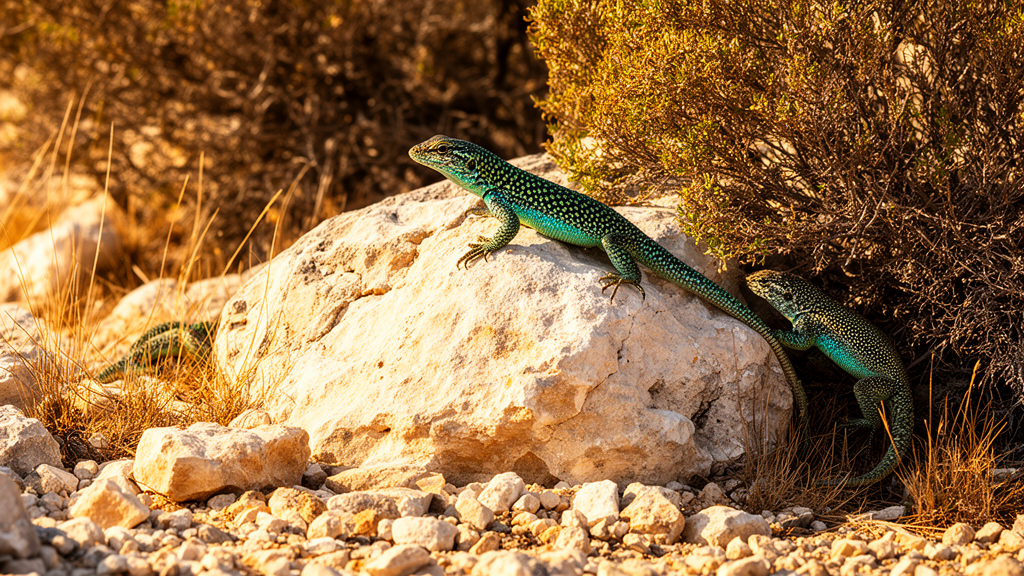
Ocellated Lizards Show Divergent Mobility Strategies Under Warming

by
November 10, 2026
in Biology
Reading Time: 2 mins read
0
Ocellated Lizards Show Divergent Mobility Strategies Under Warming

Ocellated Lizards Show Divergent Mobility Strategies Under Warming

Share on FacebookShare on TwitterShare on LinkedinShare on RedditShare on Telegram

Populations of the ocellated lizard, the largest lizard on the Iberian Peninsula, are adopting distinct behavioral strategies in response to rising temperatures, according to a study published in the Journal of Animal Ecology. The research, led by Antigoni Kaliontzopoulou from the University of Barcelona, indicates that global change is affecting the behavior and mobility of this Mediterranean species. The findings suggest that the ability of these lizards to move efficiently between shelters and feeding areas, escape predators, and interact with their natural environment may be altered by climate change.

The study integrates physiological, behavioral, and microclimatic data to examine how the ocellated lizard (Timon lepidus) responds to thermal shifts. This species is a critical model for understanding the impacts of climate change on ectothermic organisms, which rely on external heat sources to regulate their body temperature. Unlike mammals and birds, which are endotherms and can maintain internal body temperature, lizards depend directly on environmental conditions for physiological performance.

The research identified two distinct behavioral profiles among lizard populations: generalists and specialists. Generalist lizards demonstrate greater resilience and a higher capacity for mobility at high temperatures. In contrast, specialist lizards exhibit mobility that stagnates as temperatures rise. This difference in response suggests that specialist populations are less adapted to take advantage of extreme warming scenarios. The study highlights that the generalist profile may be more effective in the long term for coping with climate change, although this advantage comes with specific trade-offs.

Antigoni Kaliontzopoulou, a member of the University of Barcelona’s Department of Evolutionary Biology, Ecology and Environmental Sciences, noted that increased mobility offers more opportunities for reproduction and foraging. However, she emphasized that this heightened activity is associated with a higher risk of mortality from predation. The study provides a powerful approach to predicting how climate change can reshape the spatial and temporal niches of ectotherms. By linking physiological performance to environmental temperature, the researchers offer insights into the broader implications for other reptile species facing similar thermal challenges.

The experimental study was conducted by a team of experts including Katerina Sioumpoura, Neftalí Sillero, and Carolina Reyes-Puig from the University of Porto in Portugal, and Urtzi Enriquez-Urzelai from the Czech Academy of Sciences in the Czech Republic.

The ocellated lizard serves as a representative case for studying the broader impacts of global change on reptile behavior. The findings from this study can be applied to other ectothermic organisms that face similar thermal constraints.

In conclusion, the study demonstrates that global change is altering the behavior of the ocellated lizard, with significant implications for their mobility and survival.

Subject of Research: Behavioral and mobility responses of ocellated lizards to rising temperatures

Article Title: Global change also alters the behavior of the ocellated lizard

Article References: Global change also alters the behavior of the ocellated lizard. Original publication (Bibliographic details unavailable.)

Image Credits: AI Generated

DOI: Not provided

Keywords: ocellated lizard, climate change, ectotherms, behavioral ecology, mobility, thermal dependence, Mediterranean reptiles, Journal of Animal Ecology, University of Barcelona, global change, Global, change

News Source: Drew Townsend. (November 10, 2026). Ocellated Lizards Show Divergent Mobility Strategies Under Warming. Scienmag.


Tags: behavioral ecologychangeClimate ChangeectothermsGlobalglobal changeJournal of Animal EcologyMediterranean reptilesmobilityocellated lizardthermal dependenceUniversity of Barcelona
Share12Tweet7Share2ShareShareShare1

Related Posts

Review Finds IPEX Syndrome Can Occur Despite Preserved Regulatory T Cells

Review Finds IPEX Syndrome Can Occur Despite Preserved Regulatory T Cells

November 15, 2026
Cellular Stress Markers Identify Multi-Organ Dysfunction Syndrome in Case-Control Study

Cellular Stress Markers Identify Multi-Organ Dysfunction Syndrome in Case-Control Study

November 15, 2026

Pretreatment with abatacept alters selected motor and cytokine outcomes in parkinsonian rats

November 15, 2026

p27 Associates With Aryl Hydrocarbon Receptor Cytoplasmic Retention in Senescent Astrocytes

November 15, 2026

POPULAR NEWS

  • Early-Onset Chronic Disease Burden From Low Physical Activity Rose Ninety-Four Percent

    Early-Onset Chronic Disease Burden From Low Physical Activity Rose Ninety-Four Percent

    29 shares
    Share 12 Tweet 7
  • Review Finds IPEX Syndrome Can Occur Despite Preserved Regulatory T Cells

    29 shares
    Share 12 Tweet 7
  • Cellular Stress Markers Identify Multi-Organ Dysfunction Syndrome in Case-Control Study

    29 shares
    Share 12 Tweet 7
  • Blanching Cultivation Alters Mineral and Flavor Metabolite Profiles in Chinese Chives

    29 shares
    Share 12 Tweet 7

About

We bring you the latest biotechnology news from best research centers and universities around the world. Check our website.

Follow us

Recent News

Displaced Women in Nigerian Camps Face Enduring Grief and Identity Loss

Early-Onset Chronic Disease Burden From Low Physical Activity Rose Ninety-Four Percent

Review Finds IPEX Syndrome Can Occur Despite Preserved Regulatory T Cells

Subscribe to Blog via Email

Enter your email address to subscribe to this blog and receive notifications of new posts by email.

Join 87 other subscribers
  • Contact Us

Bioengineer.org © Copyright 2023 All Rights Reserved.

Welcome Back!

Login to your account below

Forgotten Password?

Retrieve your password

Please enter your username or email address to reset your password.

Log In
No Result
View All Result
  • Homepages
    • Home Page 1
    • Home Page 2
  • News
  • National
  • Business
  • Health
  • Lifestyle
  • Science

Bioengineer.org © Copyright 2023 All Rights Reserved.