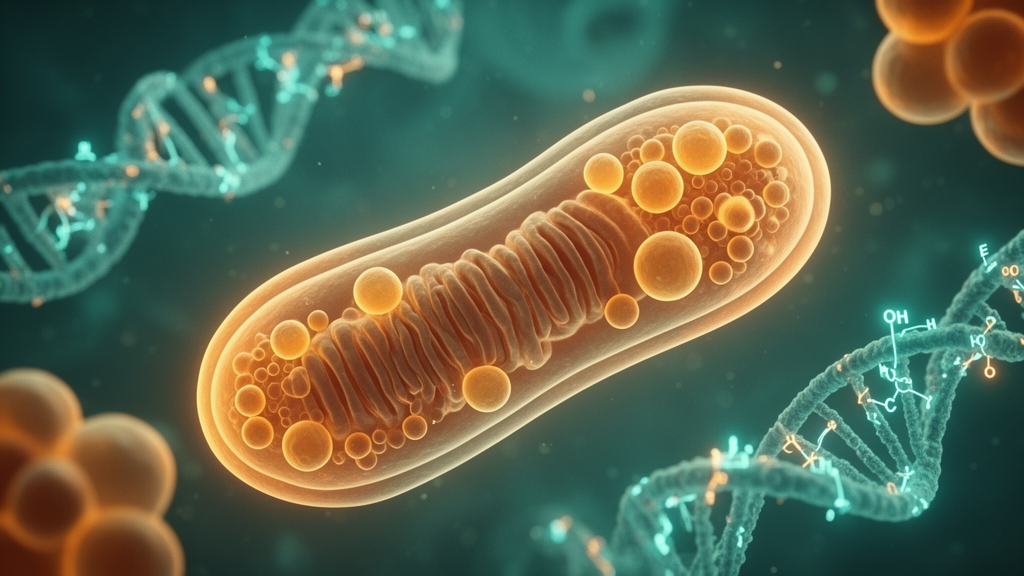
A narrative review published in Genes & Nutrition on November 29, 2025, examines the complex interplay between nutrition, epigenetic modifications, and mitochondrial function in the context of obesity. The researchers highlight that while genetic loci affecting obesity are well-documented, the specific role of epigenetic modifications regarding nutrition and mitochondrial health has not been investigated in depth. This review synthesizes scientific literature to provide a comprehensive understanding of how epigenetically driven mitochondrial dysfunction contributes to energy imbalance and metabolic disturbances.
Obesity is characterized by excessive body fat accumulation, commonly defined by a body mass index of 30 or higher, resulting from an imbalance between calorie intake and expenditure. Long-term weight maintenance is challenging due to homeostatic mechanisms that counteract weight loss by adjusting hunger signals, decreasing metabolic rate, and promoting fat storage. Mitochondria, which are crucial for maintaining energy homeostasis, adapt to environmental stimuli from an obesogenic state. Excess energy consumption elevates mitochondrial processing loads, creating more reactive oxygen species and leading to fewer and less efficient mitochondria. These changes result from the impact of environmental stimuli on epigenetic mechanisms and the cross-talk between mitochondrial and nuclear DNA.
Epigenetics refers to the regulation of gene expression without altering the DNA sequence itself, involving key mechanisms such as DNA methylation, histone modifications, and non-coding RNAs. Obesity-associated changes in these mechanisms can influence the expression of obesity-related genes and may predict an increased risk for associated metabolic diseases. The review details how mitochondrial dysfunction, driven by epigenetic changes, contributes to energy imbalance. Understanding these mechanisms is crucial for developing effective treatments and prevention strategies, as metabolic disturbances characteristic of obesity may exacerbate positive feedback loops in chronic, systemic inflammation.
The central nervous system regulates energy expenditure via beta-adrenergic stimulation, which promotes cellular changes to increase energy output in fat tissue. This process is achieved through the modulation of AMP-activated protein kinase, a central enzyme in metabolism regulation. Activation of AMPK induces catabolic pathways and regulates both peripheral and hypothalamic tissues, targeting mitochondrial metabolic function. It may influence fatty acid oxidation, glucose uptake, glycolysis, and mitochondrial biogenesis via stimulation of peroxisome proliferator-activated receptor gamma coactivator 1 alpha and uncoupling protein in white adipocytes. This energy conversion process produces reactive oxygen species, which, in an overfed state, may create oxidative stress and perturb cell function by inducing inflammation.
In obesity, adipocytes become hypertrophic and hyperplasic, creating a hypoxic environment that leads to stress, chronic inflammation, insulin resistance, and mitochondrial dysfunction. This inflammatory cycle promotes the differentiation of fibroblasts into mature white adipocytes, which store excess energy as triglycerides. Lower expression of mitochondrial proteins citrate synthase and hydroxyacyl-coA dehydrogenase trifunctional multienzyme complex subunit alpha has been observed in omental fat tissue, providing evidence for altered mitochondrial function. Similar results have been reported in rodents, where obese animals showed dysfunctional mitochondria characterized by decreased membrane potential and increased reactive oxygen species, highlighting the reduced efficiency related to changes in adipocyte morphology.
The nuclear genome and mitochondrial genome engage in bidirectional communication that influences gene expression. The human mitochondrial genome comprises 37 genes, including 13 that code for proteins essential to the electron transport chain. Nuclear DNA influences mitochondrial DNA expression by coding for mitochondrial proteins or transcription factors, such as nuclear-encoded mitochondrial transcription factor A, which controls the transcription and replication of mitochondrial DNA. Epigenetic changes to mitochondrial DNA are more challenging to study than those in nuclear DNA due to differences in their organization within the cell, as mitochondrial DNA is circular and lacks histones. However, research shows that interactions between mitochondrial and nuclear DNA can directly influence each other’s epigenetic modifications, with energy availability impacting levels of acetyl-CoA, which can subsequently acetylate nuclear DNA’s histones.
Adipose tissue is highly responsive to epigenetic regulation, particularly in the context of energy excess. In the obese state, a hallmark change is the whitening of adipose tissue, marked by reduced thermogenic output, mitochondrial efficiency, and lower numbers of mitochondria. The expression of UCP1, a key gene encoding a mitochondrial protein critical for thermogenesis, is often downregulated in individuals with obesity. Environmental stimuli, such as cold exposure, have been shown to remediate this change and improve metabolic parameters. The role of the environment in the activation and expansion of brown adipose tissue is tightly regulated by epigenetic mechanisms, and the flexibility of this process via epigenetic programming warrants study as a potential mechanism for obesity intervention.
DNA methylation plays a significant role in adipogenesis, which is regulated by epigenetic programming. DNA methyltransferases 1 and 3 are involved in the differentiation of preadipocytes, with DNMT1 inhibiting lipogenesis during adipocyte maturation by methylating the Sterol regulatory element-binding protein-1c promoter. Studies in animal models support the role of methylation in adipose function, as Dnmt1 knockout mice exhibit increased adiposity, larger adipocyte size, reduced energy expenditure, and greater insulin resistance. In humans, obesity is associated with differential methylation patterns of mitochondrial-related genes in adipose-derived mesenchymal stem cells, affecting genes involved in ATP synthesis and fatty acid metabolism. These changes correlate with increased mitochondrial area but reduced matrix density and impaired mitochondrial function, manifesting as elevated reactive oxygen species levels and lower ATP production.
Epigenetic inheritance suggests that some epigenetic and epigenomic changes can be passed from parent to offspring. Research into the effects of maternal and paternal diet over up to two generations has revealed significant impacts on offspring genetic expression and methylation profiles. Maternal obesity through conception and gestation leads to a greater risk of mitochondrial and metabolic dysfunction in offspring. Recent evidence suggests that paternal diet and weight at the time of conception affect offspring mitochondrial function, weight, and metabolic health. Small non-coding mitochondrial tRNAs in sperm may transfer to the oocyte, influencing offspring’s metabolic health. Human studies, such as the LIFE Child Study, found an association of paternal BMI with offspring obesity risk and insulin sensitivity independent of maternal BMI, highlighting the critical role of mitochondrial tRNA in metabolic regulation.
Nutrients play a key role in mitochondrial function, biogenesis, and epigenetic modifications, which together influence cellular energy metabolism. Key nutrients, including choline, B vitamins, vitamin D, and vitamin C, contribute to this process through mechanisms such as one-carbon metabolism, antioxidant activity, and gene regulation. Choline and several B vitamins are essential for one-carbon metabolism, a biochemical pathway responsible for generating methyl groups required for DNA methylation and the synthesis of S-adenosyl methionine. Disruptions in one-carbon metabolism have been linked to metabolic disorders, and low availability of one-carbon intermediates and glutathione depletion has been associated with overweight and obesity. These nutrients are critical during early development, influencing cell differentiation, proliferation, and the expression of DNA methyltransferases and microRNAs.
Vitamin D influences mitochondrial health by reducing inflammation and modulating epigenetic mechanisms, including DNA methylation and histone modifications. Vitamin C acts as an antioxidant, protecting mitochondria from oxidative damage, and serves as a cofactor for dioxygenase enzymes that mediate histone modifications and DNA demethylation. In obese animal models, vitamin C supplementation restored normal expression of TET enzymes to attenuate dysregulated DNA methylation in mesenchymal stem cells. Beyond traditional vitamins, extracellular nucleosides like adenosine and inosine play emerging roles in metabolic regulation. Inosine has been shown to reprogram cellular metabolism towards a more stem-like state, increasing oxidative phosphorylation and inducing changes in chromatin accessibility, highlighting its profound effect on epigenetic landscapes.
Fatty acids also influence epigenetic processes and mitochondrial function. Omega-3 fatty acids, particularly eicosapentaenoic acid and docosahexaenoic acid, influence DNA expression of genes involved in inflammation, metabolism, and cell differentiation by increasing activation of PGC-1 alpha and nuclear respiratory factor 1. In contrast, saturated and trans fatty acids affect methylation patterns, leading to changes in gene expression that contribute to adipocyte inflammation. Studies in mice have shown that supplementation with saturated and trans fatty acids induces hypomethylation of the Tnf gene, increasing its expression, and hypermethylation of the Pparg1 gene, decreasing its expression. This shift promotes inflammation within adipose tissues by action on both immune cells and adipocytes themselves, activating pro-inflammatory adipokines through JNK or NF-kB signaling pathways.
Alpha-lipoic acid acts as both a potent antioxidant and a cofactor for mitochondrial enzyme complexes, enhancing mitochondrial function by protecting against oxidative stress. It can affect epigenetic modifications by influencing oxidative stress and inflammation, which in turn can alter histone modifications via SIRT1. Coenzyme Q10 is a critical component of the electron transport chain, and supplementing with it can improve mitochondrial function and energy production. Emerging evidence suggests that CoQ10 can influence epigenetic processes via the dephosphorylation and activation of transcription factors. Polyphenols, such as resveratrol and quercetin, can enhance mitochondrial function by promoting mitochondrial biogenesis and protecting against oxidative stress, while also affecting epigenetic processes by modulating DNA methylation, histone modifications, and microRNA expression.
The interplay between nutrients, epigenetic regulation, and mitochondrial function underscores diet as a central determinant of metabolic health. In obesity, chronic inflammation disrupts mitochondrial efficiency, increases oxidative stress, and perturbs epigenomic regulation. Nutrients that support methylation and antioxidant defense influence DNA methylation, reactive oxygen species balance, and mitochondrial biogenesis, representing potential modulators of metabolic disturbances. Despite growing mechanistic insight, significant gaps remain in the evidence, as human trials investigating nutrient-epigenome-mitochondria interactions are limited. Technical challenges persist in measuring mitochondrial outcomes in vivo, creating barriers to translation. Advances in simulation and in silico-based modeling offer another approach to exploring nutrient effects across genetic, epigenetic, cellular, and tissue contexts, while prioritizing human studies and refining methods to capture tissue-specific responses will be vital to establish therapeutic relevance.
Subject of Research: Nutri-epigenetics of mitochondrial function and energy homeostasis in obesity
Article Title: Nutri-epigenetics of mitochondrial function and energy homeostasis in obesity
Article References: Goss, L. R., & Voruganti, V. S. (2026). Nutri-epigenetics of mitochondrial function and energy homeostasis in obesity. Genes & Nutrition, 21(1), Article 1. https://doi.org/10.1186/s12263-025-00781-w
Image Credits: AI Generated
DOI: 10.1186/s12263-025-00781-w
Keywords: Nutri-epigenetics, mitochondrial, function, energy, homeostasis, obesity, scientific research
News Source: Daisy Hatcher. (November 10, 2026). Nutrients and Epigenetics Shape Mitochondrial Function in Obesity. Scienmag.