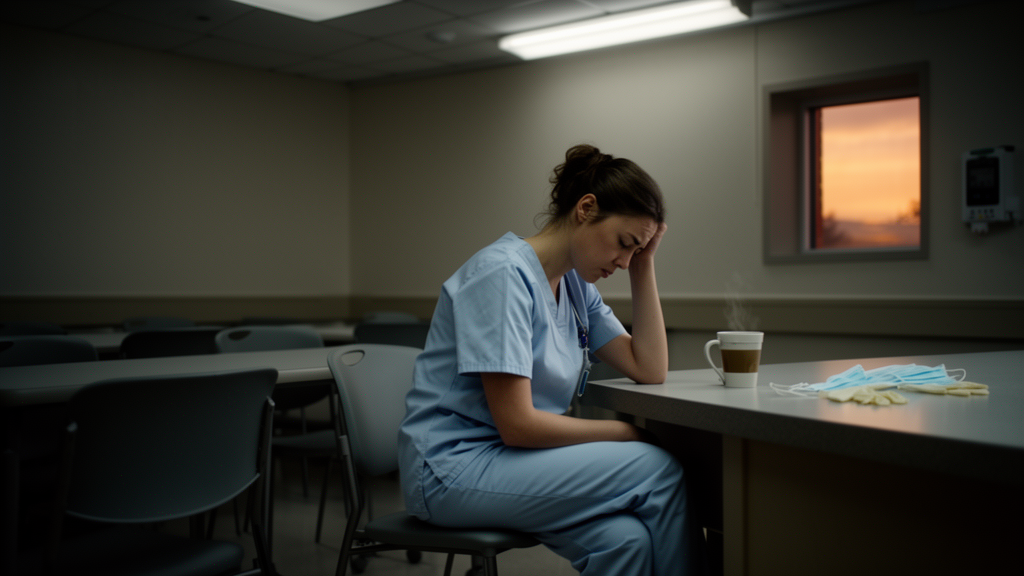
When the COVID-19 pandemic swept through hospitals in 2020, the world applauded healthcare workers from balconies and called them heroes. A new Dutch study suggests that applause, however heartfelt, did little to protect the people on the front line from the slow erosion of their mental health, autonomy and job satisfaction. Researchers at Amsterdam UMC followed nurses and physicians through the crisis and its aftermath, combining in-depth interviews with a cross-sectional survey, and their findings paint a sobering picture of what sustained crisis conditions actually do to a healthcare workforce. The work, published in BMC Nursing, argues that individual resilience, the quality so often invoked in pandemic rhetoric, is not something healthcare systems can simply draw upon indefinitely without paying a structural price.
The research team, led by Anne E. Schramade and Jonne J. Sikkens, used a sequential exploratory mixed-methods design, a two-stage approach in which qualitative findings shape the quantitative instrument that follows. In the first stage, seventeen nurses who had worked in direct patient care during the pandemic took part in semi-structured interviews, which the researchers analyzed thematically to identify recurring patterns in their accounts. Those themes then informed a survey completed by 135 healthcare professionals, including both nurses and physicians, allowing the team to compare how different professional groups experienced the same crisis measures. The study was registered in the Netherlands Trial Register before data collection began and received ethical approval from the Medical Ethics Committee of Amsterdam UMC, conducted in accordance with the Declaration of Helsinki.
Three interconnected themes emerged from the analysis: working conditions, support, and resilience. The major stressors were strikingly concrete. Nurses and physicians described overwhelming workloads, the loss of professional autonomy as infection-control protocols dictated clinical decisions, the emotional toll of enforcing visitor restrictions on frightened families, and chronic constraints on basic resources such as personal protective equipment. These were not abstract pressures but daily frictions that accumulated into exhaustion. The enforcement burden deserves particular emphasis: it fell disproportionately on nurses, who were frequently the staff members required to turn away visitors, deliver bad news at the door, and absorb the anger and grief of relatives who could not enter the ward.
That disproportionate burden is one of the study’s most consequential findings. Compared with physicians, nurses reported carrying more of the relational and enforcement work generated by pandemic restrictions, and they were significantly less likely to view their compensation as proportional to the workload they shouldered. This asymmetry matters because it reveals how a single policy, such as banning hospital visitors, distributes its costs unevenly across a hierarchy. Physicians could frame restrictions as clinical necessities negotiated at an organizational level, while nurses stood at the bedside and at the doorway, translating policy into practice in emotionally charged encounters. The survey data confirmed what the interviews suggested: the same measures produced different occupational realities depending on where one sat in the professional hierarchy.
Against these stressors, the researchers identified the protective factors that kept staff functioning, and the answer was not resilience training or mindfulness apps. Peer support and team cohesion emerged as the most important protective forces for both well-being and job satisfaction. Colleagues who understood the specific pressures of pandemic care, who could debrief after a difficult shift, and who formed tight-knit teams under pressure provided a buffer that no individual-level intervention could replicate. This finding aligns with a broader shift in occupational health psychology away from treating burnout as a personal failing and toward examining the organizational conditions that either sustain or deplete workers. In this study, the unit of survival was the team, not the individual.
Yet the study also uncovered a troubling discrepancy between what resilience questionnaires measured during the pandemic and what nurses later revealed in post-pandemic interviews. Scores captured at the height of the crisis suggested a workforce coping reasonably well, but retrospective reflections told a different story, one of delayed recognition of psychological strain. Nurses who had rated themselves as resilient in the moment later described the pandemic period as profoundly damaging, a pattern consistent with what trauma researchers call delayed onset or delayed acknowledgment of distress. The authors suggest that high functioning under acute pressure can mask accumulating harm, and that resilience measured during a crisis may systematically underestimate the true psychological cost. For hospital administrators, this is a warning against relying on snapshot wellbeing surveys to gauge workforce health.
The findings on recognition cut in an equally uncomfortable direction. Symbolic gestures of appreciation, from public praise to pizza deliveries, offered limited and fleeting benefit when they were not accompanied by structural improvements. Staff could tell the difference between being valued in words and being valued in staffing rosters, pay, and decision-making power. The study’s conclusion is blunt on this point: meaningful recognition must be paired with real changes in working conditions, or it risks becoming another burden, a reminder that institutions are celebrating workers while declining to change the conditions that harm them. In an era when applause has faded but workforce shortages persist, this distinction has become central to debates about retention.
The authors frame their results as a forecast as much as a retrospective. Future healthcare crises, whether pandemics, climate-driven emergencies, or the chronic crisis of understaffing, are likely to be characterized by shortages of staff, particularly nurses, who were already in short supply before 2020 and whose ranks have thinned since. If the pandemic demonstrated anything, it is that frontline staff absorb a substantial share of systemic shock, and that individual resilience alone is insufficient to sustain healthcare systems through prolonged strain. The study therefore calls for systemic change: structural investment in staffing levels, restoration of professional autonomy, improved working conditions, and team-based support systems designed before the next crisis rather than improvised during it. The Netherlands Trial Register entry NL8645, registered on 23 March 2020, marks how early this team began listening to the workforce, and their patience has yielded lessons that health systems ignore at their peril.
What makes this research resonate beyond the Netherlands is its methodological honesty. By letting qualitative interviews surface the lived experience first and then testing patterns quantitatively, the team avoided the common trap of imposing survey categories on a crisis that staff experienced in ways questionnaires rarely anticipate. The delayed recognition of strain, the unequal distribution of enforcement labor, and the primacy of team cohesion are findings that a purely quantitative study might have missed or mismeasured. As health systems worldwide confront persistent nursing shortages and rising burnout, the message from Amsterdam is clear: the question is no longer how to make individual workers more resilient, but how to build institutions that do not require heroism as a substitute for adequate staffing, fair compensation, and genuine support.
Subject of Research: The impact of COVID-19 pandemic measures on mental health, resilience and job satisfaction among nurses and physicians
Article Title: Impact of COVID-19 measures on mental health, resilience and job satisfaction among healthcare professionals: a mixed-methods study
Article References: Impact of COVID-19 measures on mental health, resilience and job satisfaction among healthcare professionals: a mixed-methods study. (n.d.). https://doi.org/10.1186/s12912-026-05410-4
Image Credits: AI Generated
DOI: 10.1186/s12912-026-05410-4
Keywords: COVID-19, healthcare professionals, nurses, mental health, resilience, job satisfaction, team cohesion, occupational health, workforce retention, mixed-methods research, burnout, organizational support
News Source: Ophelia Keating. (October 8, 2026). Nurses Carried the Hidden Cost of COVID Rules, Dutch Study Finds. Scienmag.