


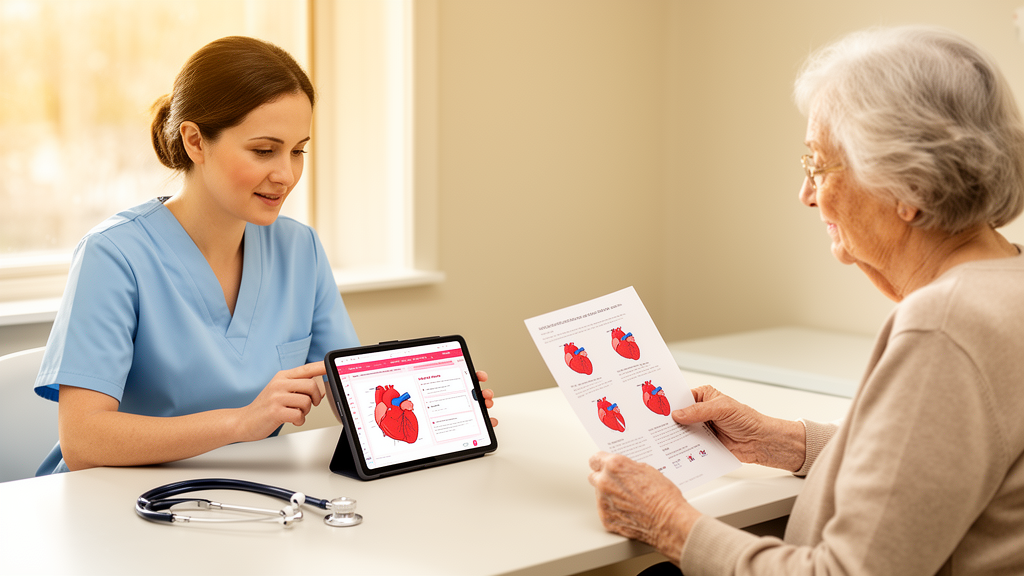
Researchers in India have built and validated a nurse-led heart failure care package that pairs a mobile application called Hriday Sathi with a printed educational booklet, and a new study reports that both components achieved high expert-rated content validity and proved feasible in a clinical pilot. The work, published in BMC Digital Health, was carried out by Nipin Kalal, Suresh K. Sharma, Ashok Kumar Bishnoi and Surender Deora, who developed the intervention at the All India Institute of Medical Sciences in Jodhpur, Rajasthan, and tested it with heart failure patients seeking treatment at the institute’s cardiology outpatient and inpatient departments.
This was a development and validation study guided by the Medical Research Council framework for complex interventions, not a full-scale effectiveness trial. The authors explicitly state that full-scale effectiveness evaluation and implementation remain beyond the scope of this study and will be addressed in future randomized controlled trials. The intervention was registered with the Clinical Trials Registry–India under CTRI/2024/08/072687 on 19 August 2024, and the published report describes a randomized controlled trial design, but the findings reported here concern content validity, feasibility and preliminary pilot observations in a small sample.
The authors cite estimates placing the prevalence of heart failure in India at around one percent of the population, roughly eleven million people, with an estimated 0.10 to 0.16 million deaths from the condition annually. They also note that while elderly populations are predominantly affected in Western countries, younger age groups bear a heavier burden in developing nations such as India. Cardiovascular diseases more broadly are described as the primary cause of mortality globally, with an estimated 523 million documented cases and 18.6 million deaths worldwide in 2019, and approximately one in four deaths in India now attributed to cardiovascular diseases.
The development process began with a systematic search of the evidence base. The team searched PubMed, MEDLINE, CINAHL, Scopus, Google Scholar and ResearchGate using a PICO framework, with search terms including heart failure, self-care, nurse-led intervention, mobile health, mHealth, patient education, clinical outcomes and quality of life. From 154 articles identified and screened, 24 studies were included, predominantly systematic reviews, meta-analyses and randomized controlled trials. These studies informed the content areas, delivery strategies and outcome measures of the intervention. The authors also draw on a prior systematic review finding that heart failure care programs reduced heart failure-specific readmission rates by 32 percent and all-cause readmissions by 15 percent, while noting that additional evidence is needed on broader patient-centered outcomes such as quality of life and patient understanding of heart failure.
The resulting mobile application, Hriday Sathi, is designed as a comprehensive patient-centered tool to support self-care, symptom monitoring and treatment adherence. Its components include a patient profile module capturing demographic details, diagnosis, comorbidities, prescribed medications and baseline clinical parameters; structured tools for daily weight monitoring and fluid intake logging; a symptom tracker that automatically categorizes patients into green, yellow and red zones indicating stable condition, early warning signs, or worsening symptoms requiring urgent attention, with zone-based nurse-guided instructions provided accordingly; a medication reminder system using alarm notifications; and daily self-care logs. A My Learning section delivers structured educational content covering the overview of heart failure, causes and risk factors, signs and symptoms, fluid and dietary management, medication adherence and safety, weight management, exercise and meditation, sexual activity and heart failure, emotional support and coping strategies, recognition of warning signs, and smoking cessation and alcohol avoidance. The application integrates recommendations from international heart failure management guidelines, the American Heart Association and the CDC.
The companion booklet, titled Health Guide for Heart Failure Patients: Hriday Sathi, mirrors this content in a printed format intended for use during hospitalization and continued reference at home. It provides information on the disease, its causes and risk factors, and common signs and symptoms, with specific modules on fluid and dietary management emphasizing salt and fluid restriction, guidance on medication adherence and safety, weight management through daily monitoring and lifestyle modification, and recommendations on exercise and meditation. It also sensitively discusses sexual activity in patients with heart failure, addresses psychosocial aspects through modules on emotional support and coping strategies, highlights recognition of early warning signs and symptom progression to enable timely help-seeking, and emphasizes smoking cessation and avoidance of alcohol.
Validation used a single-round Delphi technique with multidisciplinary experts. The Hriday Sathi application was evaluated by a panel of six nursing experts and three medical experts, who assessed its educational content, self-care components and usability, achieving an overall Content Validity Index of 0.92, which the authors describe as indicating excellent content validity. The educational booklet was independently validated by experts in nursing, cardiology and health education for clarity, relevance and patient appropriateness, achieving a CVI of 0.90, and refinements were made to improve readability and alignment with evidence-based heart failure guidelines. Expert feedback was reviewed and incorporated after deliberation with the guide, and both components were deemed valid, relevant and suitable for nurse-led delivery to support self-care and symptom management.
Feasibility was assessed in a pilot with 30 participants, ten per group across three arms, drawn from a planned sample of 153 participants calculated with G*Power based on a comparable three-arm nurse-led mHealth intervention study, using MLHFQ scores as the reference outcome, an effect size of Cohen’s f of 0.32, alpha of 0.05 and 90 percent power, with 15 percent attrition allowance. Participants were adults aged at least 18 years with clinically diagnosed heart failure of at least one year’s duration, access to an Android smartphone personally or through a family member, the ability to understand Hindi or English, and the ability to attend scheduled follow-up visits. Exclusion criteria covered critical or terminal illness, comorbid conditions such as chronic kidney disease, end-stage renal disease, multi-organ dysfunction syndrome or chronic obstructive pulmonary disease that could affect self-care or study completion, NYHA Class IV heart failure, hearing impairment, dementia or other conditions impairing cognition, and lack of home internet access. In the pilot, most participants were male, married, living in rural areas and belonging to joint families, the majority had no formal education and followed a vegetarian diet, and most had heart failure with reduced ejection fraction and NYHA Class II disease, with hypertension the most common comorbidity. Baseline characteristics were comparable across groups.
The pilot also generated preliminary outcome observations that the authors present as exploratory. At three and six months of follow-up, significant between-group differences were observed in hemoglobin and NT-proBNP levels, with better improvement in both intervention groups compared with the control group, and improvements were noted in fasting blood glucose, HbA1c, HDL, triglycerides and serum sodium levels, particularly in the intervention groups at six months. Blood pressure, pulse rate, urea, creatinine, potassium and chloride did not differ significantly between groups. Quality of life and self-care outcomes improved significantly in the intervention groups over time: at six months, both intervention groups showed significantly lower MLHFQ scores, indicating improved quality of life compared with controls, self-care maintenance, management and confidence scores on the SCHFI increased significantly with the module-based educational group showing the greatest improvement, medication adherence and cardiac self-efficacy scores improved significantly, and symptom burden on the SSQHF decreased significantly. These figures come from a pilot of 30 participants and, as the authors stress, cannot establish effectiveness; they serve to justify larger trials.
The delivery model positions nurses as central agents. Eligible patients were enrolled in the application with nurse assistance, guided to enter and update personal, clinical and self-care data daily, and received face-to-face health education using the booklet from a trained nurse. At discharge, each patient received the booklet for continued reference at home, and weekly telephonic follow-up calls of approximately five minutes were conducted to encourage adherence to the booklet content, maintain regular app usage and address difficulties. The authors argue that this approach enhances continuity, accessibility and sustainability of care, and is particularly relevant for resource-limited settings, while acknowledging implementation challenges such as ensuring consistent patient engagement with the app. The study’s stated limitations include its single-center design, small sample size and short follow-up period, and the authors conclude that future randomized controlled trials with larger, heterogeneous populations and extended follow-up are essential to determine effectiveness, implementation fidelity and cost-effectiveness before the intervention is integrated into routine heart failure care.
Subject of Research: Development and validation of a nurse-led mHealth and educational intervention for heart failure self-care
Article Title: Development and validation of a nurse-led mHealth and module-based educational intervention for heart failure patients
Article References: Kalal, N., Sharma, S. K., Bishnoi, A. K., & Deora, S. (2026). Development and validation of a nurse-led mHealth and module-based educational intervention for heart failure patients. BMC Digital Health, 4(1), Article 70. https://doi.org/10.1186/s44247-026-00298-1
Image Credits: AI Generated
DOI: 10.1186/s44247-026-00298-1
Keywords: heart failure, mHealth, nurse-led intervention, patient education, self-care, content validity, Delphi technique, Hriday Sathi, pilot study, India, digital health, MRC framework
News Source: Courtney Benton. (October 29, 2026). Nurse-led heart failure app and education booklet pass validation and feasibility tests. Scienmag.



