Researchers have developed a novel way to detect whether a person follows a Mediterranean diet using a blood test and, applying this method, have shown that a Mediterranean diet is associated with lower risk of type 2 diabetes. Jakub Sobiecki of the University of Cambridge, UK and colleagues present these findings April 27th in the open access journal PLOS Medicine.
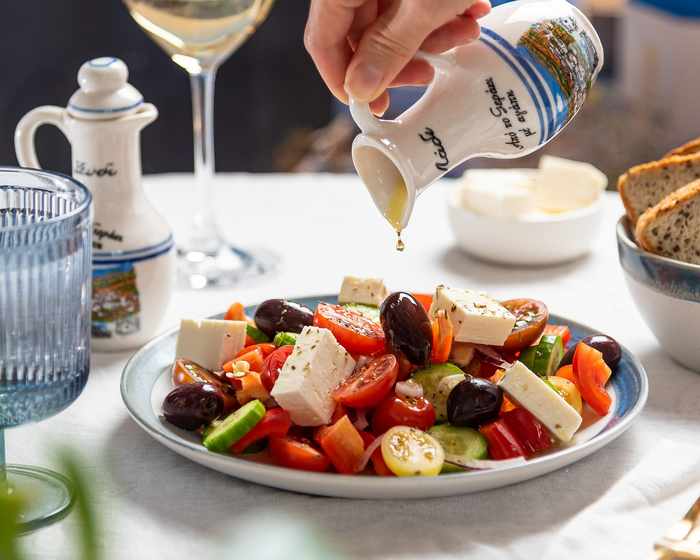
Credit: galyafanaseva, Pixabay (CC0, https://creativecommons.org/publicdomain/zero/1.0/)
Researchers have developed a novel way to detect whether a person follows a Mediterranean diet using a blood test and, applying this method, have shown that a Mediterranean diet is associated with lower risk of type 2 diabetes. Jakub Sobiecki of the University of Cambridge, UK and colleagues present these findings April 27th in the open access journal PLOS Medicine.
Prior research has shown that people who self-report that they follow a Mediterranean diet have a modestly lower risk of type 2 diabetes. However, the subjectivity of self-reports makes that link uncertain. Until now, the potential link between a Mediterranean diet and type 2 diabetes risk has not been evaluated using objective biological indicators—biomarkers—of adherence to the diet.
Sobiecki and colleagues developed a novel biomarker-based indicator of a Mediterranean diet that incorporates levels of certain molecules in the blood. First, the researchers identified that blood levels of 24 fatty acids and 5 carotenoids could be applied to predict whether participants from a clinical trial of 128 people were assigned to following a Mediterranean diet. Levels of these molecules in a person’s blood were used to calculate a biomarker score, which the researchers used as a measure of the extent to which they followed a Mediterranean diet.
Next, the researchers applied the biomarker score in a study of 340,234 people living in eight European countries, of whom 9,453 developed type 2 diabetes during follow-up and had relevant biomarkers measured. Comparing them with 12,749 participants who remained free of type 2 diabetes, the researchers found that people whose biomarker score indicated greater adherence to a Mediterranean diet were less likely to develop type 2 diabetes.
For comparison, the researchers also asked participants to self-report their diet. They found that using the biomarker score identified a stronger link between the Mediterranean diet and reduced risk of type 2 diabetes than when self-report was used. This finding suggests that previous self-report-based studies may have underestimated the association.
Based on these findings, the researchers argue that even a modest improvement in people’s adherence to a Mediterranean diet could meaningfully reduce the incidence of type 2 diabetes. However, they also point out that additional research will be needed to confirm and extend these new findings since it is currently unknown to what extent the biomarker score is specific for the Mediterranean diet.
Senior author Professor Nita Forouhi said, “Our research combining information from a dietary clinical trial and a large cohort study to identify and apply blood biomarkers for a dietary pattern is exciting and should stimulate development of improved methods to study diet-disease associations which are typically limited by reliance on subjective recall of eating.”
#####
In your coverage, please use this URL to provide access to the freely available paper in PLOS Medicine: http://journals.plos.org/plosmedicine/article?id=10.1371/journal.pmed.1004221
Citation: Sobiecki JG, Imamura F, Davis CR, Sharp SJ, Koulman A, Hodgson JM, et al. (2023) A nutritional biomarker score of the Mediterranean diet and incident type 2 diabetes: Integrated analysis of data from the MedLey randomised controlled trial and the EPIC-InterAct case-cohort study. PLoS Med 20(4): e1004221. https://doi.org/10.1371/journal.pmed.1004221
Author Countries: United Kingdom, Australia, Spain, Germany, China, Italy, Colombia, France, Sweden, Norway, Denmark, and the Netherlands
Funding: see manuscript
Journal
PLoS Medicine
DOI
10.1371/journal.pmed.1004221
Method of Research
Observational study
Subject of Research
People
COI Statement
Competing Interests: see manuscript