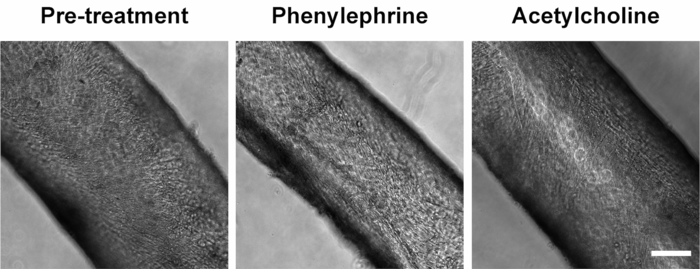
Cardiovascular diseases (CVDs) remain among the leading causes of global morbidity and mortality. In patients with CVD, blood vessels―which transport blood, oxygen, and nutrients―can become constricted or obstructed, leading to numerous complications. While revascularization and grafting are common procedures carried out during surgeries, biofabricated grafts used during these operations can have many drawbacks, for example, weak mechanical strength. To overcome these issues, researchers at the Brigham used bioengineering advancements to improve 3D bioprinting of vascular tissues with functional and mechanical hallmarks. The team used crosslinking properties of natural polymers to develop a double-network hydrogel bioink capable for bioprinting conduits. These conduits had key physiological characteristics of blood vessels including strong vasoconstriction, vasodilation, perfusability, and barrier performance comparable to native vessels. In line with the ongoing COVID-19 pandemic, the researchers also showed the possibility of using these vessels for SARS-CoV-2 pseudoviral testing.
Credit: Shrike Zhang lab/BWH
Cardiovascular diseases (CVDs) remain among the leading causes of global morbidity and mortality. In patients with CVD, blood vessels―which transport blood, oxygen, and nutrients―can become constricted or obstructed, leading to numerous complications. While revascularization and grafting are common procedures carried out during surgeries, biofabricated grafts used during these operations can have many drawbacks, for example, weak mechanical strength. To overcome these issues, researchers at the Brigham used bioengineering advancements to improve 3D bioprinting of vascular tissues with functional and mechanical hallmarks. The team used crosslinking properties of natural polymers to develop a double-network hydrogel bioink capable for bioprinting conduits. These conduits had key physiological characteristics of blood vessels including strong vasoconstriction, vasodilation, perfusability, and barrier performance comparable to native vessels. In line with the ongoing COVID-19 pandemic, the researchers also showed the possibility of using these vessels for SARS-CoV-2 pseudoviral testing.
“The vessels we have printed truly mimic a lot of the mechanics of native vessels,” said senior corresponding author, Y. Shrike Zhang, PhD, of the Division of Engineering in Medicine. “This research demonstrates the potential for such conduits to serve as vascular models for grafts in vascular surgeries, other disease studies, and broad biomedical applications.” The other co-corresponding authors included Xuanhe Zhao, PhD, of the Department of Mechanical Engineering at MIT, and C. Keith Ozaki, MD, of the Division of Vascular and Endovascular Surgery at the Brigham.
Read more in Science Advances.
Journal
Science Advances
DOI
10.1126/sciadv.abq6900
Method of Research
Experimental study
Subject of Research
Cells
Article Title
Microfluidic Bioprinting of Tough Hydrogel-based Vascular Conduits for Functional Blood Vessels
Article Publication Date
26-Oct-2022
COI Statement
: Y.S.Z. sits on
the Scientific Advisory Board of Allevi by 3D Systems, which, however, did not sponsor or bias
the current research. A provisional patent resulting from the work has been filed by the
Brigham and Women’s Hospital (filed 26 July 2022). The authors declare that they have no
other competing interest