

• HOME
  • NEWS
  • EXPLORE
    • CAREER
      • Companies
      • Jobs
    • EVENTS
    • iGEM
      • News
      • Team
    • PHOTOS
    • VIDEO
    • WIKI
  • BLOG
  • COMMUNITY
    • FACEBOOK
    • INSTAGRAM
    • TWITTER
Monday, May 18, 2026
BIOENGINEER.ORG
No Result
View All Result
  • Login
  • HOME
  • NEWS
  • EXPLORE
    • CAREER
      • Companies
      • Jobs
        • Lecturer
        • PhD Studentship
        • Postdoc
        • Research Assistant
    • EVENTS
    • iGEM
      • News
      • Team
    • PHOTOS
    • VIDEO
    • WIKI
  • BLOG
  • COMMUNITY
    • FACEBOOK
    • INSTAGRAM
    • TWITTER
  • HOME
  • NEWS
  • EXPLORE
    • CAREER
      • Companies
      • Jobs
        • Lecturer
        • PhD Studentship
        • Postdoc
        • Research Assistant
    • EVENTS
    • iGEM
      • News
      • Team
    • PHOTOS
    • VIDEO
    • WIKI
  • BLOG
  • COMMUNITY
    • FACEBOOK
    • INSTAGRAM
    • TWITTER
No Result
View All Result
Bioengineer.org
No Result
View All Result
Home NEWS Science News Biology

North Pacific climate patterns influence El Nino occurrences

Bioengineer by Bioengineer
March 7, 2018
in Biology
Reading Time: 2 mins read
0
Share on FacebookShare on TwitterShare on LinkedinShare on RedditShare on Telegram
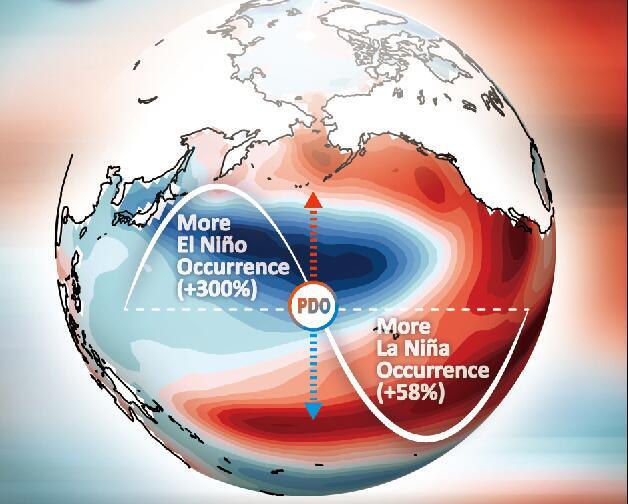
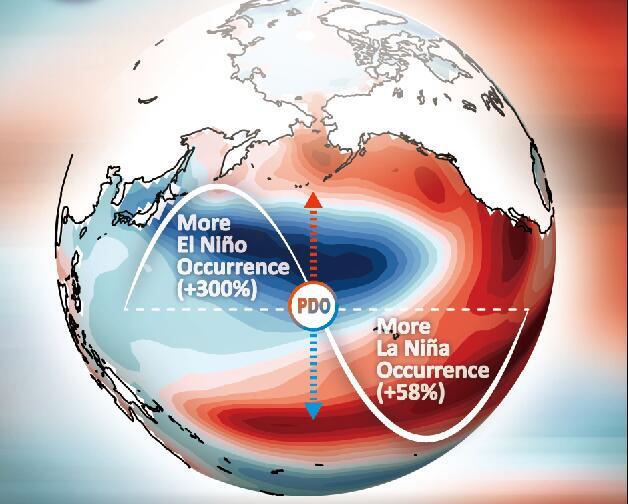
IMAGE

Credit: Advances in Atmospheric Sciences

For decades, the world's leading scientists have observed the phenomena known as El Nino and La Nina. Both significantly impact the global climate and both pose a puzzle to scientists since they're not completely understood. Now, a new study helps clear up some of the obscurity surrounding El Nino and La Nina, which together are called the El Nino Southern Oscillation (ENSO). This new study examines ENSO frequency asymmetry during different phases of the Pacific Decadal Oscillation (PDO), a climate pattern in the North Pacific.

Previous studies have investigated the relationship between ENSO and PDO but none have examined if the warm (positive) and cool (negative) phases of PDO in the North Pacific influence the frequency of ENSO events in the tropical Pacific. "For the first time," said Prof. ZHENG Fei from the Institute of Atmospheric Physics, Chinese Academy of Sciences, and coauthor on the study, "we quantitatively demonstrated that El Nino is 300 percent more (58 percent less) frequent than La Nina in positive (negative) PDO phases."

The findings were published in Advances of Atmospheric Sciences and selected as the cover article of Issue 5.

To arrive at their findings, the researchers used observational data and the output of 19 models from the Coupled Model Intercomparison Project Phase 5 (CMIP5). "By adopting the observations and CMIP5 climate model simulations," said Zheng, "we had an opportunity to explore how PDO modulates the occurrence of ENSO." This type of exploration meets an increasing need today, which is for scientists to better understand the mechanisms that affect the occurrence of ENSO.

While all the answers surrounding these events aren't known, the effects of ENSO are well understood. When sea surface temperatures are warmer or cooler than normal in the equatorial Pacific Ocean, weather patterns around the world are impacted. Everything from pressure systems to wind and precipitation can be influenced by ENSO, including the supply of water in a region since it can cause moisture extremes.

ZHENG and his group at the Chinese Academy of Sciences have been focusing on ENSO for more than 10 years now. The results from their own recent studies showing that ENSO prediction highly relies on off-equatorial physical processes motivated this latest study exploring the effects of PDO, according to Zheng, who believes that this approach is necessary to understand ENSO better. "Our study suggests that more attention should be paid to the processes outside the equator when attempting ENSO predictions to provide reliable warning of climate extreme events and avoid potential economic loss," he said.

###

Media Contact

Zheng Lin
[email protected]
86-108-299-5053
@aasjournal

http://english.iap.cas.cn/

Original Source

https://link.springer.com/article/10.1007/s00376-017-7133-z http://dx.doi.org/10.1007/s00376-017-7133-z


Share12Tweet8Share2ShareShareShare2

Related Posts

Uncovering C. elegans Immunity via Genetic Screens — Biology

Uncovering C. elegans Immunity via Genetic Screens

May 16, 2026
Single mother must adapt swiftly — the survival of her colony depends on it — Biology

Single mother must adapt swiftly — the survival of her colony depends on it

May 15, 2026

Why Are Nearly Everyone Right-Handed? It Might Be Linked to How We Learned to Walk

May 15, 2026

Excessive Neuronal Activity Initiates Severe Autoimmune Brain Disorder

May 15, 2026
Please login to join discussion

POPULAR NEWS

  • Research Indicates Potential Connection Between Prenatal Medication Exposure and Elevated Autism Risk

    844 shares
    Share 338 Tweet 211
  • New Study Reveals Plants Can Detect the Sound of Rain

    731 shares
    Share 292 Tweet 182
  • Salmonella Haem Blocks Macrophages, Boosts Infection

    62 shares
    Share 25 Tweet 16
  • Breastmilk Balances E. coli and Beneficial Bacteria in Infant Gut Microbiomes

    58 shares
    Share 23 Tweet 15

About

We bring you the latest biotechnology news from best research centers and universities around the world. Check our website.

Follow us

Recent News

Micronutrients Linked to Mood and Psychotic Disorders

AI Tool in Radiotherapy Advances Global Fight to Eradicate Cervical Cancer

Detecting Illicit Bitcoin Transactions with Temporal Graph Learning

Subscribe to Blog via Email

Enter your email address to subscribe to this blog and receive notifications of new posts by email.

Join 82 other subscribers
  • Contact Us

Bioengineer.org © Copyright 2023 All Rights Reserved.

Welcome Back!

Login to your account below

Forgotten Password?

Retrieve your password

Please enter your username or email address to reset your password.

Log In
No Result
View All Result
  • Homepages
    • Home Page 1
    • Home Page 2
  • News
  • National
  • Business
  • Health
  • Lifestyle
  • Science

Bioengineer.org © Copyright 2023 All Rights Reserved.