

• HOME
  • NEWS
  • EXPLORE
    • CAREER
      • Companies
      • Jobs
    • EVENTS
    • iGEM
      • News
      • Team
    • PHOTOS
    • VIDEO
    • WIKI
  • BLOG
  • COMMUNITY
    • FACEBOOK
    • INSTAGRAM
    • TWITTER
Friday, June 26, 2026
BIOENGINEER.ORG
No Result
View All Result
  • Login
  • HOME
  • NEWS
  • EXPLORE
    • CAREER
      • Companies
      • Jobs
        • Lecturer
        • PhD Studentship
        • Postdoc
        • Research Assistant
    • EVENTS
    • iGEM
      • News
      • Team
    • PHOTOS
    • VIDEO
    • WIKI
  • BLOG
  • COMMUNITY
    • FACEBOOK
    • INSTAGRAM
    • TWITTER
  • HOME
  • NEWS
  • EXPLORE
    • CAREER
      • Companies
      • Jobs
        • Lecturer
        • PhD Studentship
        • Postdoc
        • Research Assistant
    • EVENTS
    • iGEM
      • News
      • Team
    • PHOTOS
    • VIDEO
    • WIKI
  • BLOG
  • COMMUNITY
    • FACEBOOK
    • INSTAGRAM
    • TWITTER
No Result
View All Result
Bioengineer.org
No Result
View All Result
Home Headlines

Non-invasive imaging predicts cancer malignancy

Bioengineer.org by Bioengineer.org
January 27, 2018
in Headlines, Health, Science News
Reading Time: 2 mins read
0
Share on FacebookShare on TwitterShare on LinkedinShare on RedditShare on Telegram
IMAGE

Credit: Osaka University

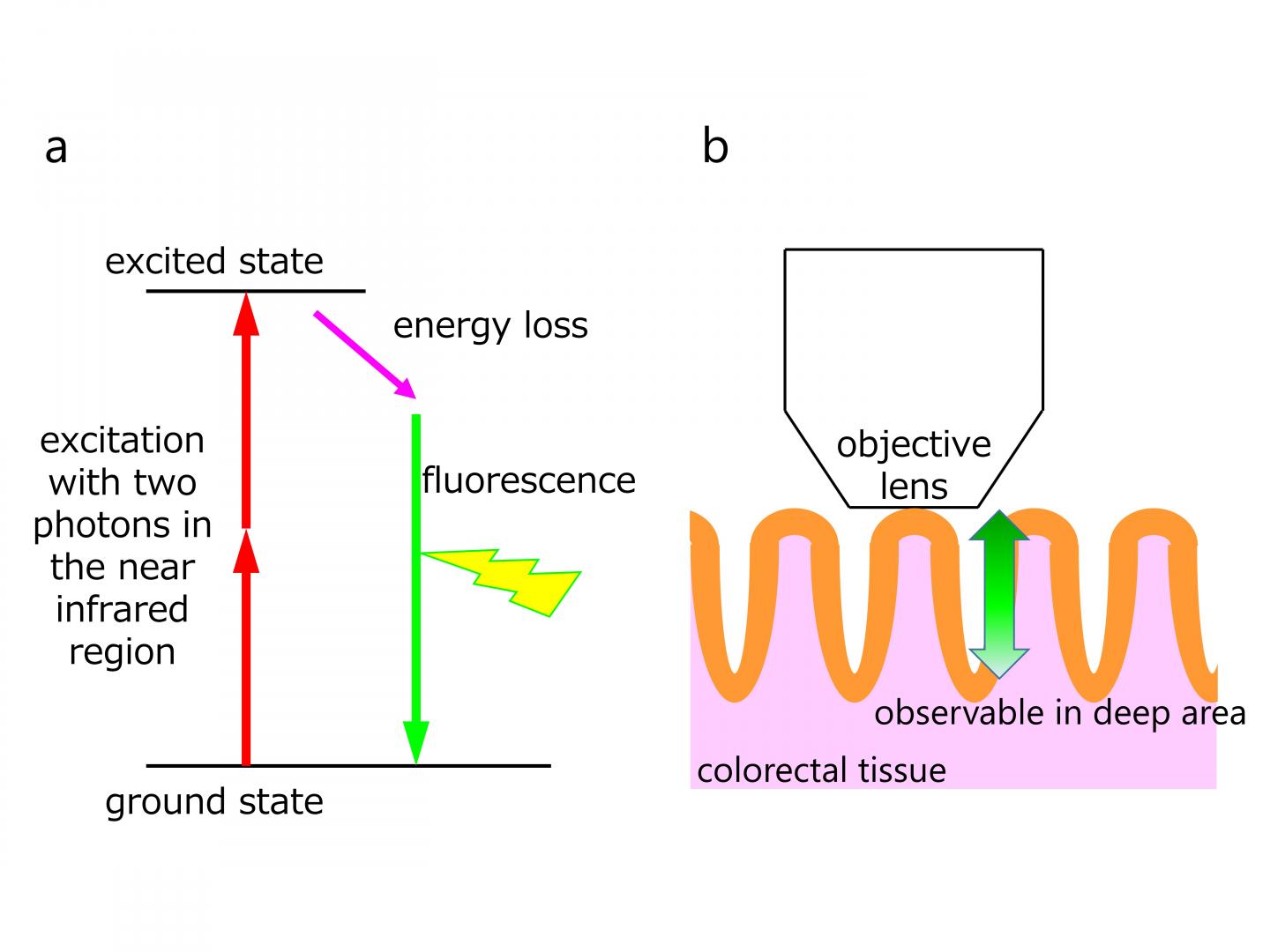
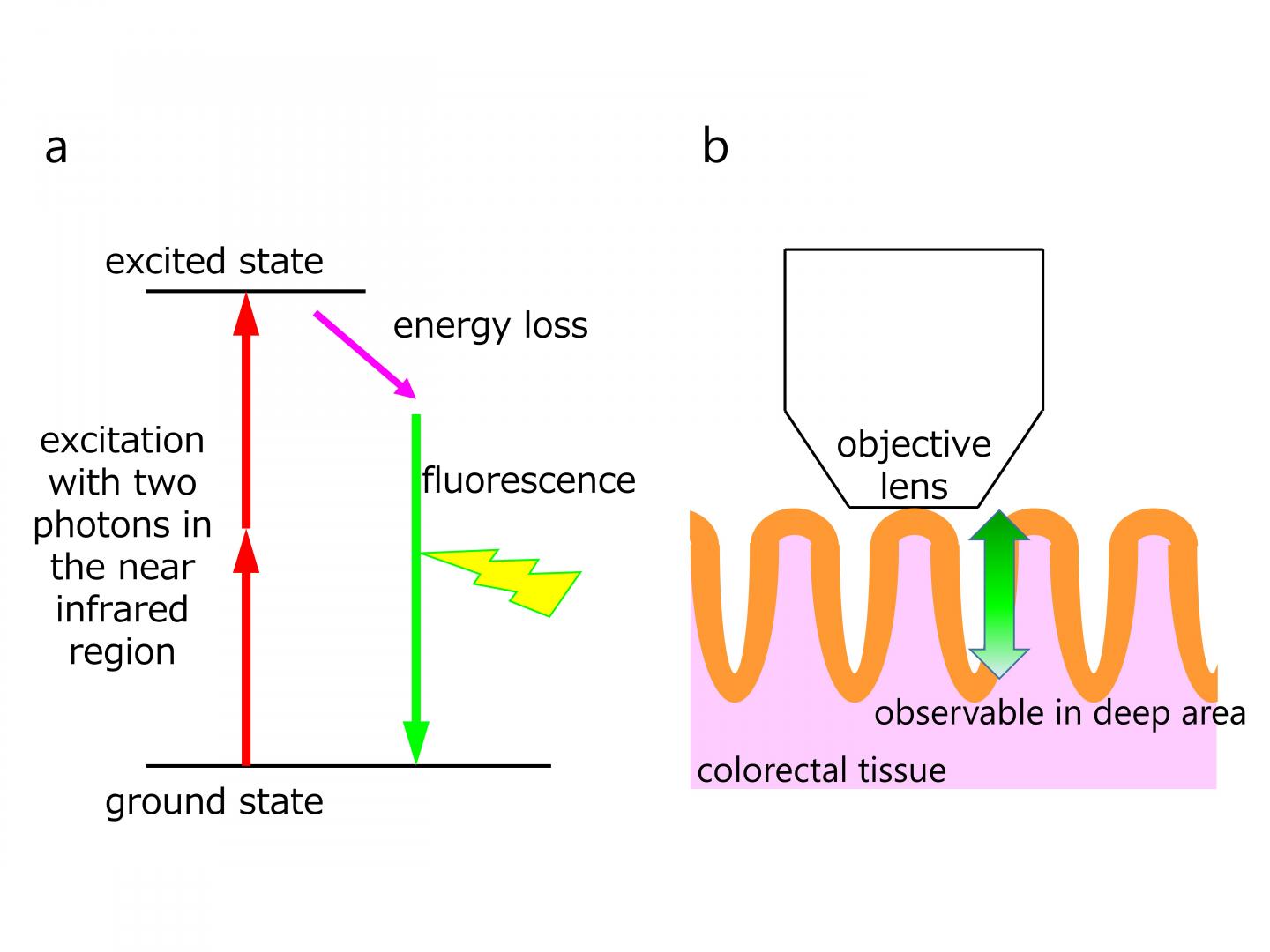
(Osaka, Japan) A new study by Osaka University scientists shows that non-labeling multiphoton microscopy (NL-MPM) can be used for quantitative imaging of cancer that is safe and requires no resection, fixation or staining of tissues. The report is expected to simplify and reduce the time of cancer diagnosis and can be read in Scientific Reports.

To diagnose cancer and determine the proper treatment plan, pathologists depend on biopsies from the patient. The cutting, fixing and staining of the specimen generally provides reliable information, but these pathology-based diagnostic procedures require substantial time and cause tissue damage. Professor Masaru Ishii and his team of scientists have been exploring non-labeling microscopy methods as a means to observe and diagnose the cancer while preserving as much information as possible.

"MPM is an effective tool that enables the visualization of deep regions within living tissues and organs. We are developing NL-MPM to diagnose the malignancy of colorectal cancer," he said.

Colorectal cancer has some ideal properties for the application of NL-MPM. Traditionally, microscopy of living organisms has depended on the attachment of a fluorescent dye to the target tissue. However, these dyes are often toxic, and it would be desirable to visualize human tissues without the need for additional labeling. Colorectal cancer particularly affects epithelial tissue, which emanates a sufficient signal in NL-MPM without the addition of any foreign dye, because chemicals natural to the tissue will emit autofluorescence.

"MPM relies on second harmonic generation (SHG) in addition to autofluorescence, and the basement membrane beneath the epithelial cells gives a strong SHG signal," explains Ishii, adding that the signal comes specifically from the basement membrane of the tissue, a region that is difficult to observe using contemporary staining techniques.

Using NL-MPM, Ishii's group, in collaboration with other scientists at Osaka University, was able to quantify the severity of the cancer using two parameters they created, index N and index S. Index N is a number that describes the size of the nuclei in the cell, while index S is a number that summarizes the intensity of SHG signals. Normal tissue was defined as that with an index N 9.5 (a larger index N indicating larger nuclei) and an index S > 3.1 (healthy tissue, because of its regular structure, gives off a stronger SHG signal).

"Any tissues that were outside these boundaries were deemed cancerous," said Ishii. The two indices also provide a highly reliable prediction of the malignancy of the cancer.

Ishii acknowledges that the technology needs improvement before it reaches clinical use, but is excited about its prospect for patient care.

"We envision the use of endoscopy with the MPM system, as well as the use of NL-MPM during operations because of its rapid analysis," he said.

###

Media Contact

Saori Obayashi
[email protected]
81-661-055-886
@osaka_univ_e

http://www.osaka-u.ac.jp/en

Original Source

http://resou.osaka-u.ac.jp/en/research/2017/20170731_1 http://dx.doi.org/10.1038/s41598-017-07244-2

Share12Tweet8Share2ShareShareShare2

Related Posts

Tracking Lanthanide-Labeled Microplastics in Plants

June 25, 2026

POSTECH Researchers Slash Cost of Reconstituted Cell-Free Systems by 95%

June 25, 2026

AI and Physics Collaborate to Design Advanced Hydrogen Storage Materials

June 25, 2026

Natural Hallucinogens: Evolution’s Ecological Tools, Not Mere Chemical Byproducts

June 25, 2026
Please login to join discussion

POPULAR NEWS

  • Saying Goodbye to PGY-6: Pediatric Fellowship Realities

    103 shares
    Share 41 Tweet 26
  • Multi-Hospital Study Reveals Long Covid Burden Is Twice as High as Current Estimates

    92 shares
    Share 36 Tweet 23
  • Detection of EDCs in Breast Milk and Infant Urine Up to Six Months Highlights Early Exposure Risks

    77 shares
    Share 31 Tweet 19
  • New Drug Candidate Developed at McMaster Shows Potential for Treating Brain Cancer

    58 shares
    Share 23 Tweet 15

About

We bring you the latest biotechnology news from best research centers and universities around the world. Check our website.

Follow us

Recent News

Tracking Lanthanide-Labeled Microplastics in Plants

POSTECH Researchers Slash Cost of Reconstituted Cell-Free Systems by 95%

AI and Physics Collaborate to Design Advanced Hydrogen Storage Materials

Subscribe to Blog via Email

Success! An email was just sent to confirm your subscription. Please find the email now and click 'Confirm' to start subscribing.

Join 82 other subscribers
  • Contact Us

Bioengineer.org © Copyright 2023 All Rights Reserved.

Welcome Back!

Login to your account below

Forgotten Password?

Retrieve your password

Please enter your username or email address to reset your password.

Log In
No Result
View All Result
  • Homepages
    • Home Page 1
    • Home Page 2
  • News
  • National
  • Business
  • Health
  • Lifestyle
  • Science

Bioengineer.org © Copyright 2023 All Rights Reserved.
