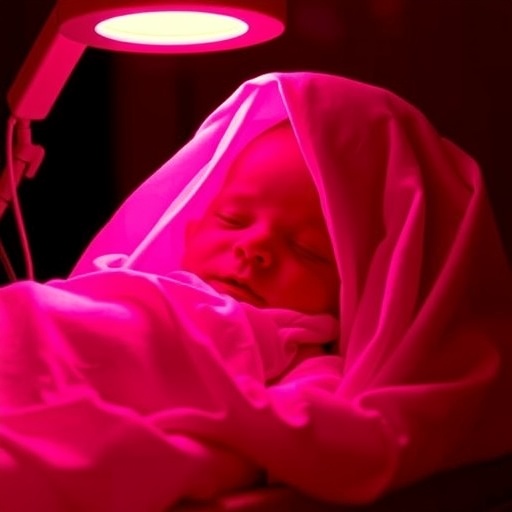
Newborn jaundice is common, but identifying which infants will develop clinically significant hyperbilirubinemia remains a challenge—especially when clinicians must balance rapid decisions with limited predictive tools. In a new study, researchers tested whether a breath-based signal could flag risk earlier and more precisely than conventional assessment alone. Their findings focus on end-tidal carbon monoxide corrected for ambient carbon monoxide (ETCOc), a noninvasive proxy for bilirubin production.
Bilirubin is generated when heme breaks down; increased breakdown accelerates jaundice. Because carbon monoxide is released during heme catabolism, exhaled CO can serve as a biological readout of that process. The “end-tidal” measurement captures CO at the end of a breath, while the “corrected” component adjusts for baseline environmental CO, improving specificity in real-world settings.
To make the approach clinically usable, the team constructed age-specific ETCOc percentile distributions. Neonates change rapidly after birth, and CO-related physiology varies with postnatal age. The percentile framework therefore aims to convert raw breath signals into context-appropriate thresholds, rather than relying on a single universal cut-off.
The study also evaluated whether these percentiles predict the need for phototherapy, a standard treatment used when bilirubin levels rise beyond safety thresholds. By linking ETCOc patterns to eventual treatment decisions, the researchers assessed ETCOc’s potential as an early-warning tool.
Technically, the measurements were performed using non-dispersive infrared spectroscopy, a technology that quantifies gas concentrations by analyzing how gases absorb specific infrared wavelengths. This enables rapid, bedside-friendly readings without blood sampling—an advantage when clinicians require repeated assessments.
Using their age-stratified distribution, the authors report that ETCOc can identify newborns at risk for significant hyperbilirubinemia leading to phototherapy. In other words, breath CO dynamics appear to track the underlying bilirubin-generating activity closely enough to support prediction rather than mere description.
If validated broadly, ETCOc percentile–based screening could complement existing bilirubin nomograms and reduce uncertainty during the early postnatal window. It may help clinicians target monitoring and treatment to those most likely to deteriorate.
Overall, the work positions non-dispersive infrared breath testing as a promising addition to neonatal care, potentially improving timing and accuracy in managing jaundice. For now, the next step is translation: larger, multi-center studies and careful assessment of how ETCOc performs across diverse populations and measurement conditions.
Subject of Research: Neonatal hyperbilirubinemia prediction; neonatal jaundice phototherapy
Article Title: Age-specific ETCOc measured by non-dispersive infrared spectroscopy predicts neonatal phototherapy
Article References: Wu, Y., Zhu, C., Zheng, Y. et al. Age-specific ETCOc measured by non-dispersive infrared spectroscopy predicts neonatal phototherapy. Pediatr Res (2026). https://doi.org/10.1038/s41390-026-05309-5
Image Credits: AI Generated
DOI: https://doi.org/10.1038/s41390-026-05309-5
Tags: age-specific ETCOc percentilesbilirubin production assessmentbreath analysis in newbornsclinical utility of ETCOc testingearly prediction of neonatal hyperbilirubinemiaend-tidal carbon monoxide measurementETCOc as hyperbilirubinemia predictorheme breakdown biomarkersneonatal jaundice detectionneonatal phototherapy decision-makingnon-dispersive infrared spectroscopy in neonatesnoninvasive bilirubin monitoring