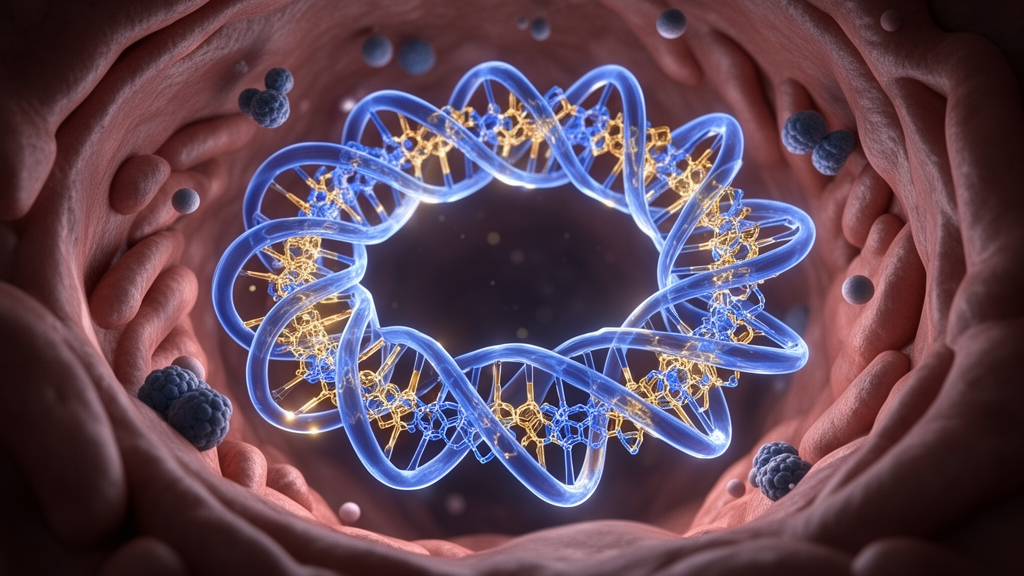
In a comprehensive review published in Experimental and Molecular Medicine, researchers have synthesized emerging evidence demonstrating that non-canonical DNA conformations within human mitochondrial genomes act as critical regulators of gene expression while concurrently establishing focal hotspots for mutagenesis and large-scale genomic rearrangements. Human mitochondrial DNA exists as a circular double-stranded molecule encoding thirty-seven essential genes, including core protein subunits of the respiratory chain complexes required for oxidative phosphorylation and cellular energy generation. Unlike the nuclear genome, mitochondrial DNA is directly exposed to high concentrations of reactive oxygen species generated as metabolic byproducts within the mitochondrial matrix and operates under a comparatively limited enzymatic repair repertoire. These intrinsic biochemical conditions cause somatic mutations in mitochondrial DNA to accumulate at rates one to two orders of magnitude higher per base than in nuclear chromosomes. High-sensitivity sequencing assays reveal an approximate fivefold increase in mitochondrial somatic variants across the human lifespan, with mutations clustering densely within the non-coding displacement loop control region.
Beyond standard right-handed B-DNA double helices, mitochondrial sequences readily adopt alternative secondary conformations driven by specific compositional biases, inverted symmetry, and local topological stresses. These non-B DNA structures arise predominantly at repetitive motifs stabilized by non-Watson-Crick base pairing, strand extrusion, and specialized base-stacking arrangements. The primary structural classes characterized in mitochondrial genomes include four-stranded G-quadruplexes formed within guanine-rich tracts, hairpins and cruciforms emerging from inverted repeats, and left-handed Z-DNA conformations arising within alternating purine-pyrimidine tracts. Unlike nuclear chromatin, which is tightly organized by canonical histone octamers, mitochondrial DNA is packaged into nucleoprotein complexes termed nucleoids and undergoes continuous rounds of transcription and replication in the absence of nucleotide excision repair or robust double-strand break repair pathways.
Within the mitochondrial genome, non-B DNA motifs are non-randomly concentrated in vital regulatory regions, including the replication origins, stem-loop elements, and the displacement loop, functioning as physiological molecular switches that modulate nucleoid architecture and govern enzymatic access. Inverted repeats show widespread evolutionary enrichment at replication origins across mitochondrial genomes, while the mitochondrial matrix exhibits intense macromolecular crowding that thermodynamically favors G-quadruplex assembly relative to nuclear environments. A prominent regulatory hub is conserved sequence block II within the control region, where guanine-rich sequences form hybrid G-quadruplex architectures between the non-template DNA strand and newly synthesized RNA transcripts, facilitating transcription termination and generating required primers for DNA synthesis. Comparative evolutionary investigations demonstrate that control-region guanine motifs have been selectively shaped across human lineages, with Homo sapiens harboring shorter, interruptible guanine tracts compared with the longer uninterrupted runs observed in Neanderthal sequences, potentially providing modern humans with replication-efficiency advantages. Mitochondrial maintenance enzymes actively bind, resolve, or interact with these folded architectures, underscoring that transient structure formation is fundamentally integrated into routine organellar transcription and replication control.
Despite their essential regulatory functions, excessive or unresolved non-B DNA conformations severely disrupt replication fork dynamics and compromise genome integrity. Experimental induction of replication stalling using the chain-terminating nucleoside analogue ddC significantly increases G-quadruplex accumulation across the major arc, the primary genomic zone prone to large-scale deletions. Artificially stabilizing mitochondrial G-quadruplexes provokes a marked reduction in total mitochondrial DNA copy number within twenty-four hours, an outcome resulting directly from replication fork arrest rather than accelerated organellar turnover, as cellular mitophagy markers remain entirely unaltered during this window. In malignant cells, mitochondrial G-quadruplex accumulation increases under hypoxic microenvironments, where JAK-STAT3 signaling facilitates the translocation of RelA into mitochondria to stabilize non-canonical folds, correlating with metabolic shifts toward glycolysis-related transcription. Concurrently, mitochondrial genome instability induces left-handed Z-DNA conformations that bind Z-DNA-binding protein 1, activating proinflammatory cascades and type I interferon responses implicated in cardiac tissue injury and autoimmune photosensitivity, illustrating how topological disruptions provoke systemic inflammatory consequences.
The pathological impact of non-B DNA structures is most clearly manifested in recurrent large-scale mitochondrial deletions that characterize mitochondrial syndromes such as progressive external ophthalmoplegia, Kearns-Sayre syndrome, and Pearson syndrome. These common pathogenic deletions reside primarily within the major arc, the larger genomic span bounded between the heavy-strand replication origin and the light-strand replication origin. Breakpoint analyses demonstrate that deletion boundaries recurrently co-localize with sequence motifs predicted to adopt non-B conformations, supporting a model where secondary structures promote polymerase pausing and intermediate strand breakage. In progressive external ophthalmoplegia and Kearns-Sayre syndrome, deletions frequently share identical thirteen-base-pair direct repeat flanking sequences that promote aberrant repeat-mediated misalignment, generating stereotypical deletions between nucleotide positions 8,470 and 13,447 within the ATP6 to ND5 respiratory complex genes. Conversely, Pearson syndrome deletions frequently lack direct flanking repeats and instead undergo error-prone microhomology-mediated repair, producing heterogeneous deletions ranging between 1.1 and 10 kilobases across individual patients that excise core oxidative phosphorylation subunits.
Direct biochemical and structural investigations demonstrate why non-B DNA structures represent potent physical impediments to the mitochondrial replication machinery. Sequence analyses reveal that predicted five-prime deletion breakpoints across multiple mitochondrial disorders exhibit an extraordinary sevenfold enrichment at G-quadruplex motifs relative to transfer RNA genes or the displacement loop. Purified mitochondrial replicative helicase, TWINKLE, resolves intact G-quadruplex substrates with substantially lower unwinding efficiency compared with standard duplex DNA templates, establishing a biochemical vulnerability whereby folded guanine quadruplexes persist during active fork movement. When TWINKLE-mediated unwinding is stalled by these stable topological barriers, coordination with DNA polymerase gamma is interrupted, precipitating replication fork arrest, exposure of extended single-stranded intermediates, and structure-dependent cleavage. While computational and physical breakpoint correlations provide compelling evidence for this vulnerability model, directly demonstrating the de novo folding event that triggers the initial primary lesion within intact clinical specimens remains an ongoing technical objective.
The ultimate functional consequences of non-B DNA-associated deletions diverge markedly depending on tissue mitotic activity, energetic demands, and cellular metabolic plasticity. When large deletions eliminate genes encoding essential respiratory chain subunits, respiratory complex assembly fails, causing defective electron transport, heightened mitochondrial reactive oxygen species generation, and diminished cellular fitness. In proliferative cancer cells, severe mitochondrial DNA alterations are often tolerated through adaptive metabolic reprogramming, including the upregulation of glycolytic pathways, activation of organellar stress responses, clearance of defective fragments via mitophagy, or horizontal acquisition of healthy mitochondria from adjacent stromal cells.
Investigating mitochondrial non-canonical structures requires a specialized methodological framework combining in silico prediction, direct biophysical validation, live-cell molecular probing, and sequencing-based structural mapping. Computational prediction algorithms, including G4Hunter and QGRS Mapper for guanine quadruplexes, ZSeeker for alternating purine-pyrimidine tracts, and Palindrome analyser or EMBOSS einverted for cruciform-forming inverted repeats, evaluate compositional asymmetry, loop lengths, and thermodynamic folding energies to identify structure-prone genomic segments. Biophysical methodologies, such as circular dichroism and nuclear magnetic resonance spectroscopy, confirm spontaneous structure assembly and stability in vitro, although their application within living mitochondria is restricted by dense nucleoid packaging and fluctuating local ionic microenvironments. To overcome these barriers, investigators have deployed targeted cellular probes, including the BG4 antibody and the engineered SG4 nanobody modified with mitochondrial targeting sequences to visualize organellar quadruplexes in intact cells. Furthermore, non-denaturing bisulfite sequencing maps transient single-stranded cytosine exposures, confirming structural unwinding at loci such as the intergenic boundary between COXII and tRNALys.
Complementing physical imaging and sequencing platforms, transmitochondrial cybrid systems provide essential functional models by transferring patient-derived mitochondrial genomes into standardized, uniform nuclear backgrounds. These cybrid lines allow researchers to decouple intrinsic mitochondrial sequence features from nuclear variations, directly demonstrating that patient-derived tracts containing specific inverted repeats or guanine runs experience pronounced replication pausing, reduced transcription, and heightened deletion frequencies. These cellular phenotypes intensify when non-B structures are stabilized by chemical ligands and are partially rescued by the ectopic expression of structure-resolving enzymes. Nevertheless, critical experimental challenges remain, as exogenous small-molecule ligands and binding probes frequently stabilize the precise conformations they are designed to detect, inadvertently altering local replication and transcription dynamics. Distinguishing authentic in vivo structure formation from transient single-stranded intermediates or transcription-associated R-loops therefore demands rigorous orthogonal validation, standardized normalization against variable copy number, and careful evaluation of potential nuclear-mitochondrial pseudogene interference.
The translational implications of mitochondrial non-B DNA biology point toward a paradigm shift from blunt genome elimination toward precise sequence-directed structure tuning. Conventional therapeutic strategies for mitochondrial disorders rely primarily on heteroplasmy shifting, utilizing mitochondria-targeted nucleases such as mitoTALENs to selectively cleave mutant genomes and allow residual wild-type copies to repopulate the organellar network. However, nuclease-mediated cleavage permanently reduces total mitochondrial DNA copy numbers, causing potential organellar toxicity when mutant burdens are high, and cannot differentiate between sequences where pathogenic variants differ only subtly from normal templates. In contrast, newly developed mitochondrial base editing tools, including DddA-derived cytosine base editors that convert cytosine-guanine base pairs to thymine-adenine pairs and adenine base editors that convert adenine-thymine pairs to guanine-cytosine pairs, achieve targeted nucleotide modifications without generating destructive double-strand breaks. Rather than merely eliminating damaged genomes after pathogenic lesions occur, base editing presents the theoretical capability to alter the underlying sequence composition that promotes non-B DNA formation, potentially neutralizing structural instability at its upstream source. Successfully translating these approaches will depend on rigorously delineating beneficial regulatory structures from pathogenic liabilities, ensuring therapeutic edits preserve necessary transcription and replication signals while shielding the mitochondrial genome from catastrophic structural collapse.
Subject of Research: Non-canonical secondary DNA structures and mutational mechanisms in the mitochondrial genome
Article Title: Non-B DNA-associated mutations in the mitochondrial genome
Article References: Brázda, V., Kim, M., Kim, H., Kledus, F., Dobrovolná, M., Drápalová, K., & Lee, S. (2026). Non-B DNA-associated mutations in the mitochondrial genome. Experimental & Molecular Medicine. https://doi.org/10.1038/s12276-026-01890-1
Image Credits: AI Generated
DOI: 10.1038/s12276-026-01890-1
Keywords: mitochondrial DNA, non-B DNA, G-quadruplexes, cruciform structures, Z-DNA, TWINKLE helicase, POLG replication, D-loop region, heteroplasmy, Kearns-Sayre syndrome, Pearson syndrome, progressive external ophthalmoplegia, base excision repair, base editing, DdCBE, cybrid models, CSBII, somatic mutations
News Source: Ophelia Keating. (November 24, 2026). Non-B DNA Structures Shape Mutational Hotspots and Vulnerability in Human Mitochondrial Genomes. Scienmag.