


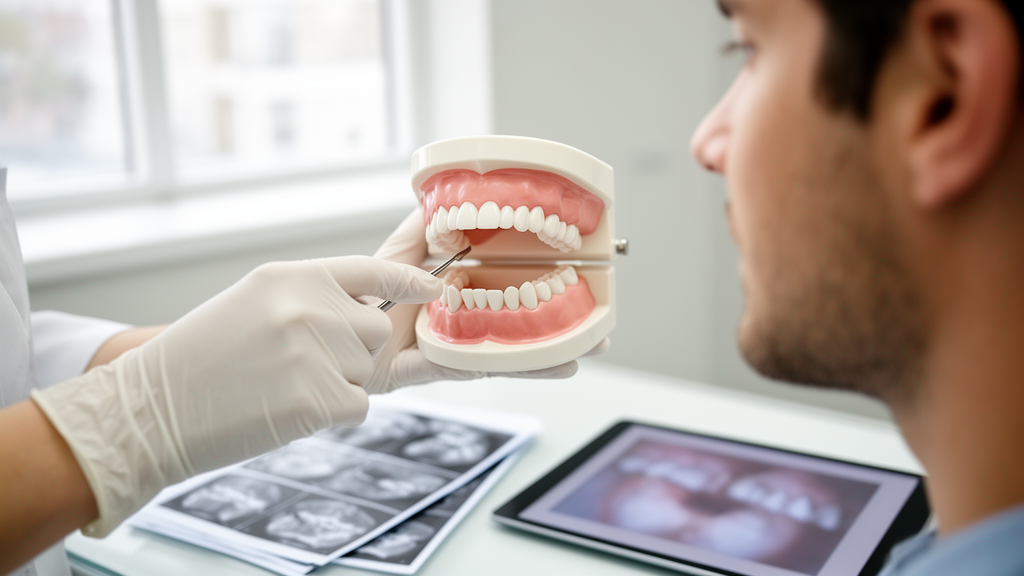
Orthodontists face one of the most consequential choices in their field when they decide whether to remove permanent teeth to make room for straightening the rest. A systematic review published in Frontiers in Oral Health on 30 October 2026 concludes that this decision is not governed by any single measurement or numerical cutoff. Instead, it rests on the combined interpretation of crowding, facial profile, incisor position, skeletal relationships, and occlusal characteristics, with artificial intelligence models so far largely mirroring the same factors rather than revealing new ones.
The review, conducted by Martin Baxmann, Márton Zsoldos, and Krisztina Kárpáti of the Department of Orthodontics and Paediatric Dentistry at the University of Szeged in Hungary, searched PubMed, MEDLINE, Embase, Scopus, Web of Science, and the Cochrane Library from database inception through 1 July 2026. Two reviewers independently screened titles and abstracts, performed full-text assessment, extracted data, and appraised risk of bias, with a third reviewer consulted when consensus failed. From 834 records identified, 678 remained after duplicate removal, 90 proceeded to full-text assessment, and 19 studies published between 2013 and 2026 met all eligibility criteria. Because the studies differed so widely in design, populations, diagnostic variables, measurement methods, and statistical approaches, the authors judged meta-analysis inappropriate and synthesized the findings narratively under the SWiM reporting guideline.
The included studies spanned North America, Europe, Asia, and the Middle East, covering the United States, China, Türkiye, Greece, Belgium, Germany, Italy, India, Iran, and South Korea. Sample sizes ranged from 44 participants in a statistically defined borderline Class I cohort to 1,636 patients in a deep-learning image analysis study. Eight studies developed or validated statistical, machine learning, or AI-based prediction models, seven used retrospective cohort designs comparing extraction and non-extraction groups or different extraction strategies, two were analytical cross-sectional studies of clinician decision-making, and one applied discriminant analysis to borderline cases. Most participants were adolescents or young adults undergoing comprehensive treatment, though several studies included adults or mixed-age cohorts with Class I and Class II malocclusions.
Dental crowding and tooth size–arch length discrepancy, the gap between the space needed to align the teeth and the space available in the arch, emerged as the most consistently evaluated diagnostic factors. Where the direction of association was assessed, greater maxillary or mandibular crowding and greater space deficiency generally favored extraction over non-extraction treatment. In borderline Class I patients, maxillary and mandibular arch length discrepancy together with mandibular incisor protrusion provided the strongest discrimination between treatment groups, while in a larger Class I cohort lower crowding was the strongest discriminator, followed by lower lip position, upper crowding, and overjet. Prediction studies echoed this pattern, with maxillary and mandibular crowding or arch length discrepancy repeatedly ranking among the most influential predictors of extraction selection.
Yet the review found no consistent numerical threshold for recommending extraction. Reported definitions of borderline or clinically relevant crowding ranged from roughly 4 to 10 millimeters of space deficiency, varying across populations and study designs. The authors emphasize that crowding should be viewed as one component of a comprehensive diagnostic assessment rather than an independent indication for removing teeth. The magnitude of the associations could not be directly compared across studies because predictor definitions, statistical approaches, and reported effect measures differed substantially, and several studies reported variable rankings or classification performance rather than individual effect estimates.
Facial profile and soft-tissue characteristics formed the second consistent domain. In clinician-based assessments of borderline cases, facial profile and crowding were repeatedly ranked among the most influential treatment-planning considerations. Lower lip position relative to the E-plane independently contributed to distinguishing extraction from non-extraction treatment in Class I patients, while greater lip protrusion and incisor proclination characterized extraction patients in borderline Class II Division 1 samples. Facial convexity, lip position, and incisor prominence were also weighed alongside crowding in borderline skeletal Class I patients and adult extraction-planning cohorts. These findings were directionally consistent, indicating that greater dental and soft-tissue protrusion tended to favor extraction when interpreted together with available space and desired incisor position, though most studies did not report directly comparable adjusted effect estimates or confidence intervals for individual soft-tissue variables.
Cephalometric and skeletal measures contributed primarily as complementary rather than isolated predictors. Incisor position and inclination, including the U1–NA, U1–SN, L1–NB, and L1–MP measurements, were repeatedly evaluated, with greater incisor protrusion or proclination generally associated with extraction when additional space was needed for retraction. Sagittal skeletal measures, particularly the ANB angle and Wits appraisal, contributed to several multivariable and machine-learning models, whereas vertical measurements showed less consistent associations. Vertical skeletal dimensions did not significantly differ among extraction-pattern and non-extraction groups in one Class I cohort with at least 5 millimeters of crowding, yet vertical facial dimensions contributed to prediction in other multivariable models. No isolated cephalometric measurement proved consistent enough across studies to function as a stand-alone extraction criterion.
Occlusal and other treatment-planning variables showed more context-dependent associations. Greater overjet contributed to extraction versus non-extraction discrimination in Class I patients and to extraction-strategy selection in Class II Division 1 patients, while molar relationship mattered particularly when choosing among alternative premolar-extraction patterns. Overbite, lip incompetence, and sagittal discrepancy contributed more strongly to extraction-pattern selection than to the initial binary decision in an artificial neural-network model. Posterior space and second-molar position may also influence planning in borderline cases: among patients with 5 to 9 millimeters of crowding, second-molar eruption disturbances were less frequent in extraction than non-extraction arches, and pretreatment second-molar angulation, vertical position, and available posterior space were associated with eruption disturbances. Posterior mandibular space measured along the Ramus Anterior Vertical reference line was proposed as an additional planning variable in patients with 4 to 9 millimeters of mandibular crowding, though its clinical decision value remains preliminary.
The eight prediction-model studies largely reinforced the same diagnostic domains identified in conventional clinical evidence. In a multi-institutional random-forest model, maxillary and mandibular crowding were the two highest-ranking predictors; in an ensemble model, maxillary and mandibular arch length discrepancy ranked highest, followed by the Wits appraisal and anterior facial height. Reported binary extraction-classification accuracy ranged from approximately 77 percent in a multimodal model combining intraoral scans and cephalometric features to 94 percent in an artificial neural-network model, while models predicting specific extraction patterns generally performed less consistently than binary classifiers. Crucially, the prediction target in these studies generally reflected clinician-selected or expert-assigned treatment decisions, so reported performance primarily indicates agreement with those reference decisions rather than independent determination of whether extraction was clinically necessary. Most models lacked independent external validation, and several predicted historical clinician decisions or expert-assigned labels.
Methodological quality ranged from moderate to critical risk of bias. Of the eight prediction-model studies, seven were judged at high risk of bias and one at moderate; the two clinician decision-making studies were both rated moderate; among the retrospective cohort studies, two had moderate risk, three serious risk, and one critical risk. Common concerns included retrospective designs, limited external validation, selection bias, potential confounding from non-randomized treatment allocation, and variability in clinician treatment philosophies. The authors conclude that current AI models should be regarded as decision-support tools rather than replacements for clinical judgment, and that whether image-derived or latent features provide genuinely novel determinants of extraction need remains uncertain. They call for prospective, multicenter studies with standardized diagnostic criteria, consistent definitions of crowding severity and tooth size–arch length discrepancy, external validation of AI models across diverse populations, and greater incorporation of patient preferences into extraction decision-making.
Subject of Research: Diagnostic factors influencing orthodontic extraction versus non-extraction treatment decisions in orthodontics
Article Title: Diagnostic factors influencing orthodontic extraction decision-making: a systematic review
Article References: Baxmann, M., Zsoldos, M., & Kárpáti, K. (2026). Diagnostic factors influencing orthodontic extraction decision-making: a systematic review. Frontiers in Oral Health, 7, 1967358. https://doi.org/10.3389/froh.2026.1967358
Image Credits: AI Generated
DOI: 10.3389/froh.2026.1967358
Keywords: orthodontics, tooth extraction, dental crowding, arch length discrepancy, facial profile, incisor position, cephalometrics, artificial intelligence, machine learning, prediction models, systematic review, treatment planning
News Source: Ophelia Keating. (October 30, 2026). No single number decides which teeth come out, systematic review finds. Scienmag.



