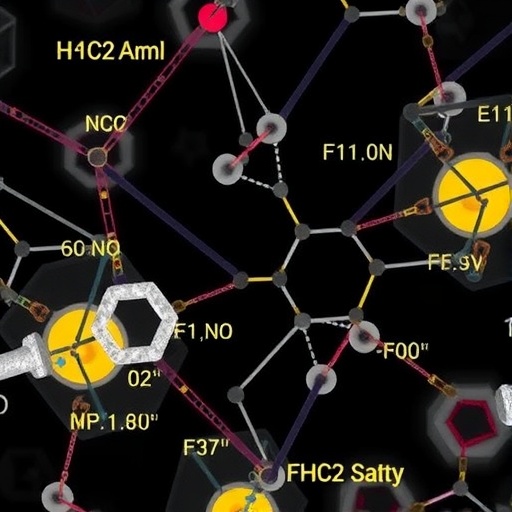
Liquid battery electrolytes have long been described as if they were simple recipes: a salt dissolved in a solvent, perhaps combined with an additive and adjusted to a specific concentration. But inside a working battery, these liquids are far more dynamic and complex than their ingredient lists suggest. Their molecules continually reorganize, exchange partners, form clusters, and respond differently depending on their local surroundings. A new Perspective from researchers at King Abdullah University of Science and Technology (KAUST) argues that understanding these changing liquid states could be essential to building batteries that last longer, operate more safely, and waste less energy. The study presents nuclear magnetic resonance (NMR) as a powerful way to observe the hidden structural and dynamic features that conventional electrolyte descriptions often overlook.
The central message is that an electrolyte should not be treated as a fixed formulation with a single average identity. Instead, it should be understood as an evolving collection of microscopic environments. Within the same liquid, some ions may be tightly paired, others may be surrounded by solvent molecules, and still others may participate in larger salt-rich aggregates. Solvent molecules can form temporary networks through hydrogen bonding, while additives may redistribute unevenly or alter the local coordination of ions. These differences can exist even when two electrolyte samples have the same nominal chemical composition. By mapping how these environments form and change, scientists may be able to explain why apparently similar formulations produce dramatically different battery lifetimes, charging behavior, and interfacial stability.
The issue becomes especially important at the boundary between the electrolyte and the battery electrodes. During the first cycles of operation, chemical reactions at these interfaces create the solid-electrolyte interphase, or SEI, on the anode and the cathode-electrolyte interphase, or CEI, on the cathode. These thin layers can protect electrode materials from continued attack, but their composition and structure strongly influence charge transfer, ion transport, gas generation, parasitic reactions, and long-term cycling. The interphases are not formed by the electrolyte’s ingredient list alone. They are shaped by which molecules and ions occupy the region near the electrode, how quickly they move, and which local chemical populations persist long enough to react. Averages measured across the bulk liquid may therefore conceal the precise environments that control battery performance.
The Perspective, published online on May 26, 2026, in eScience Energy, organizes this challenge around three connected properties: microscopic structure, microscopic motion, and heterogeneity. Structure refers not only to the first solvation shell around an ion, but also to larger patterns of association and organization. Researchers need to know whether cations and anions are separated or paired, whether aggregates are transient or persistent, how solvents coordinate with ions, and whether salt-rich and solvent-rich regions coexist. These features can influence the availability of reactive species and determine which components reach an electrode surface first. They can also affect the pathways through which lithium, sodium, zinc, magnesium, or other charge-carrying ions move through the liquid.
NMR can interrogate these environments by detecting the magnetic behavior of atomic nuclei placed in a strong magnetic field. Different nuclei, including those associated with cations, anions, solvents, additives, and coordinated water, produce signals that change according to their chemical surroundings. Chemical shifts can indicate changes in electronic structure and coordination, while line shapes can reveal whether molecules experience a uniform environment or a distribution of rapidly changing ones. Multinuclear measurements can connect the behavior of several components rather than examining a single species in isolation. Correlation experiments can further show which molecules or ions interact, helping researchers reconstruct the local organization of the electrolyte without relying solely on a simplified structural model.
The second layer, microscopic motion, extends beyond the conventional measurement of diffusion. Diffusion describes how particles move over relatively longer distances, but battery electrolytes also undergo local exchange, molecular rotation, ion hopping, and short-range rearrangement. Two ions may repeatedly associate and separate without traveling far, while a solvent molecule may rapidly change its coordination partner. Exchange spectroscopy, or EXSY, can track the movement of nuclei between distinct chemical environments. Diffusion-ordered spectroscopy, known as DOSY, can distinguish components according to their mobility, and relaxation measurements can reveal how local fluctuations affect nuclear magnetization. Together, these methods can separate different kinds of motion that may otherwise be compressed into one transport number.
The third layer is dynamic heterogeneity, a condition in which one formulation contains multiple populations with different structures or rates of motion. This means that an electrolyte may not behave as a perfectly uniform liquid. Some regions may respond quickly, while others remain comparatively sluggish. Broad or asymmetric NMR peaks, partially resolved resonances, and distributions of relaxation times can signal the presence of these coexisting states. Such heterogeneity may help explain why a formulation can show acceptable average conductivity while still producing unstable interfaces or uneven electrochemical reactions. A measurement that reports only one average value could miss a smaller but highly reactive population that has an outsized effect on battery degradation.
According to the authors, the value of the NMR framework lies in keeping these three forms of information connected. Rather than reducing an electrolyte to one dominant peak, one proposed solvation structure, or one transport coefficient, researchers can ask several linked questions: Which local states are present? How rapidly do they exchange? Which ones remain available near the electrode? And do their populations change during charging, discharging, heating, or aging? This approach could also help clarify why high-concentration electrolytes and localized high-concentration electrolytes behave differently from conventional dilute solutions. In such systems, changes in the balance between solvent molecules, ions, and aggregates can influence both bulk transport and the chemical reactions that create protective interphases.
The implications reach across a wide range of battery technologies, including lithium-ion, sodium-ion, zinc, magnesium, aqueous, organic, and emerging high-energy systems. The researchers point to operando NMR as an important future direction, allowing electrolyte behavior to be followed while a battery is actively operating rather than only before or after cycling. Interface-sensitive techniques, including magic angle spinning NMR and dynamic nuclear polarization-enhanced NMR, may provide additional information about the thin regions where bulk electrolyte chemistry meets electrode surfaces. Combining these measurements with molecular simulations and artificial-intelligence-based analysis could reveal connections between local liquid structure and measurable battery outcomes. In the longer term, the goal is to replace formulation-driven trial and error with a more predictive chemistry of battery liquids—one that identifies not only what an electrolyte contains, but how its microscopic worlds organize, move, and evolve before they determine the fate of a battery.
Subject of Research: Liquid battery electrolytes, their microscopic structure, motion, and dynamic heterogeneity, studied using nuclear magnetic resonance (NMR).
Article Title: “NMR for liquid battery electrolytes: Structure, motion, and heterogeneity”
News Publication Date: May 26, 2026
Web References: eScience Energy: https://www.sciencedirect.com/journal/escience-energy; Article: https://www.sciencedirect.com/science/article/pii/S3050995526000528?via%3Dihub
References: DOI: 10.1016/j.esen.2026.100077
Image Credits: Yunpei Zhu and Husam N. Alshareef
Keywords
Battery electrolytes, nuclear magnetic resonance, NMR, electrolyte heterogeneity, ion transport, solvation structure, battery interfaces, SEI, CEI, lithium batteries, sodium batteries, energy storage, electrochemistry
Tags: additives impact on electrolyte structurecomplex molecular interactions in liquid battery electrolytesElectrolyte dynamics in liquid batterieselectrolyte evolution during battery operationhidden electrolyte states in energy storageimproving battery safety and longevity through electrolyte insightsion pairing and clustering in liquid electrolytesmicroscopic environments in battery electrolytesNMR spectroscopy for battery researchNMR techniques for understanding electrolyte behaviorsolvent network formation in battery liquidsstructural heterogeneity in battery electrolytes