

• HOME
  • NEWS
  • EXPLORE
    • CAREER
      • Companies
      • Jobs
    • EVENTS
    • iGEM
      • News
      • Team
    • PHOTOS
    • VIDEO
    • WIKI
  • BLOG
  • COMMUNITY
    • FACEBOOK
    • INSTAGRAM
    • TWITTER
Monday, April 27, 2026
BIOENGINEER.ORG
No Result
View All Result
  • Login
  • HOME
  • NEWS
  • EXPLORE
    • CAREER
      • Companies
      • Jobs
        • Lecturer
        • PhD Studentship
        • Postdoc
        • Research Assistant
    • EVENTS
    • iGEM
      • News
      • Team
    • PHOTOS
    • VIDEO
    • WIKI
  • BLOG
  • COMMUNITY
    • FACEBOOK
    • INSTAGRAM
    • TWITTER
  • HOME
  • NEWS
  • EXPLORE
    • CAREER
      • Companies
      • Jobs
        • Lecturer
        • PhD Studentship
        • Postdoc
        • Research Assistant
    • EVENTS
    • iGEM
      • News
      • Team
    • PHOTOS
    • VIDEO
    • WIKI
  • BLOG
  • COMMUNITY
    • FACEBOOK
    • INSTAGRAM
    • TWITTER
No Result
View All Result
Bioengineer.org
No Result
View All Result
Home NEWS Science News

Nitrogen fixation in ambient conditions

Bioengineer by Bioengineer
November 12, 2018
in Science News
Reading Time: 2 mins read
0
Share on FacebookShare on TwitterShare on LinkedinShare on RedditShare on Telegram
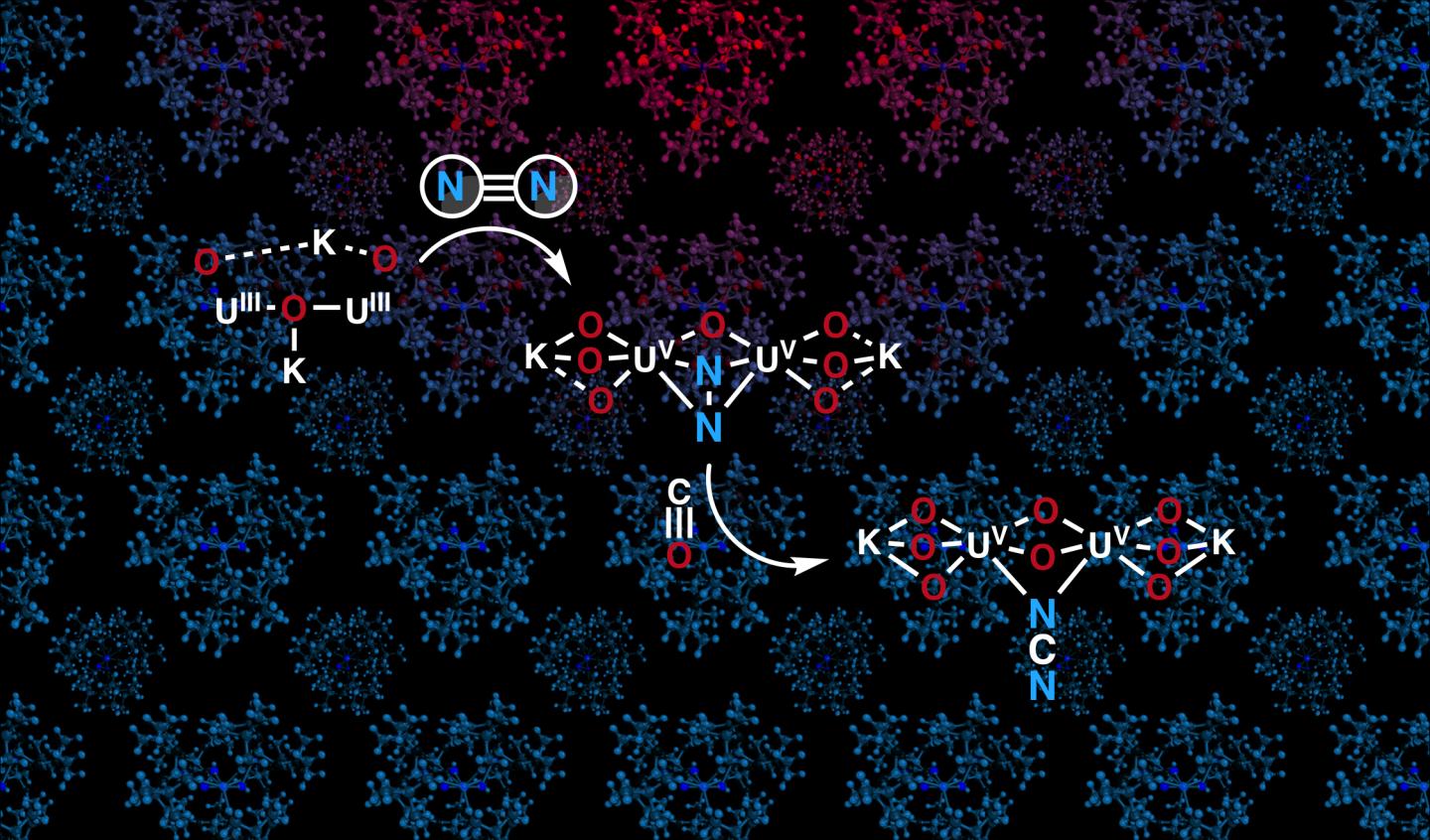
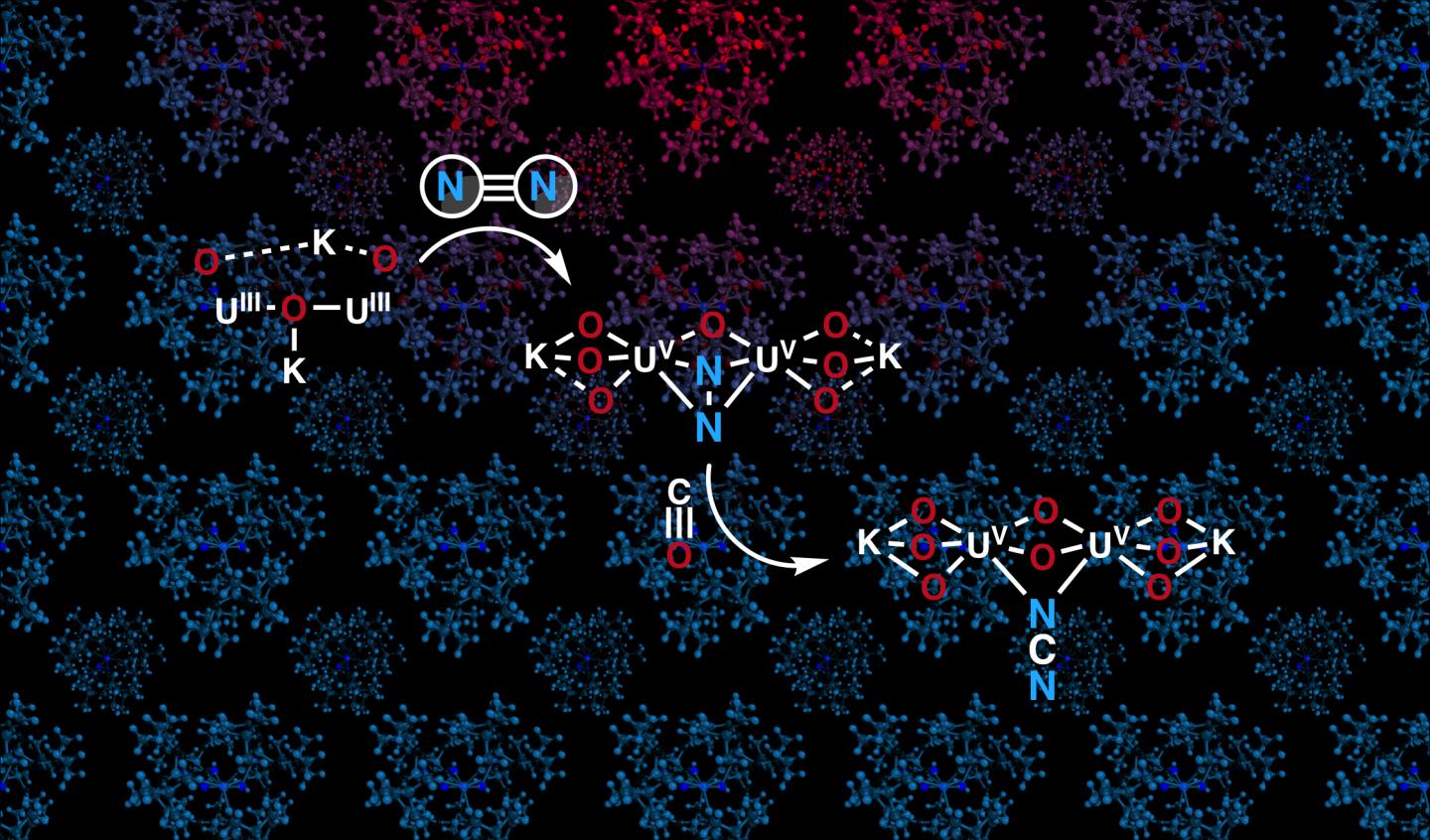
IMAGE

Credit: Marta Falcone/Marinella Mazzanti/EPFL

Abundant in nature (78% of the air we breathe), nitrogen is rarely used in the industrial production of chemicals, with the most important process being the synthesis of ammonia, which is in turn used for the preparation of agricultural fertilizers.

Using nitrogen as a raw material ("feedstock") for industrial usage is accomplished by a reaction known as "nitrogen fixation". In this reaction, molecular nitrogen (or "dinitrogen"; N2) is split into two atoms of nitrogen that can then be connected to other elements like hydrogen or carbon, which allow nitrogen to be stored as ammonia or converted directly in higher value compounds.

But ammonia is not easy to make on an industrial level; the main process, called "Haber-Bosch", uses an iron-based catalyst at temperatures around 450oC and pressures of 300 bar — almost 300 times the pressure at sea level. In order to make the process more cost-effective, chemists have focused on the development of new systems that can transform nitrogen into useful compounds using mild low-energy conditions.

In 2017, the lab of Marinella Mazzanti at EPFL was able to convert molecular nitrogen into ammonia in ambient conditions by synthesizing a compound containing two uranium(III) ions and three potassium centers held together by a nitride group.

Now, the group, in collaboration with other EPFL groups, has shown that by replacing the nitride bridge in the uranium system with an oxo bridge they can still bind dinitrogen. In addition, the bound dinitrogen can be easily cleaved in ambient conditions by carbon monoxide to make cyanamide, a compound that is widely used in agriculture, pharmaceuticals, and various organic compounds.

The reactivity of the oxo-bridged dinitrogen complex was remarkably different compared to the previous nitride complex and the few other nitrogen complexes known in the field. Computational studies then allowed the scientists to relate these differences in reactivity to the bonding in the uranium-oxo/-nitride bridge.

"These findings provide important insight into the relation between structure and reactivity that should extend to nitride and oxide materials," says Marinella Mazzanti. "Moreover, the implementation of these compounds in catalytic systems could ultimately lead to a lower cost access to fertilizers."

###

Reference

Marta Falcone, Luciano Barluzzi, Julie Andrez, Farzaneh Fadaei Tirani, Ivica Zivkovic, Alberto Fabrizio, Clemence Corminboeuf, Kay Severin, Marinella Mazzanti. The role of bridging ligands in dinitrogen reduction and functionalization by uranium multimetallic complexes. Nature Chemistry 12 November 2018. DOI: 10.1038/s41557-018-0167-8

Media Contact

Nik Papageorgiou
[email protected]
41-216-932-105
@EPFL_en

http://www.epfl.ch/index.en.html

Related Journal Article

http://dx.doi.org/10.1038/s41557-018-0167-8

Share12Tweet8Share2ShareShareShare2

Related Posts

New Lung Cancer Model Uncovers How Tumor Location Influences Immune Response — Biology

New Lung Cancer Model Uncovers How Tumor Location Influences Immune Response

April 27, 2026

Exclusive Human Milk Diet Benefits Very Low Birth Weight Infants

April 27, 2026

Spatial Clues Guide Chemo-Immunotherapy in Colorectal Cancer

April 27, 2026

Histone Methylation Drives Stemness, Tumor Growth Axis

April 27, 2026
Please login to join discussion

POPULAR NEWS

  • Research Indicates Potential Connection Between Prenatal Medication Exposure and Elevated Autism Risk

    823 shares
    Share 329 Tweet 206
  • New Study Reveals Plants Can Detect the Sound of Rain

    691 shares
    Share 276 Tweet 173
  • Scientists Investigate Possible Connection Between COVID-19 and Increased Lung Cancer Risk

    66 shares
    Share 26 Tweet 17
  • Salmonella Haem Blocks Macrophages, Boosts Infection

    60 shares
    Share 24 Tweet 15

About

We bring you the latest biotechnology news from best research centers and universities around the world. Check our website.

Follow us

Recent News

New Lung Cancer Model Uncovers How Tumor Location Influences Immune Response

Exclusive Human Milk Diet Benefits Very Low Birth Weight Infants

Spatial Clues Guide Chemo-Immunotherapy in Colorectal Cancer

Subscribe to Blog via Email

Enter your email address to subscribe to this blog and receive notifications of new posts by email.

Join 81 other subscribers
  • Contact Us

Bioengineer.org © Copyright 2023 All Rights Reserved.

Welcome Back!

Login to your account below

Forgotten Password?

Retrieve your password

Please enter your username or email address to reset your password.

Log In
No Result
View All Result
  • Homepages
    • Home Page 1
    • Home Page 2
  • News
  • National
  • Business
  • Health
  • Lifestyle
  • Science

Bioengineer.org © Copyright 2023 All Rights Reserved.