• HOME
  • NEWS
  • EXPLORE
    • CAREER
      • Companies
      • Jobs
    • EVENTS
    • iGEM
      • News
      • Team
    • PHOTOS
    • VIDEO
    • WIKI
  • BLOG
  • COMMUNITY
    • FACEBOOK
    • INSTAGRAM
    • TWITTER
Thursday, March 26, 2026
BIOENGINEER.ORG
No Result
View All Result
  • Login
  • HOME
  • NEWS
  • EXPLORE
    • CAREER
      • Companies
      • Jobs
        • Lecturer
        • PhD Studentship
        • Postdoc
        • Research Assistant
    • EVENTS
    • iGEM
      • News
      • Team
    • PHOTOS
    • VIDEO
    • WIKI
  • BLOG
  • COMMUNITY
    • FACEBOOK
    • INSTAGRAM
    • TWITTER
  • HOME
  • NEWS
  • EXPLORE
    • CAREER
      • Companies
      • Jobs
        • Lecturer
        • PhD Studentship
        • Postdoc
        • Research Assistant
    • EVENTS
    • iGEM
      • News
      • Team
    • PHOTOS
    • VIDEO
    • WIKI
  • BLOG
  • COMMUNITY
    • FACEBOOK
    • INSTAGRAM
    • TWITTER
No Result
View All Result
Bioengineer.org
No Result
View All Result
Home Headlines

NIH explores connection between Ebola survival and co-infection with malaria parasites

Bioengineer.org by Bioengineer.org
January 31, 2018
in Headlines, Health, Science News
Reading Time: 2 mins read
0
Share on FacebookShare on TwitterShare on LinkedinShare on RedditShare on Telegram
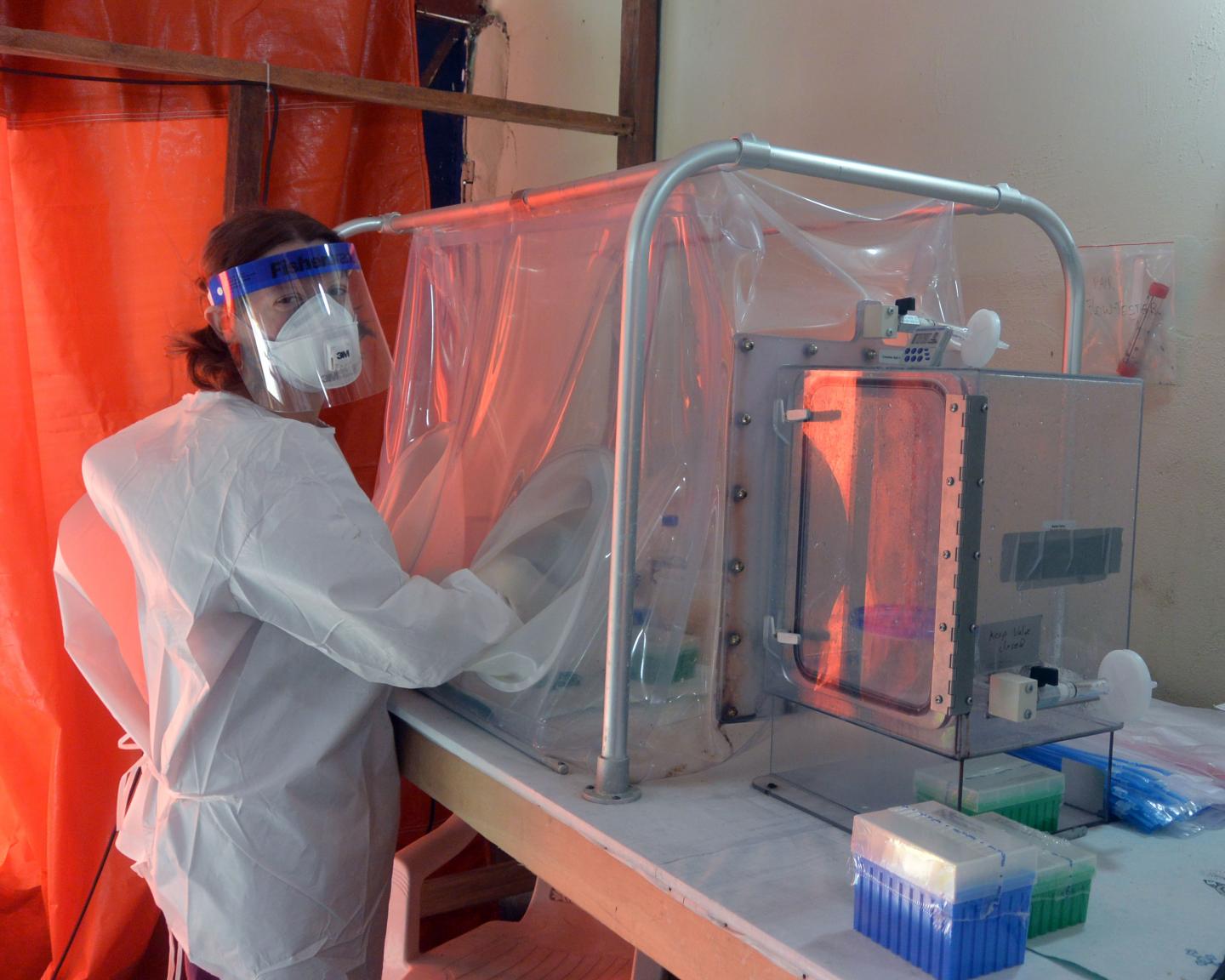
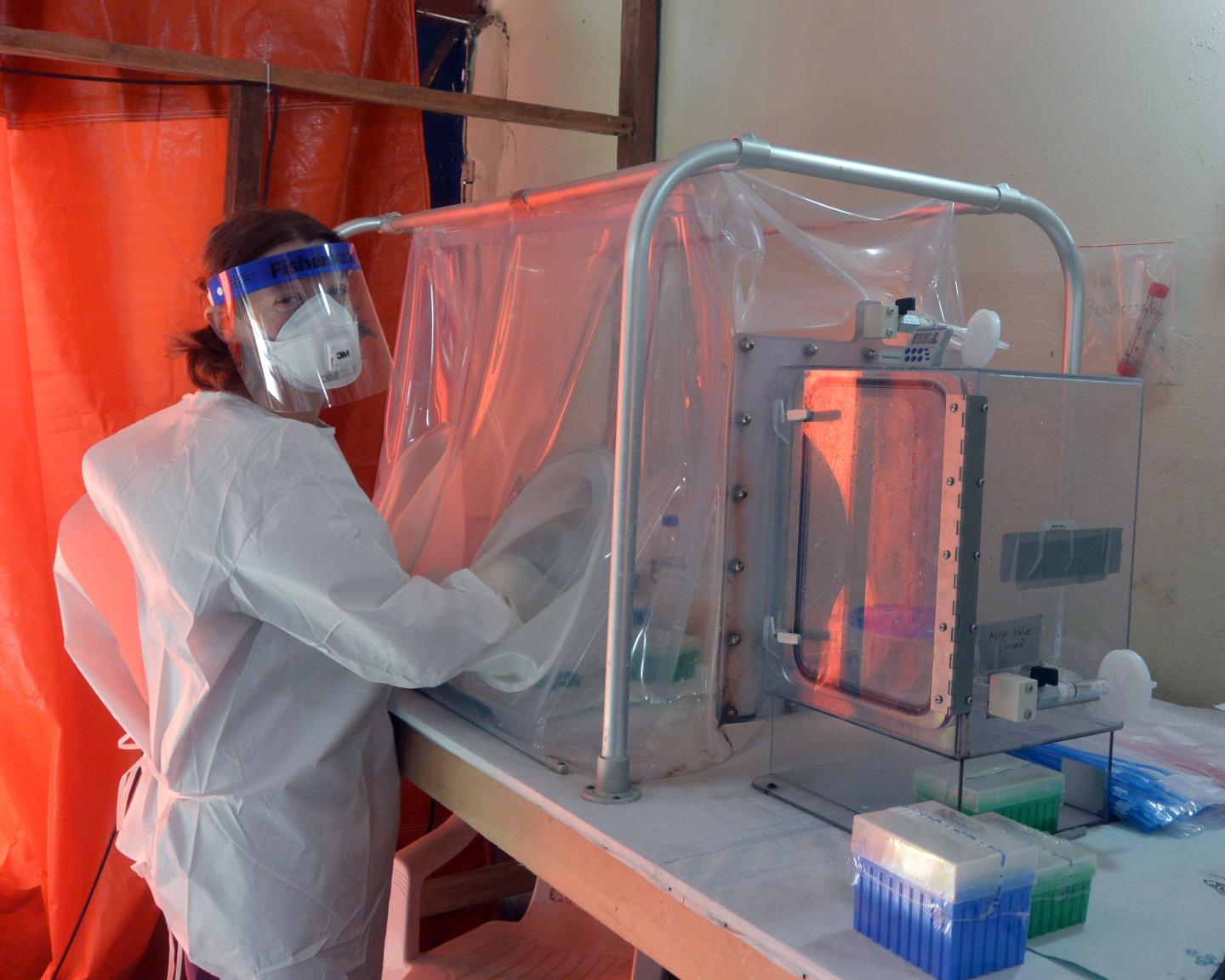
IMAGE

Credit: NIAID

People infected with Ebola virus were 20 percent more likely to survive if they were co-infected with malaria-causing Plasmodium parasites, according to data collected at an Ebola diagnostic laboratory in Liberia in 2014-15. Moreover, greater numbers of Plasmodium parasites correlated with increased rates of Ebola survival, according to a dozen collaborating research groups in the new study, published in Clinical Infectious Diseases. The survival difference was evident even after controlling for Ebola viral load and age. Scientists from the National Institute of Allergy and Infectious Diseases, part of the National Institutes of Health (NIH), led the project.

At a joint diagnostic laboratory established in Liberia by NIH and the Centers for Disease Control and Prevention, the scientists tested 1,868 blood samples. The samples were from people seeking care for possible Ebola virus infection at the ELWA3 Ebola Treatment Unit in Monrovia. Testing confirmed Ebola virus infection in 1,182 samples; 956 of them were tested for Plasmodium parasites, and 185 were positive. Fifty-eight percent with both infections survived, compared to 46 percent who were infected with Ebola virus alone. Of the people with the highest Plasmodium levels, 83 percent survived.

Anti-malaria drugs were routinely administered to all patients seen at the Treatment Unit during the Ebola outbreak and had no bearing on the increased survival in Plasmodium-infected patients in the study, the researchers say. Moreover, in separate experiments conducted in the United States, treatment with antimalarials did not affect survival in laboratory mice infected with Ebola virus.

The research group is working to pinpoint a mechanism that could explain the association between Plasmodium infection and surviving an Ebola infection. If a connection is found, they say it might improve understanding of disease caused by Ebola and open possibilities for developing new treatments.

###

ARTICLE: K Rosenke et al. Plasmodium parasitemia associated with increased survival in Ebola virus-infected patients. Clinical Infectious Diseases DOI: 10.1093/cid/ciw452 (2016).

WHO: Emmie de Wit, Ph.D., and Kyle Rosenke, Ph.D., both of NIAID's Laboratory of Virology, are available to comment on this study.

CONTACT: To schedule interviews, please contact Ken Pekoc, (301) 402-1663, [email protected]

NIAID conducts and supports research–at NIH, throughout the United States, and worldwide–to study the causes of infectious and immune-mediated diseases, and to develop better means of preventing, diagnosing and treating these illnesses. News releases, fact sheets and other NIAID-related materials are available on the NIAID website.

About the National Institutes of Health (NIH): NIH, the nation's medical research agency, includes 27 Institutes and Centers and is a component of the U.S. Department of Health and Human Services. NIH is the primary federal agency conducting and supporting basic, clinical, and translational medical research, and is investigating the causes, treatments, and cures for both common and rare diseases. For more information about NIH and its programs, visit http://www.nih.gov.

NIH…Turning Discovery Into Health®

Media Contact

Ken Pekoc
[email protected]
301-402-1663
@NIAIDNews

http://www.niaid.nih.gov

Share12Tweet8Share2ShareShareShare2

Related Posts

Starburst Winds Drain Supernova Energy Quickly

Starburst Winds Drain Supernova Energy Quickly

March 26, 2026
Decoding the Phosphorus Puzzle: How Microplastics and Hydrochar Transform Nutrient Dynamics in Rice Paddies

Decoding the Phosphorus Puzzle: How Microplastics and Hydrochar Transform Nutrient Dynamics in Rice Paddies

March 26, 2026

Microtubules Found to Actively Ensure Accurate Chromosome Distribution During Cell Division

March 25, 2026

Aversive Learning Hijacks Brain Sugar Sensor

March 25, 2026
Please login to join discussion

POPULAR NEWS

  • blank

    Revolutionary AI Model Enhances Precision in Detecting Food Contamination

    96 shares
    Share 38 Tweet 24
  • Imagine a Social Media Feed That Challenges Your Views Instead of Reinforcing Them

    1003 shares
    Share 397 Tweet 248
  • Uncovering Functions of Cavernous Malformation Proteins in Organoids

    54 shares
    Share 22 Tweet 14
  • Promising Outcomes from First Clinical Trials of Gene Regulation in Epilepsy

    51 shares
    Share 20 Tweet 13

About

We bring you the latest biotechnology news from best research centers and universities around the world. Check our website.

Follow us

Recent News

In-Sensor Cryptography Links Physical Process to Digital Identity

Can Psychosocial Factors Influence Cancer Risk?

Depression Factors in Elderly: Pre vs. Post-COVID Analysis

Subscribe to Blog via Email

Success! An email was just sent to confirm your subscription. Please find the email now and click 'Confirm' to start subscribing.

Join 78 other subscribers
  • Contact Us

Bioengineer.org © Copyright 2023 All Rights Reserved.

Welcome Back!

Login to your account below

Forgotten Password?

Retrieve your password

Please enter your username or email address to reset your password.

Log In
No Result
View All Result
  • Homepages
    • Home Page 1
    • Home Page 2
  • News
  • National
  • Business
  • Health
  • Lifestyle
  • Science

Bioengineer.org © Copyright 2023 All Rights Reserved.