• HOME
  • NEWS
  • EXPLORE
    • CAREER
      • Companies
      • Jobs
    • EVENTS
    • iGEM
      • News
      • Team
    • PHOTOS
    • VIDEO
    • WIKI
  • BLOG
  • COMMUNITY
    • FACEBOOK
    • INSTAGRAM
    • TWITTER
Friday, July 17, 2026
BIOENGINEER.ORG
No Result
View All Result
  • Login
  • HOME
  • NEWS
  • EXPLORE
    • CAREER
      • Companies
      • Jobs
        • Lecturer
        • PhD Studentship
        • Postdoc
        • Research Assistant
    • EVENTS
    • iGEM
      • News
      • Team
    • PHOTOS
    • VIDEO
    • WIKI
  • BLOG
  • COMMUNITY
    • FACEBOOK
    • INSTAGRAM
    • TWITTER
  • HOME
  • NEWS
  • EXPLORE
    • CAREER
      • Companies
      • Jobs
        • Lecturer
        • PhD Studentship
        • Postdoc
        • Research Assistant
    • EVENTS
    • iGEM
      • News
      • Team
    • PHOTOS
    • VIDEO
    • WIKI
  • BLOG
  • COMMUNITY
    • FACEBOOK
    • INSTAGRAM
    • TWITTER
No Result
View All Result
Bioengineer.org
No Result
View All Result
Home NEWS Science News Biology

NIH awards UTHealth’s Vasanthi Jayaraman $2.6 million for brain research

Bioengineer by Bioengineer
October 30, 2017
in Biology
Reading Time: 2 mins read
0
Share on FacebookShare on TwitterShare on LinkedinShare on RedditShare on Telegram
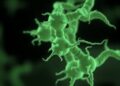
IMAGE

Credit: UTHealth

The National Institutes of Health has presented its Maximizing Investigators' Research Award to Vasanthi Jayaraman, Ph.D., a professor of biochemistry and molecular biology with McGovern Medical School at The University of Texas Health Science Center at Houston (UTHealth). It is a $2.6 million, five-year award.

The award provides long-term support to experienced investigators with outstanding records of research. The idea is to give researchers the opportunity to take greater risks, to be more adventurous in their lines of inquiry or to take the time to develop new techniques.

"We are working to enhance learning and memory, as well as to pave the way for new treatments for Lou Gehrig's disease and other neurodegenerative conditions," Jayaraman said.

Described as one of the final frontiers in science, the process by which brain cells communicate with each other largely remains a mystery.

To learn more about how the brain functions, Jayaraman's laboratory is studying a family of proteins – glutamate receptors – that play a major role in the conversion of chemical signals into electrical signals.

Her team is developing high-resolution images of these proteins, which can potentially be used by pharmaceutical companies to develop drug targets. "We want to learn more about how these proteins work," she said.

"Vasanthi is a leader in the field of structure function investigations of ion channels. She has over 50 publications, appearing in leading journals," said Rodney Kellems, Ph.D., professor and chair of biochemistry and molecular biology at McGovern Medical School at UTHealth.

"Vasanthi is not only a leader in research, as indicated by the NIH Award, she is also an excellent educator and mentor and was recently notified that she is a recipient of a University of Texas System 2017 Regents Outstanding Teacher Award," he said.

Jayaraman is a past recipient of grants from the NIH's National Institute of General Medical Sciences, which supports basic research that increases understanding of biological processes and lays the foundation for advances in disease diagnosis, treatment and prevention. Her research has appeared in Science, Nature Chemical Biology, Proceedings of the National Academy of Sciences and The Journal of Biological Chemistry.

Jayaraman is the co-director of the Biochemistry and Molecular Biology Graduate Program and a 2016 McGovern Scholar. Jayaraman and Kellems are on the faculty of The University of Texas MD Anderson Cancer Center UTHealth Graduate School of Biomedical Sciences.

###

Media Contact

Rob Cahill
[email protected]
713-500-3030

http://www.uthouston.edu

Original Source

https://www.uth.edu/media/story.htm?id=6d617e0f-9444-45f8-b964-4c86252aa9eb

Share12Tweet8Share2ShareShareShare2

Related Posts

Compact genetic switch offers new potential therapies for drug-resistant epilepsy

Compact genetic switch offers new potential therapies for drug-resistant epilepsy

July 17, 2026
Metabolomic Profiling Reveals Subtype-Specific Molecular Programs in Pediatric Ependymoma

Metabolomic Profiling Reveals Subtype-Specific Molecular Programs in Pediatric Ependymoma

July 17, 2026

NIH Grants $10.7 Million to Advance Sensory Biology at OU Medicine

July 17, 2026

New Model Uncovers Hidden Disease Signals and Predicts Health Outcomes

July 16, 2026
Please login to join discussion

POPULAR NEWS

  • Scientists Overcome Antimicrobial Resistance in Bacteria Linked to Cystic Fibrosis

    Scientists Overcome Antimicrobial Resistance in Bacteria Linked to Cystic Fibrosis

    42 shares
    Share 17 Tweet 11
  • Porcine Heart Transplant

    50 shares
    Share 20 Tweet 13
  • 高齢者の骨粗鬆症治療の持続性比較

    51 shares
    Share 20 Tweet 13
  • A multifaceted sensation

    49 shares
    Share 20 Tweet 12

About

We bring you the latest biotechnology news from best research centers and universities around the world. Check our website.

Follow us

Recent News

Association for Molecular Pathology Names 2026 Award Winners

Smart Ring Discretion Challenged by New Findings

Compact genetic switch offers new potential therapies for drug-resistant epilepsy

Subscribe to Blog via Email

Enter your email address to subscribe to this blog and receive notifications of new posts by email.

Join 85 other subscribers
  • Contact Us

Bioengineer.org © Copyright 2023 All Rights Reserved.

Welcome Back!

Login to your account below

Forgotten Password?

Retrieve your password

Please enter your username or email address to reset your password.

Log In
No Result
View All Result
  • Homepages
    • Home Page 1
    • Home Page 2
  • News
  • National
  • Business
  • Health
  • Lifestyle
  • Science

Bioengineer.org © Copyright 2023 All Rights Reserved.