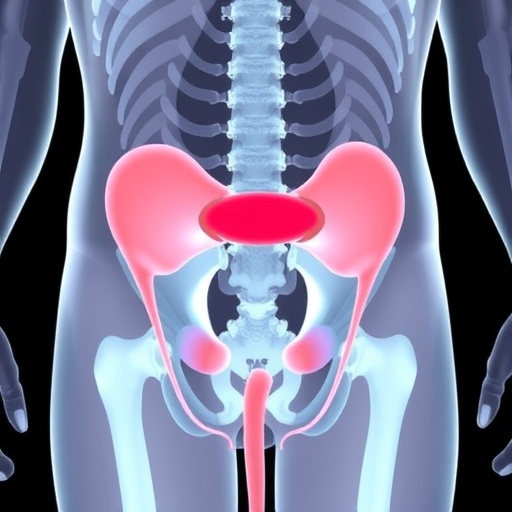
For more than twenty years, pediatric urologic surgeon Eric Kurzrock of UC Davis has focused on a remarkable medical challenge: improving bladder reconstruction for children with complicated urologic conditions. His research seeks to replace existing bladder augmentation procedures, which rely on sections of intestine or stomach, with sophisticated bioengineered grafts. These grafts have the potential to reduce complications and drastically improve outcomes for children suffering from neuropathic bladders, a condition affecting nerve control over bladder function, often seen in spina bifida or spinal cord injury patients.
The neuropathic bladder presents a unique set of problems because it results from impaired communication between the nervous system and the bladder itself. This dysfunction can lead to severe bladder control issues and progressive kidney damage. Current standard surgeries, such as enterocystoplasty, involve using intestinal or gastric tissue to enlarge the bladder but come with significant surgical complexity and risks, including infection and long-term graft contraction. Enter NIH’s $4 million injection of funding to UC Davis, aiming to tackle these obstacles using cutting-edge bioengineering techniques.
At the core of Kurzrock’s vision is the understanding that a viable bladder graft must integrate robust vascular networks to survive and function long-term. Traditional grafts often suffer from insufficient blood supply, leading to contraction and failure. Kurzrock’s innovative approach centers on the development of vascularized grafts—living tissue constructs teeming with functional blood vessels that inosculate, or connect, rapidly with the host’s native vasculature. His pivotal 2022 studies using murine and porcine models proved these blood vessel connections form within days post-transplant, dramatically enhancing graft survival and function.
Collaboration with UC Davis bioengineer Aijun Wang has added a transformative layer to this pioneering work. Wang’s expertise in biomaterial scaffolds—three-dimensional structures designed to support tissue regeneration—has driven the creation of a customized scaffold embedded with a novel ligand molecule, LXW7. This ligand selectively binds to endothelial cells, the architects of new blood vessels, facilitating their attachment, migration, and sustained viability on the scaffold. By fostering endothelial cell interaction with the extracellular matrix, this bioengineered scaffold jumpstarts robust microvascular growth within the graft.
Bladder tissue, by nature, defies simple regeneration. It is a free-floating organ, lacking a surrounding cellular matrix, a feature that historically complicates efforts to engineer it effectively. Bioengineered grafts must therefore recreate not only the structural integrity but also the vascular intricacies vital for tissue viability. Kurzrock’s method involves first decellularizing porcine bladder tissue, removing all native cells while preserving the extracellular protein matrix. This acellular scaffold minimizes immune rejection risks while providing the necessary biochemical framework for host cell infiltration and vascularization.
Following modification with the LXW7 ligand, grafts are surgically implanted onto the patient’s rectus muscle bed. This unique incubation site offers a vascular-rich environment that nurtures graft maturation and vessel formation before transplantation onto the bladder. The rectus muscle bed effectively serves as a biologic bioreactor, priming the graft for enhanced integration and functional performance once transplanted. Remarkably, this space allows for repeated graft incubations over time, expanding therapeutic possibilities.
The implications of this graft maturation technique are clinically profound. Rapid inosculation ensures blood perfusion throughout the graft, preventing the contraction phenomena that plague traditional bladder augmentation methods. This bioengineered, vascularized graft can more faithfully replicate the mechanical compliance and storage functions of native bladder tissue, offering a lifeline for children whose bladder conditions threaten their kidney health and quality of life.
Kurzrock emphasizes that this strategy not only leverages the body’s innate healing capacity but enhances it through sophisticated molecular engineering. Wang highlights how incorporating ligand technology into scaffold design represents a significant leap forward in microvascular tissue engineering. By facilitating endothelial cell adherence and survival, the ligand-modified scaffold helps propagate a dense, functional microvasculature capable of sustaining not only bladder matrix but also adjacent smooth muscle elements critical for bladder contractility.
Before any human clinical trials can commence, rigorous preclinical tests leveraging pig models will evaluate the safety, durability, and efficacy of these vascularized grafts in vivo. Given the anatomical and physiological similarities of porcine bladders to humans, the pig model represents a critical translational step. Success in this phase would signify a transformative advance in pediatric urology, offering a synthetic yet biocompatible organ substitute that could obviate the complications of intestinal grafts once and for all.
In essence, this research embodies a convergence of pediatric urology, regenerative medicine, and biomaterials engineering. The ability to grow fully vascularized bladder grafts in vivo prior to implantation inaugurates a new paradigm in reconstructive surgery. Such advances not only promise to extend life expectancy and reduce surgical morbidity for children with neurogenic bladder anomalies but could establish a model platform for bioengineering other complex hollow organs.
As the field increasingly embraces integrative bioengineering solutions like this, the longstanding barriers in bladder tissue regeneration may soon fall. Enhanced graft survival, reduced immunogenicity, and accelerated vascular integration will mark a turning point for patients needing bladder augmentation, with broad implications in regenerative therapies across medicine.
The UC Davis team’s work epitomizes the potential of combining molecular ligand innovation with advanced scaffold design and regenerative surgery techniques. Their ambitious roadmap underscores how precision bioengineering can address intricate physiological challenges and provide life-transformative therapies. With NIH funding catalyzing this progress, the era of custom-grown, vascularized bladder grafts is on a promising horizon.
Subject of Research: Bioengineered vascularized grafts for pediatric bladder reconstruction
Article Title: Growing Blood Vessels to Revolutionize Pediatric Bladder Reconstruction: A Bioengineering Breakthrough at UC Davis
News Publication Date: Information not provided
Web References:
Eric Kurzrock – UC Davis
National Institutes of Health
Aijun Wang – UC Davis Bioengineering
UC Davis Children’s Hospital
Kurzrock 2022 Study on Vascularized Grafts
Keywords: Pediatric urology, bladder reconstruction, vascularized grafts, bioengineered scaffolds, LXW7 ligand, regenerative medicine, neurogenic bladder, bladder augmentation, tissue engineering, microvascular regeneration, UC Davis
Tags: bioengineered bladder grafts for childrenbladder reconstruction without intestinal tissueenterocystoplasty alternativesnerve-bladder communication disordersneuropathic bladder treatment innovationsNIH pediatric bladder repair grantnovel bladder augmentation technologypediatric urologic surgery advancementsreducing complications in bladder surgeryspina bifida bladder dysfunction therapyUC Davis pediatric urology researchvascularized bladder graft engineering