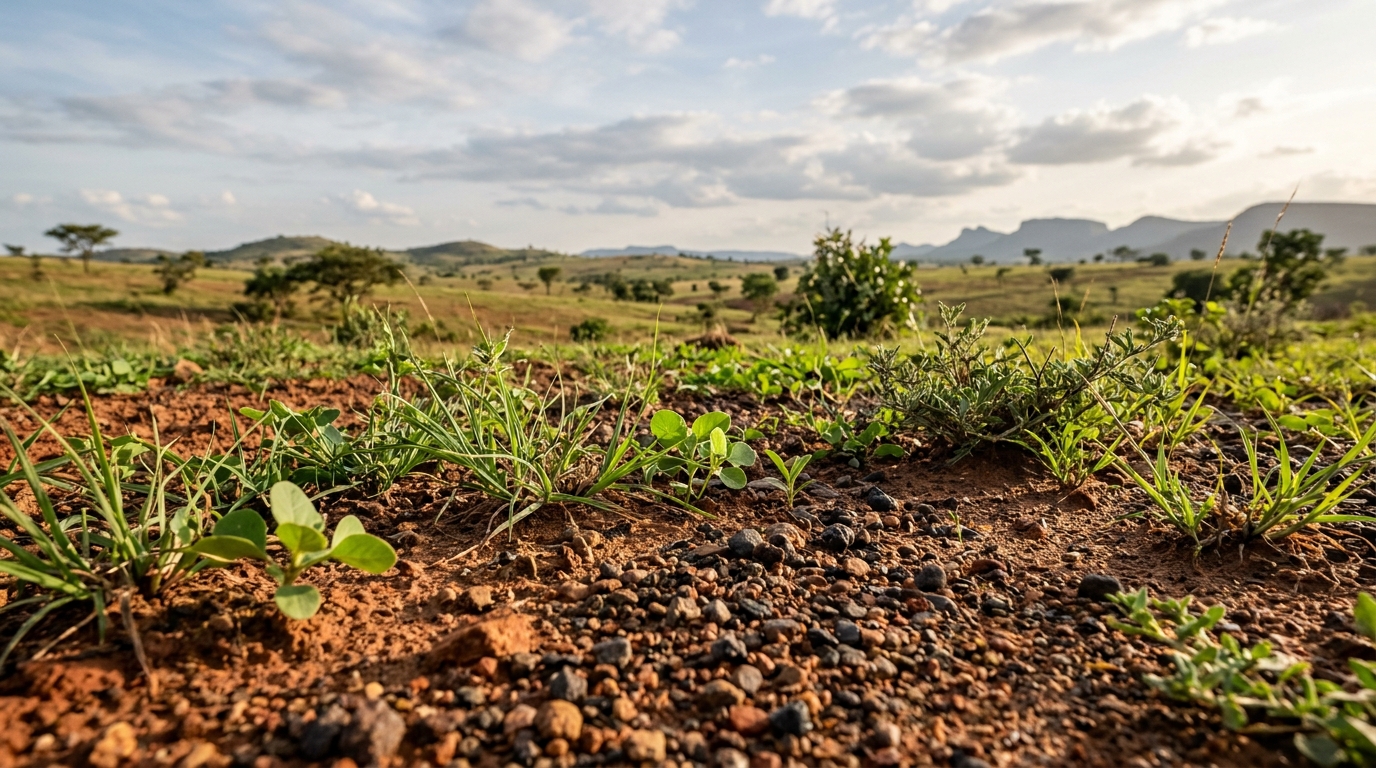
A new study published in Discover Life evaluates the ecological and human health risks associated with heavy metal contamination in soils from tin mining sites on the Jos Plateau in Nigeria. The research team analyzed 90 surface soil samples collected from nine active and abandoned mining locations to determine the concentrations of five specific metals: lead, arsenic, cadmium, tin, and antimony. By utilizing Monte Carlo simulations alongside deterministic models, the study provides a probabilistic assessment of exposure risks for both adult and child populations living near these mining zones. The primary objective was to quantify metal concentrations, evaluate ecological risks using standard indices, and assess potential carcinogenic and non-carcinogenic health implications through integrated risk modeling.
The sampling process involved collecting soil from a depth of 0 to 20 centimeters using a stainless-steel auger at sites selected based on mining intensity and proximity to human settlements. After air-drying and sieving the samples, researchers digested them with concentrated nitric and perchloric acids to extract metal content. The concentrations were then quantified using atomic absorption spectrophotometry, with arsenic and antimony analyzed via hydride generation. This methodological approach ensured accurate measurement of metal levels in milligrams per kilogram of dry weight, allowing for a detailed comparison against established environmental guideline values.
The results indicated that the mean concentrations of the metals followed a descending order of lead, arsenic, cadmium, tin, and antimony. Lead concentrations ranged from 0.15 to 0.28 mg/kg, while arsenic levels varied between 0.08 and 0.13 mg/kg. Although the mean concentrations of arsenic, cadmium, and lead exceeded selected World Health Organization guideline values, the absolute concentrations remained relatively low. Statistical analysis revealed significant spatial variation in arsenic and tin concentrations across the different mining sites, suggesting that local geological and mining activities influence the distribution of these metals in the soil.
To assess the ecological impact, the study calculated several pollution indices, including the geo-accumulation index, contamination factor, pollution load index, and potential ecological risk index. The geo-accumulation index values for all metals were below 0.05, indicating that the soils are practically uncontaminated or only slightly contaminated relative to geochemical background levels. The potential ecological risk index values ranged from 7.31 to 9.37 across the sites, which is well below the threshold of 150 that indicates high risk. Cadmium contributed the most to the ecological risk due to its high toxic response coefficient, but the overall ecological risk was classified as low for all sampled locations.
The human health risk assessment focused on three exposure pathways: ingestion, inhalation, and dermal contact. The average daily dose for ingestion was consistently higher for children than for adults, reflecting their lower body weight and higher soil ingestion rates. Lead exhibited the highest ingestion values, with child exposure ranging from 6.3 × 10⁻⁷ to 1.2 × 10⁻⁶ mg/kg/day. Inhalation and dermal exposure doses were significantly lower than ingestion doses, though inhalation remained a relevant pathway in areas with high dust levels. The study used the United States Environmental Protection Agency models to calculate these doses, ensuring a standardized approach to risk estimation.
Non-carcinogenic health risks were evaluated using the hazard quotient and hazard index. The total hazard index for adults was 7.7 × 10⁻³, while for children it was 2.2 × 10⁻². Both values are far below the threshold of 1.0, which indicates a potential for adverse health effects. Arsenic and antimony were the dominant contributors to the non-carcinogenic risk, primarily through the ingestion pathway. These findings suggest that while there is a cumulative sub-threshold risk, particularly for children, the immediate non-cancer health risks from soil exposure in these areas are negligible.
Carcinogenic risk assessment revealed that arsenic ingestion was the primary driver of lifetime cancer risk for both adults and children. The total lifetime cancer risk for arsenic was 2.01 × 10⁻⁶ for adults and 5.70 × 10⁻⁶ for children. When considering all metals and exposure pathways, the overall total lifetime cancer risk was 2.49 × 10⁻⁶ for adults and 7.17 × 10⁻⁶ for children. These values fall within the acceptable risk range recommended by the USEPA, which is between 10⁻⁶ and 10⁻⁴. However, children exhibited comparatively higher risks, highlighting their increased susceptibility to environmental contaminants.
Monte Carlo simulations were employed to account for uncertainty and variability in exposure parameters, providing a more robust risk estimate than deterministic models alone. The simulations used 10,000 iterations to characterize the distribution of hazard quotients and cancer risks. The median probabilistic cancer risks closely matched the deterministic values, but the upper percentiles showed substantially higher risks for arsenic and cadmium, especially among children. Sensitivity analysis identified ingestion as the dominant exposure pathway for antimony and tin, while for arsenic and cadmium, ingestion, inhalation, and dermal contact contributed comparably to the total risk. This probabilistic approach allows for a better understanding of the range of possible outcomes and the specific factors driving risk.
The study also examined the relationships between different heavy metals using correlation analysis and principal component analysis. Significant positive correlations were found between lead and cadmium, and between lead and tin, suggesting potential similarities in their sources or accumulation mechanisms. The presence of lead ore or lead mining activities in the area may explain the association with tin, as minerals containing lead often coexist with tin ores. Principal component analysis identified three distinct pollution sources: one characterized by tin and lead, another dominated by arsenic, and a third predominantly represented by cadmium. This source identification helps in understanding the different pathways through which these metals enter the soil environment.
Despite the low ecological and health risks indicated by the indices, the study highlights the need for continued monitoring and soil management interventions. The concentrations of arsenic, cadmium, and lead exceeded certain guideline values, which warrants attention for long-term environmental health. The researchers recommend community soil-hygiene education and targeted measures to immobilize arsenic, such as phytoremediation or soil amendments. These interventions could help mitigate the potential risks, particularly for vulnerable populations like children who are more likely to be exposed to contaminated soils through play and other activities.
Limitations of the study include the reliance on total metal concentrations without analyzing soil physicochemical properties such as pH, organic matter, and texture, which influence metal mobility and bioavailability. The absence of sequential extraction or speciation analysis means that the bioavailable fraction of the metals remains uncertain. Additionally, sampling was conducted during a single season, preventing the assessment of temporal variability in metal redistribution. No biomonitoring of plants or human populations was undertaken to validate the environmental exposure estimates. These factors should be considered when interpreting the risk assessments and planning future studies in the region.
The findings of this study contribute to the understanding of heavy metal contamination in mining-impacted soils in West Africa. By integrating ecological and human health risk assessments with Monte Carlo simulations, the research provides a comprehensive framework for evaluating environmental risks in post-mining landscapes. The results suggest that while the immediate risks are low, the legacy of mining activities continues to influence soil quality and potential exposure pathways. Evidence-based risk management and environmental rehabilitation are essential to protect the health of local communities and the ecological integrity of the Jos Plateau region.
Subject of Research: Ecological and human health risk assessment of heavy metals in soil from tin mining sites in Nigeria
Article Title: Monte Carlo and ecological risk assessment of heavy metals in soil from tin mining sites in, Nigeria
Article References: Falae, T. T., Abdulai, P. M., Orosun, M. M., Udom, G. J., & Orisakwe, O. E. (2026). Monte Carlo and ecological risk assessment of heavy metals in soil from tin mining sites in, Nigeria. Discover Life, 56(1), Article 21. https://doi.org/10.1007/s11084-026-09741-9
Image Credits: AI Generated
DOI: 10.1007/s11084-026-09741-9
Keywords: heavy metals, tin mining, soil contamination, Monte Carlo simulation, ecological risk, human health, Nigeria, Jos Plateau, arsenic, lead, cadmium, environmental science
News Source: Drew Townsend. (November 8, 2026). Nigerian Tin Mining Soil Study Finds Low Ecological Risk. Scienmag.