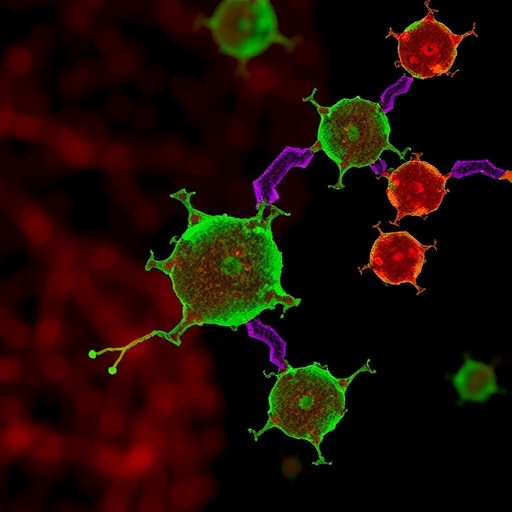
Credit: Courtesy of NIH/NINDS.
NIH-funded researchers delayed signs of amyotrophic lateral sclerosis (ALS) in rodents by injecting them with a second-generation drug designed to silence the gene, superoxide dismutase 1 (SOD1). The results, published in the Journal of Clinical Investigation, suggest the newer version of the drug may be effective at treating an inherited form of the disease caused by mutations in SOD1. Currently, the drug is being tested in an ALS clinical trial (NCT02623699).
ALS destroys motor neurons responsible for activating muscles, causing patients to rapidly lose muscle strength and their ability to speak, swallow, move, and breathe. Most die within 3-5 years of symptom onset. Previous studies suggested that a gene therapy drug, called an antisense oligonucleotide, could be used to treat a form of ALS caused by mutations in the gene SOD1. These drugs turned off SOD1 by latching onto versions the gene encoded in messenger RNA (mRNA), tagging them for disposal and preventing SOD1 protein production.
Using rats and mice genetically modified to carry normal or disease-mutant versions of human SOD1, a team of researchers led by Timothy M. Miller, M.D., Ph.D., Washington University, St. Louis, MO, discovered that newer versions of the drug may be more effective at treating ALS than the earlier one that had been tested in a phase 1 clinical trial. For instance, injections of the newer versions were more efficient at reducing normal, human SOD1 mRNA levels in rats and mice and they helped rats, genetically modified to carry a disease-causing mutation in SOD1, live much longer than previous versions of the drug. Injections of the new drugs also delayed the age at which mice carrying a disease-mutant SOD1 gene had trouble balancing on a rotating rod and appeared to prevent muscle weakness and loss of connections between nerves and muscles, suggesting it could treat the muscle activation problems caused by ALS. These and other results were the basis for a current phase 1 clinical trial testing the next generation drug in ALS patients (NCT02623699).
###
Article:
Campbell et al. Antisense oligonucleotides extend survival and reverse decrement in muscle response in ALS models. The Journal of Clinical Investigation, July 16, 2018 DOI: 10.1172/JCI99081
This study was supported by grants from NINDS (NS078398, NS084970). Ionis Pharmaceuticals and Biogen supplied the antisense oligonucleotides and were full participants in the study.
For more information:
http://www.ninds.nih.gov
http://www.ninds.nih.gov/Disorders/All-Disorders/Amyotrophic-Lateral-Sclerosis-ALS-Information-Page NCT02623699
About NINDS is the nation's leading funder of research on the brain and nervous system. The mission of NINDS is to seek fundamental knowledge about the brain and nervous system and to use that knowledge to reduce the burden of neurological disease.
About the National Institutes of Health (NIH): NIH, the nation's medical research agency, includes 27 Institutes and Centers and is a component of the U.S. Department of Health and Human Services. NIH is the primary federal agency conducting and supporting basic, clinical, and translational medical research, and is investigating the causes, treatments, and cures for both common and rare diseases. For more information about NIH and its programs, visit http://www.nih.gov.
Media Contact
Christopher G. Thomas
[email protected]
301-496-5751
@NINDSnews
http://www.ninds.nih.gov
Original Source
https://www.ninds.nih.gov/News-Events/News-and-Press-Releases/Press-Releases/Next-generation-ALS-drug-silences-inherited-form http://dx.doi.org/10.1172/JCI99081