

• HOME
  • NEWS
  • EXPLORE
    • CAREER
      • Companies
      • Jobs
    • EVENTS
    • iGEM
      • News
      • Team
    • PHOTOS
    • VIDEO
    • WIKI
  • BLOG
  • COMMUNITY
    • FACEBOOK
    • INSTAGRAM
    • TWITTER
Tuesday, September 1, 2026
BIOENGINEER.ORG
No Result
View All Result
  • Login
  • HOME
  • NEWS
  • EXPLORE
    • CAREER
      • Companies
      • Jobs
        • Lecturer
        • PhD Studentship
        • Postdoc
        • Research Assistant
    • EVENTS
    • iGEM
      • News
      • Team
    • PHOTOS
    • VIDEO
    • WIKI
  • BLOG
  • COMMUNITY
    • FACEBOOK
    • INSTAGRAM
    • TWITTER
  • HOME
  • NEWS
  • EXPLORE
    • CAREER
      • Companies
      • Jobs
        • Lecturer
        • PhD Studentship
        • Postdoc
        • Research Assistant
    • EVENTS
    • iGEM
      • News
      • Team
    • PHOTOS
    • VIDEO
    • WIKI
  • BLOG
  • COMMUNITY
    • FACEBOOK
    • INSTAGRAM
    • TWITTER
No Result
View All Result
Bioengineer.org
No Result
View All Result
Home NEWS Science News

Newly discovered microRNA regulates mobility of tumor cells

Bioengineer by Bioengineer
October 27, 2017
in Science News
Reading Time: 3 mins read
0
Share on FacebookShare on TwitterShare on LinkedinShare on RedditShare on Telegram
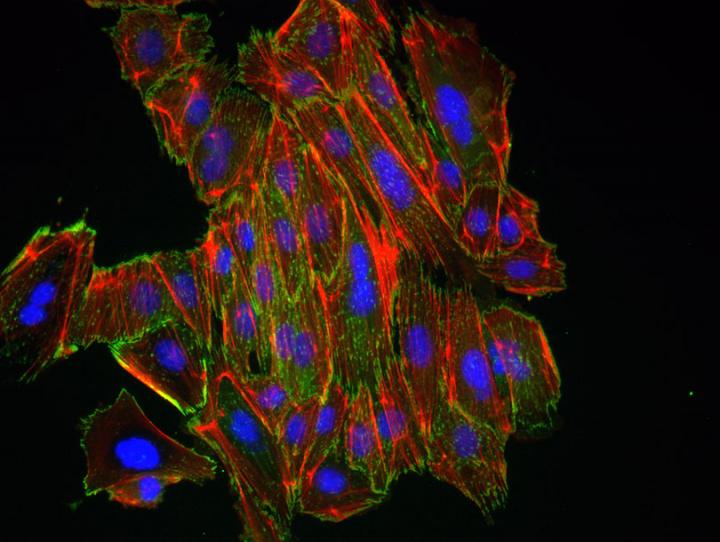
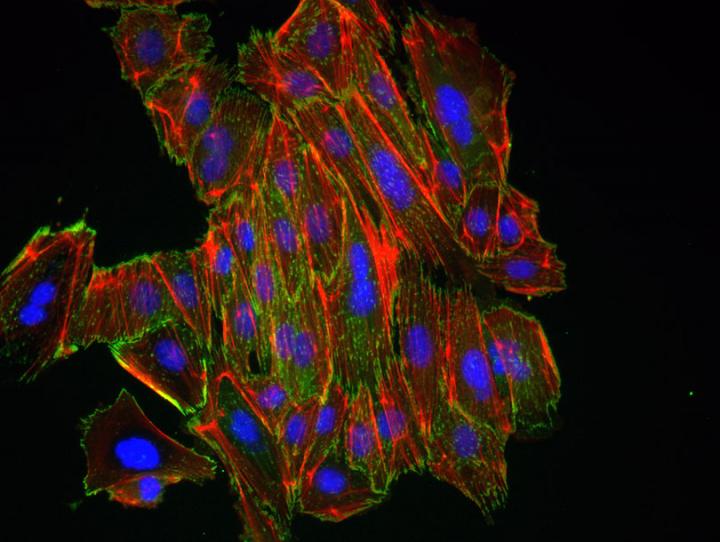
IMAGE

Credit: (Image: University of Basel, Department of Biomedicine)

Cancer cells can reactivate a cellular process that is an essential part of embryonic development. This allows them to leave the primary tumor, penetrate the surrounding tissue and form metastases in peripheral organs. In the journal Nature Communications, researchers from the University of Basel's Department of Biomedicine provide an insight into the molecular networks that regulate this process.

During an embryo's development, epithelial cells can break away from the cell cluster, modify their cell type-specific properties, and migrate into other regions to form the desired structures there. This process, which is known as an epithelial-mesenchymal transition (EMT), is reversible and can also proceed in the direction from mesenchymal cells to epithelial cells (MET). It is repeated multiple times during embryonic development and ultimately paves the way for the formation of organs in the human body.

Tumor cells can reactivate the program

Although this is a completely normal process during embryogenesis, it also plays an important role in the spread of tumor cells within the body and in the formation of metastases. As a result, this cellular program has also attracted greater attention in the field of tumor research in recent years.

Tumor cells are able to reactivate the EMT/MET program. By doing so, they obtain characteristics of stem cells and develop increased resistance to not only classical but also state-of-the-art targeted cancer therapies.

An EMT also makes it easier for cancer cells to break away from the primary tumor, to penetrate into surrounding tissue and into blood vessels, to spread throughout the body and to form metastases in distant organs, which is ultimately responsible for the death of most cancer patients.

The research group, led by Professor Gerhard Christofori from the University of Basel's Department of Biomedicine, researches the molecular processes that regulate the cellular EMT program. By doing so, they aim to demonstrate new intervention strategies to combat the development of malignant tumors and the formation of metastases – such as in the case of breast cancer, one of the most common and malicious diseases in women.

Newly discovered microRNA inhibits EMT

In a study published in the latest edition of Nature Communications, the researchers focused specifically on microRNAs (miRNAs), a class of very short non-coding RNAs with a considerable effect on gene regulation. They identified a hitherto unknown microRNA, miR-1199-5p, that induces epithelial cell behavior and impedes the malignancy of tumor cells, as well as their potential to form secondary tumors.

In concrete terms, the newly discovered microRNA prevents the synthesis of a specific protein, the transcription factor Zeb1, which activates EMT/MET – but if it is missing, the EMT process is prevented. Zeb1 also suppresses the expression of miR1199-5p in what is known as a negative feedback loop, whereby the two molecules regulate one another reciprocally.

More and more often, molecular switches of this kind are being found within processes that cause cells to alter or lose their cell type-specific properties. They appear to be responsible for a rapid, reversible cellular response to extracellular stimuli.

In the future, these insights into the molecular networks for regulating EMT/MET plasticity may allow the development of new strategies for the treatment of breast cancer.

###

Media Contact

Cornelia Niggli
[email protected]
@UniBasel_en

http://www.unibas.ch/

Original Source

https://www.unibas.ch/en/News-Events/News/Uni-Research/Newly-Discovered-microRNA-Regulates-Mobility-of-Tumor-Cells.html http://dx.doi.org/10.1038/s41467-017-01197-w


Share12Tweet8Share2ShareShareShare2

Related Posts

β-Sitosterol from Ipomoea carnea Jacq. As a promising anti-inflammatory agent: Evidence from in silico modeling and in vitro validation

β-Sitosterol from Ipomoea carnea Jacq. As a promising anti-inflammatory agent: Evidence from in silico modeling and in vitro validation

August 31, 2026
Design, fabrication and characterization of a wearable Fiber Bragg grating sensor for cardiorespiratory monitoring using finger plethysmography

Design, fabrication and characterization of a wearable Fiber Bragg grating sensor for cardiorespiratory monitoring using finger plethysmography

August 31, 2026

KAIST opens the era of industrial-scale microbial foods, proposing growth strategies for the next-generation protein market

August 31, 2026

Virologist awarded $2 million NIH grant to investigate how virus-infected cells live and die

August 31, 2026
Please login to join discussion

POPULAR NEWS

  • β-Sitosterol from Ipomoea carnea Jacq. As a promising anti-inflammatory agent: Evidence from in silico modeling and in vitro validation

    29 shares
    Share 12 Tweet 7
  • Design, fabrication and characterization of a wearable Fiber Bragg grating sensor for cardiorespiratory monitoring using finger plethysmography

    29 shares
    Share 12 Tweet 7
  • KAIST opens the era of industrial-scale microbial foods, proposing growth strategies for the next-generation protein market

    29 shares
    Share 12 Tweet 7
  • Virologist awarded $2 million NIH grant to investigate how virus-infected cells live and die

    29 shares
    Share 12 Tweet 7

About

We bring you the latest biotechnology news from best research centers and universities around the world. Check our website.

Follow us

Recent News

β-Sitosterol from Ipomoea carnea Jacq. As a promising anti-inflammatory agent: Evidence from in silico modeling and in vitro validation

Design, fabrication and characterization of a wearable Fiber Bragg grating sensor for cardiorespiratory monitoring using finger plethysmography

KAIST opens the era of industrial-scale microbial foods, proposing growth strategies for the next-generation protein market

Subscribe to Blog via Email

Enter your email address to subscribe to this blog and receive notifications of new posts by email.

Join 85 other subscribers
  • Contact Us

Bioengineer.org © Copyright 2023 All Rights Reserved.

Welcome Back!

Login to your account below

Forgotten Password?

Retrieve your password

Please enter your username or email address to reset your password.

Log In
No Result
View All Result
  • Homepages
    • Home Page 1
    • Home Page 2
  • News
  • National
  • Business
  • Health
  • Lifestyle
  • Science

Bioengineer.org © Copyright 2023 All Rights Reserved.