• HOME
  • NEWS
  • EXPLORE
    • CAREER
      • Companies
      • Jobs
    • EVENTS
    • iGEM
      • News
      • Team
    • PHOTOS
    • VIDEO
    • WIKI
  • BLOG
  • COMMUNITY
    • FACEBOOK
    • INSTAGRAM
    • TWITTER
Sunday, May 10, 2026
BIOENGINEER.ORG
No Result
View All Result
  • Login
  • HOME
  • NEWS
  • EXPLORE
    • CAREER
      • Companies
      • Jobs
        • Lecturer
        • PhD Studentship
        • Postdoc
        • Research Assistant
    • EVENTS
    • iGEM
      • News
      • Team
    • PHOTOS
    • VIDEO
    • WIKI
  • BLOG
  • COMMUNITY
    • FACEBOOK
    • INSTAGRAM
    • TWITTER
  • HOME
  • NEWS
  • EXPLORE
    • CAREER
      • Companies
      • Jobs
        • Lecturer
        • PhD Studentship
        • Postdoc
        • Research Assistant
    • EVENTS
    • iGEM
      • News
      • Team
    • PHOTOS
    • VIDEO
    • WIKI
  • BLOG
  • COMMUNITY
    • FACEBOOK
    • INSTAGRAM
    • TWITTER
No Result
View All Result
Bioengineer.org
No Result
View All Result
Home NEWS Science News Biology

Newly discovered fossil sea urchin is the oldest of its kind

Bioengineer by Bioengineer
February 9, 2018
in Biology
Reading Time: 2 mins read
0
Share on FacebookShare on TwitterShare on LinkedinShare on RedditShare on Telegram
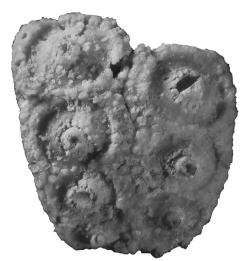
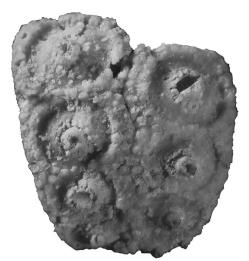
IMAGE

Researchers have uncovered a fossil sea urchin that pushes back a fork in its family tree by 10 million years, according to a new study.

A team from USC found the Eotiaris guadalupensis in the collections of the Smithsonian Institution from the Glass Mountains of west Texas, where it had been buried in a rock formation that dates back to 268.8 million years at its youngest.

"This fossil pushes the evolution of this type of sea urchin from the Wuchiapingian age all the way back to the Roadian age," said David Bottjer, professor at the USC Dornsife College of Letters, Arts and Sciences, and senior author of a paper announcing the find that appeared in Nature Scientific Reports on October 21.

This paper was a collaboration between Bottjer's lab and Eric Davidson's lab at Caltech. Jeffrey Thompson, a Ph.D. student at USC and was the lead author of the study, found the fossils of Eotiaris guadalupensis in the Smithsonian collections.

Eotiaris guadalupensis is a cidaroid, one of the two main types of sea urchins found in today's oceans. The other group, the euechinoids, evolved wildly varying body types and accounts for almost all sea urchins alive today. Cidaroids, by contrast, look pretty much the same as they did millions of years ago. Both evolved from an ancestral group of echinoids known as the Archaeocidaridae, which are now extinct.

The divergence of the two groups marks a major – and relatively abrupt – shift in the genetic organization of sea urchins.

"It's not just the color of a moth's wing changing," said Bottjer, referring to the classic example of the peppered moth in England that, in the post-Industrial Revolution's sooty skies, began to appear in a darker color. "We're looking at tightly intertwined networks of genes that change together to cause major morphological differences."

Pinning down the time at which the two groups diverged allows evolutionary biologists to better understand the processes that occur during major evolutionary changes.

Bottjer and Thompson will also expand on these findings at the Geological Society of America meeting in Baltimore on November 3 and 4, when they will discuss in separate presentations the burgeoning field of paleogenomics – tracking morphological innovations from the fossil record which are produced by know genes in modern organisms, to date when these genes first evolved.

###

This research was funded by the National Science Foundation (Grant IOS1240626).

The paper can be found online here: http://www.nature.com/articles/srep15541

Share13Tweet8Share2ShareShareShare2

Related Posts

Ancient Plant Populations Reveal Fresh Insights into Climate Resilience — Biology

Ancient Plant Populations Reveal Fresh Insights into Climate Resilience

May 8, 2026
Rare Brain Disorders in Children Linked to Mutations in Lesser-Known Protein Complex — Biology

Rare Brain Disorders in Children Linked to Mutations in Lesser-Known Protein Complex

May 8, 2026

From Odd Insect to Underwater Predator: The Remarkable Evolution of a Bloodthirsty Fruit Fly

May 8, 2026

SNU Professor Sangwoo Seo’s Team Develops Next-Generation CRISPR Biocontainment Technology to Control Microbial Survival Without DNA Cleavage

May 8, 2026
Please login to join discussion

POPULAR NEWS

  • Research Indicates Potential Connection Between Prenatal Medication Exposure and Elevated Autism Risk

    840 shares
    Share 336 Tweet 210
  • New Study Reveals Plants Can Detect the Sound of Rain

    727 shares
    Share 290 Tweet 181
  • Scientists Investigate Possible Connection Between COVID-19 and Increased Lung Cancer Risk

    68 shares
    Share 27 Tweet 17
  • Salmonella Haem Blocks Macrophages, Boosts Infection

    61 shares
    Share 24 Tweet 15

About

We bring you the latest biotechnology news from best research centers and universities around the world. Check our website.

Follow us

Recent News

Urdu Fall Risk Questionnaire Adapted for Elderly

Key Pharmacological Markers for HIV Prevention in MSM

Taking 8,500 Steps Daily May Aid Long-Term Weight Management, Study Finds

Subscribe to Blog via Email

Success! An email was just sent to confirm your subscription. Please find the email now and click 'Confirm' to start subscribing.

Join 82 other subscribers
  • Contact Us

Bioengineer.org © Copyright 2023 All Rights Reserved.

Welcome Back!

Login to your account below

Forgotten Password?

Retrieve your password

Please enter your username or email address to reset your password.

Log In
No Result
View All Result
  • Homepages
    • Home Page 1
    • Home Page 2
  • News
  • National
  • Business
  • Health
  • Lifestyle
  • Science

Bioengineer.org © Copyright 2023 All Rights Reserved.