• HOME
  • NEWS
  • EXPLORE
    • CAREER
      • Companies
      • Jobs
    • EVENTS
    • iGEM
      • News
      • Team
    • PHOTOS
    • VIDEO
    • WIKI
  • BLOG
  • COMMUNITY
    • FACEBOOK
    • INSTAGRAM
    • TWITTER
Monday, May 18, 2026
BIOENGINEER.ORG
No Result
View All Result
  • Login
  • HOME
  • NEWS
  • EXPLORE
    • CAREER
      • Companies
      • Jobs
        • Lecturer
        • PhD Studentship
        • Postdoc
        • Research Assistant
    • EVENTS
    • iGEM
      • News
      • Team
    • PHOTOS
    • VIDEO
    • WIKI
  • BLOG
  • COMMUNITY
    • FACEBOOK
    • INSTAGRAM
    • TWITTER
  • HOME
  • NEWS
  • EXPLORE
    • CAREER
      • Companies
      • Jobs
        • Lecturer
        • PhD Studentship
        • Postdoc
        • Research Assistant
    • EVENTS
    • iGEM
      • News
      • Team
    • PHOTOS
    • VIDEO
    • WIKI
  • BLOG
  • COMMUNITY
    • FACEBOOK
    • INSTAGRAM
    • TWITTER
No Result
View All Result
Bioengineer.org
No Result
View All Result
Home NEWS Science News Biology

Newly discovered crossbill species numbers few

Bioengineer by Bioengineer
August 1, 2018
in Biology
Reading Time: 2 mins read
0
Share on FacebookShare on TwitterShare on LinkedinShare on RedditShare on Telegram
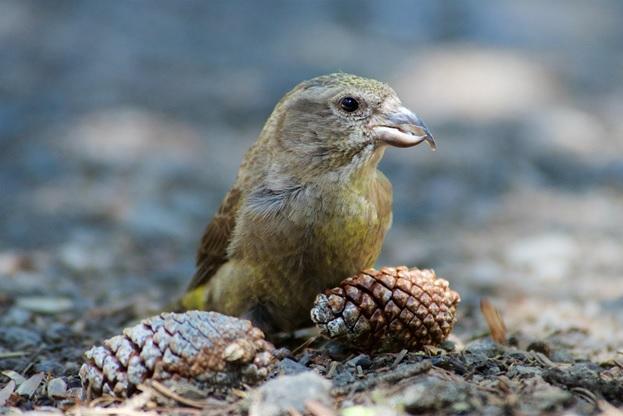
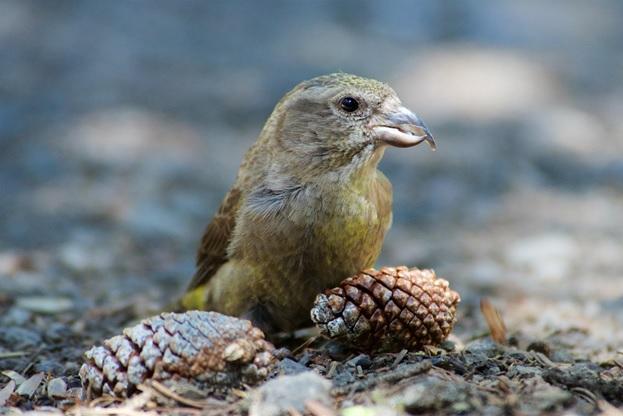
IMAGE

Credit: C.W. Benkman

As might be expected for a recently discovered bird species in the continental United States – only the second in nearly 80 years – the Cassia Crossbill (Loxia sinesciuris) is range-restricted. It occurs in just two small mountain ranges on the northeast edge of the Great Basin Desert where it is engaged in a coevolutionary arms race with lodgepole pine. Based on a current paper in The Condor: Ornithological Applications, Cassia Crossbills occupy about 70 km2 of lodgepole pine forest and number only ~5,800 birds.

Not only are there relatively few of these crossbills, but earlier work showed that their population is vulnerable to hot summer days (>32?C or 90?F). Hot days can cause seeds in the fire-adapted lodgepole pine cones – the sole food of Cassia Crossbills – to be shed to the ground and effectively lost to the crossbills. After three summers with four or more hot summer days, Cassia Crossbills declined by over 80% between 2003 and 2011. Fortunately, hot summer days have been few in the last 10 years, allowing the crossbill population to rebound. However, the impact of these hot summer days may help explain why the recent study shows that Cassia Crossbills occur more commonly in larger mature stands of lodgepole pine present on the cooler north-facing slopes where cones are less exposed to such extreme temperatures and large numbers of seeds can accumulate in the cones.

Unfortunately, the outlook for the continued accumulation of seeds in closed cones in the canopy is bleak. More hot summer days are projected, along with increasing fire frequency, preventing pine from reaching the ages most productive for the Cassia Crossbill. "Maintaining mature lodgepole pine with lots of old, closed cones that the crossbills rely upon will be a challenge," Craig Benkman, a co-author of the study, concedes. "However, a concerted effort is likely worthwhile, as these forests provide more than just great habitat for Cassia Crossbills."

###

"Habitat associations and abundance of a range-restricted specialist, the Cassia Crossbill (Loxia sinesciuris)" is available at http://www.bioone.org/doi/full/10.1650/CONDOR-17-257.1.

About the journal: The Condor: Ornithological Applications is a peer-reviewed, international journal of ornithology. It began in 1899 as the journal of the Cooper Ornithological Club, a group of ornithologists in California that became the Cooper Ornithological Society, which merged with the American Ornithologists' Union in 2016 to become the American Ornithological Society. In 2016, The Condor had the number one impact factor among 24 ornithology journals.

Media Contact

Craig W. Benkman
[email protected]

http://americanornithologypubs.org/

Related Journal Article

http://dx.doi.org/10.1650/CONDOR-17-257.1

Share12Tweet8Share2ShareShareShare2

Related Posts

Uncovering C. elegans Immunity via Genetic Screens — Biology

Uncovering C. elegans Immunity via Genetic Screens

May 16, 2026
Single mother must adapt swiftly — the survival of her colony depends on it — Biology

Single mother must adapt swiftly — the survival of her colony depends on it

May 15, 2026

Why Are Nearly Everyone Right-Handed? It Might Be Linked to How We Learned to Walk

May 15, 2026

Excessive Neuronal Activity Initiates Severe Autoimmune Brain Disorder

May 15, 2026
Please login to join discussion

POPULAR NEWS

  • Research Indicates Potential Connection Between Prenatal Medication Exposure and Elevated Autism Risk

    844 shares
    Share 338 Tweet 211
  • New Study Reveals Plants Can Detect the Sound of Rain

    731 shares
    Share 292 Tweet 182
  • Salmonella Haem Blocks Macrophages, Boosts Infection

    62 shares
    Share 25 Tweet 16
  • Breastmilk Balances E. coli and Beneficial Bacteria in Infant Gut Microbiomes

    58 shares
    Share 23 Tweet 15

About

We bring you the latest biotechnology news from best research centers and universities around the world. Check our website.

Follow us

Recent News

AI Enhances Quality Control of Schistosomiasis Tests

New Survey Finds Just One-Third of Teens Have Private Healthcare Consultations, According to Parents

Micronutrients Linked to Mood and Psychotic Disorders

Subscribe to Blog via Email

Enter your email address to subscribe to this blog and receive notifications of new posts by email.

Join 82 other subscribers
  • Contact Us

Bioengineer.org © Copyright 2023 All Rights Reserved.

Welcome Back!

Login to your account below

Forgotten Password?

Retrieve your password

Please enter your username or email address to reset your password.

Log In
No Result
View All Result
  • Homepages
    • Home Page 1
    • Home Page 2
  • News
  • National
  • Business
  • Health
  • Lifestyle
  • Science

Bioengineer.org © Copyright 2023 All Rights Reserved.