• HOME
  • NEWS
  • EXPLORE
    • CAREER
      • Companies
      • Jobs
    • EVENTS
    • iGEM
      • News
      • Team
    • PHOTOS
    • VIDEO
    • WIKI
  • BLOG
  • COMMUNITY
    • FACEBOOK
    • INSTAGRAM
    • TWITTER
Sunday, August 30, 2026
BIOENGINEER.ORG
No Result
View All Result
  • Login
  • HOME
  • NEWS
  • EXPLORE
    • CAREER
      • Companies
      • Jobs
        • Lecturer
        • PhD Studentship
        • Postdoc
        • Research Assistant
    • EVENTS
    • iGEM
      • News
      • Team
    • PHOTOS
    • VIDEO
    • WIKI
  • BLOG
  • COMMUNITY
    • FACEBOOK
    • INSTAGRAM
    • TWITTER
  • HOME
  • NEWS
  • EXPLORE
    • CAREER
      • Companies
      • Jobs
        • Lecturer
        • PhD Studentship
        • Postdoc
        • Research Assistant
    • EVENTS
    • iGEM
      • News
      • Team
    • PHOTOS
    • VIDEO
    • WIKI
  • BLOG
  • COMMUNITY
    • FACEBOOK
    • INSTAGRAM
    • TWITTER
No Result
View All Result
Bioengineer.org
No Result
View All Result
Home NEWS Science News Biology

New winter squash decline research paves the way for understanding the disease

Bioengineer by Bioengineer
June 30, 2020
in Biology
Reading Time: 2 mins read
0
IMAGE
Share on FacebookShare on TwitterShare on LinkedinShare on RedditShare on Telegram

IMAGE

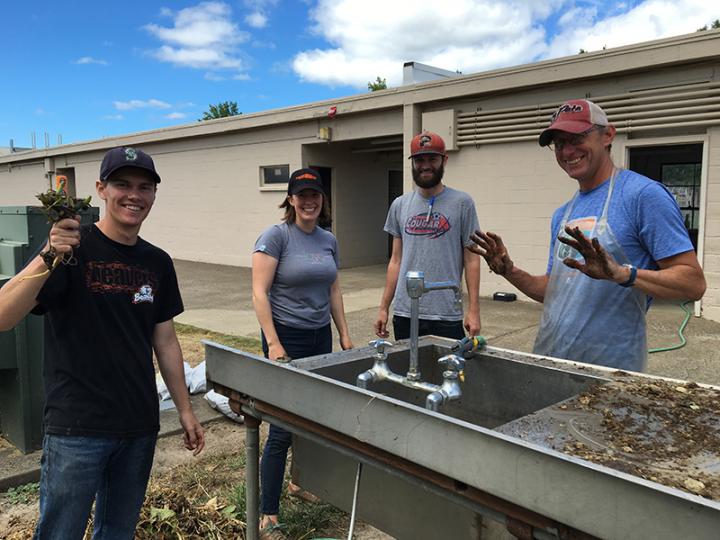
Credit: Hannah Rivedal

Winter squash is an important crop grown in the Willamette Valley, and the most important processing cultivar, Golden Delicious, has been grown in Oregon since the 1970s. Over the last two decades, however, growers have noticed yield declines throughout the valley. Agriculture specialists have identified an association between yield decline and disease symptoms such as stunting, vascular discoloration, late-season vine collapse, and root and crown rot, all symptoms of soilborne disease.

As causal agents for this problem had not been characterized, pathologists conducted two surveys. One to identify fungi associated with symptomatic squash tissue to establish the population present in diseased squash. The second identified fungi associated with squash randomly selected from 49 fields to establish the general fungal population associated with squash. The fungi collected from each field was compared to identify factors associated with the presence or absence of disease symptoms.

“The results of our analyses show that certain fungi are able to colonize particular tissues better than others and a history of squash production was often indicative of greater disease severity,” explained Hannah Rivedal, the paper’s first author. “Ultimately we identified a shortlist of five potential causal agents that will be studied further, to determine if they can reproduce the symptoms associated with winter squash yield decline.”

This research has instructed growers to stop overwatering early in the growing season, which is when primary infections can occur, and has also highlighted the need for rotation out of winter squash for at least 3 to 4 years.

Rivedal and her colleagues’ work is unique due to its usage of statistical analyses from community ecology. This method could be helpful to other plant pathologists diagnosing similar disease problems without a clear causal agent.

“These analyses can identify likely causal agents out of a relatively large pool of potential pathogens, which is helpful as disease systems change with climate and are caused by less conspicuous disease agents.”

As for Rivedal and her lab, in future studies they will report the pathogenic ability of these fungi, how that ability is enhanced or diminished in different combinations, and which winter squash and other cucurbits are most susceptible to the disease.

###

Learn more in “Characterization of the Fungal Community Associated with Root, Crown, and Vascular Symptoms in an Undiagnosed Yield Decline of Winter Squash,” published in the May issue of Phytobiomes Journal.

Media Contact
Ashley Bergman Carlin
[email protected]

Related Journal Article

http://dx.doi.org/10.1094/PBIOMES-11-18-0056-R

Tags: Agricultural Production/EconomicsAgricultureEcology/EnvironmentFood/Food SciencePlant Sciences
Share12Tweet8Share2ShareShareShare2

Related Posts

Magnesium Emerges as Key Regulator of Mitochondria, Metabolism, and Aging

Magnesium Emerges as Key Regulator of Mitochondria, Metabolism, and Aging

August 30, 2026
GNG10 Drives Colorectal Cancer Through Non-Canonical Wnt Signaling

GNG10 Drives Colorectal Cancer Through Non-Canonical Wnt Signaling

August 30, 2026

Novel TCF4 Splicing Variant Linked to Pitt-Hopkins Syndrome

August 30, 2026

Metanephrine-Secreting Dog Adrenal Cancer Mimicked Pheochromocytoma, Case Shows

August 30, 2026
Please login to join discussion

POPULAR NEWS

  • New technique maps dielectric stability of paper substrates at high frequencies

    29 shares
    Share 12 Tweet 7
  • Toxic elements leach from drinking cups depending on material and beverage type

    29 shares
    Share 12 Tweet 7
  • Notoginseng polysaccharide nanoparticles reprogram microglia metabolism to ease Alzheimer’s disease

    29 shares
    Share 12 Tweet 7
  • Magnesium Emerges as Key Regulator of Mitochondria, Metabolism, and Aging

    29 shares
    Share 12 Tweet 7

About

We bring you the latest biotechnology news from best research centers and universities around the world. Check our website.

Follow us

Recent News

New technique maps dielectric stability of paper substrates at high frequencies

Toxic elements leach from drinking cups depending on material and beverage type

Notoginseng polysaccharide nanoparticles reprogram microglia metabolism to ease Alzheimer’s disease

Subscribe to Blog via Email

Enter your email address to subscribe to this blog and receive notifications of new posts by email.

Join 85 other subscribers
  • Contact Us

Bioengineer.org © Copyright 2023 All Rights Reserved.

Welcome Back!

Login to your account below

Forgotten Password?

Retrieve your password

Please enter your username or email address to reset your password.

Log In
No Result
View All Result
  • Homepages
    • Home Page 1
    • Home Page 2
  • News
  • National
  • Business
  • Health
  • Lifestyle
  • Science

Bioengineer.org © Copyright 2023 All Rights Reserved.