• HOME
  • NEWS
  • EXPLORE
    • CAREER
      • Companies
      • Jobs
    • EVENTS
    • iGEM
      • News
      • Team
    • PHOTOS
    • VIDEO
    • WIKI
  • BLOG
  • COMMUNITY
    • FACEBOOK
    • INSTAGRAM
    • TWITTER
Monday, August 31, 2026
BIOENGINEER.ORG
No Result
View All Result
  • Login
  • HOME
  • NEWS
  • EXPLORE
    • CAREER
      • Companies
      • Jobs
        • Lecturer
        • PhD Studentship
        • Postdoc
        • Research Assistant
    • EVENTS
    • iGEM
      • News
      • Team
    • PHOTOS
    • VIDEO
    • WIKI
  • BLOG
  • COMMUNITY
    • FACEBOOK
    • INSTAGRAM
    • TWITTER
  • HOME
  • NEWS
  • EXPLORE
    • CAREER
      • Companies
      • Jobs
        • Lecturer
        • PhD Studentship
        • Postdoc
        • Research Assistant
    • EVENTS
    • iGEM
      • News
      • Team
    • PHOTOS
    • VIDEO
    • WIKI
  • BLOG
  • COMMUNITY
    • FACEBOOK
    • INSTAGRAM
    • TWITTER
No Result
View All Result
Bioengineer.org
No Result
View All Result
Home NEWS Science News Biology

New way to prevent genetically engineered and unaltered organisms from producing offspring

Bioengineer by Bioengineer
October 12, 2017
in Biology
Reading Time: 2 mins read
0
Share on FacebookShare on TwitterShare on LinkedinShare on RedditShare on Telegram

A major obstacle to applying genetic engineering to benefit humans and the environment is the risk that organisms whose genes have been altered might produce offspring with their natural counterparts, releasing the novel genes into the wild. Now, researchers from the University of Minnesota's BioTechnology Institute have developed a promising way to prevent such interbreeding. The approach, called "synthetic incompatibility," effectively makes engineered organisms a separate species unable to produce viable offspring with their wild or domesticated relatives.

Synthetic incompatibility has applications in controlling or eradicating invasive species, crop pests and disease-carrying insects as well as preventing altered genes from escaping from genetically modified crops into other plant populations. The results were published online today in the journal Nature Communications.

The technology uses a new class of molecular tools called "programmable transcription factors" that make it possible to control which genes are turned on and which genes are turned off in an organism. If an engineered organism mates with a wild counterpart, the transcription factors render the offspring unable to survive by activating genes that cause their cells to die.

"This approach is particularly valuable because we do not introduce any toxic genes," said Maciej Maselko, a postdoctoral scholar from Smanski's lab who performed the work. "The genetic incompatibility results from genes already in the organism being turned on at the wrong place or time."

The research was done in brewer's yeast, but it can potentially be applied in insects, aquatic organisms and plants using a new gene editing technique known as CRISPR-Cas9. "Other methods to control gene flow, for example disrupting pollen or using a chemical to control reproduction in crops, are very species-specific and change how the crops are propagated. Our approach is expected work in virtually any sexually reproducing organism without changing how they are normally grown," said Michael Smanski, an assistant professor who led the study.

Synthetic incompatibility may make it possible to use crops to produce medications as well as food, feed and fuel. It also raises hope for using genetic engineering to control populations of invasive species or pests such as Asian carp in North America and disease-carrying mosquitoes throughout the world.

The next step, Smanski said, is to demonstrate the approach can work in organisms other than yeast "We're working on moving into model fish, insects, nematodes and plants," he said.

The University of Minnesota College of Biological Sciences seeks to improve human welfare and global conditions by advancing knowledge of the mechanisms of life and preparing students to create the biology of tomorrow.

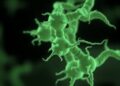
Video Caption: Live-cell imaging videos showing the results of mating experiments in yeast. Offspring from wild-type yeast (left) grow and divide to form a micro-colony. Hybrid offspring between wild-type and a 'synthetic incompatibility' strain (right) are not viable.

###

Media Contact

Stephanie Xenos
[email protected]
612-624-8723
@UMNews

http://www.umn.edu
Share12Tweet8Share2ShareShareShare2

Related Posts

Methylation puts parasites in motion

Methylation puts parasites in motion

August 31, 2026
Desiccation promotes DNA damage and rifampin resistance in Mycobacterium tuberculosis

Desiccation promotes DNA damage and rifampin resistance in Mycobacterium tuberculosis

August 31, 2026

Gastrointestinal Parasitism in Cattle and Water Buffaloes in Pakistan: Prevalence and Associated Risk Factors

August 31, 2026

Development of HPLC–PDA method for steviol glycosides analysis in food matrices

August 31, 2026
Please login to join discussion

POPULAR NEWS

  • β-Sitosterol from Ipomoea carnea Jacq. As a promising anti-inflammatory agent: Evidence from in silico modeling and in vitro validation

    29 shares
    Share 12 Tweet 7
  • Design, fabrication and characterization of a wearable Fiber Bragg grating sensor for cardiorespiratory monitoring using finger plethysmography

    29 shares
    Share 12 Tweet 7
  • KAIST opens the era of industrial-scale microbial foods, proposing growth strategies for the next-generation protein market

    29 shares
    Share 12 Tweet 7
  • Virologist awarded $2 million NIH grant to investigate how virus-infected cells live and die

    29 shares
    Share 12 Tweet 7

About

We bring you the latest biotechnology news from best research centers and universities around the world. Check our website.

Follow us

Recent News

β-Sitosterol from Ipomoea carnea Jacq. As a promising anti-inflammatory agent: Evidence from in silico modeling and in vitro validation

Design, fabrication and characterization of a wearable Fiber Bragg grating sensor for cardiorespiratory monitoring using finger plethysmography

KAIST opens the era of industrial-scale microbial foods, proposing growth strategies for the next-generation protein market

Subscribe to Blog via Email

Enter your email address to subscribe to this blog and receive notifications of new posts by email.

Join 85 other subscribers
  • Contact Us

Bioengineer.org © Copyright 2023 All Rights Reserved.

Welcome Back!

Login to your account below

Forgotten Password?

Retrieve your password

Please enter your username or email address to reset your password.

Log In
No Result
View All Result
  • Homepages
    • Home Page 1
    • Home Page 2
  • News
  • National
  • Business
  • Health
  • Lifestyle
  • Science

Bioengineer.org © Copyright 2023 All Rights Reserved.