• HOME
  • NEWS
  • EXPLORE
    • CAREER
      • Companies
      • Jobs
    • EVENTS
    • iGEM
      • News
      • Team
    • PHOTOS
    • VIDEO
    • WIKI
  • BLOG
  • COMMUNITY
    • FACEBOOK
    • INSTAGRAM
    • TWITTER
Saturday, September 5, 2026
BIOENGINEER.ORG
No Result
View All Result
  • Login
  • HOME
  • NEWS
  • EXPLORE
    • CAREER
      • Companies
      • Jobs
        • Lecturer
        • PhD Studentship
        • Postdoc
        • Research Assistant
    • EVENTS
    • iGEM
      • News
      • Team
    • PHOTOS
    • VIDEO
    • WIKI
  • BLOG
  • COMMUNITY
    • FACEBOOK
    • INSTAGRAM
    • TWITTER
  • HOME
  • NEWS
  • EXPLORE
    • CAREER
      • Companies
      • Jobs
        • Lecturer
        • PhD Studentship
        • Postdoc
        • Research Assistant
    • EVENTS
    • iGEM
      • News
      • Team
    • PHOTOS
    • VIDEO
    • WIKI
  • BLOG
  • COMMUNITY
    • FACEBOOK
    • INSTAGRAM
    • TWITTER
No Result
View All Result
Bioengineer.org
No Result
View All Result
Home NEWS Science News Biology

New UM faculty member lands $1.8 million grant to study intracellular bacteria that infect most insects

Bioengineer by Bioengineer
October 3, 2017
in Biology
Reading Time: 2 mins read
0
Share on FacebookShare on TwitterShare on LinkedinShare on RedditShare on Telegram
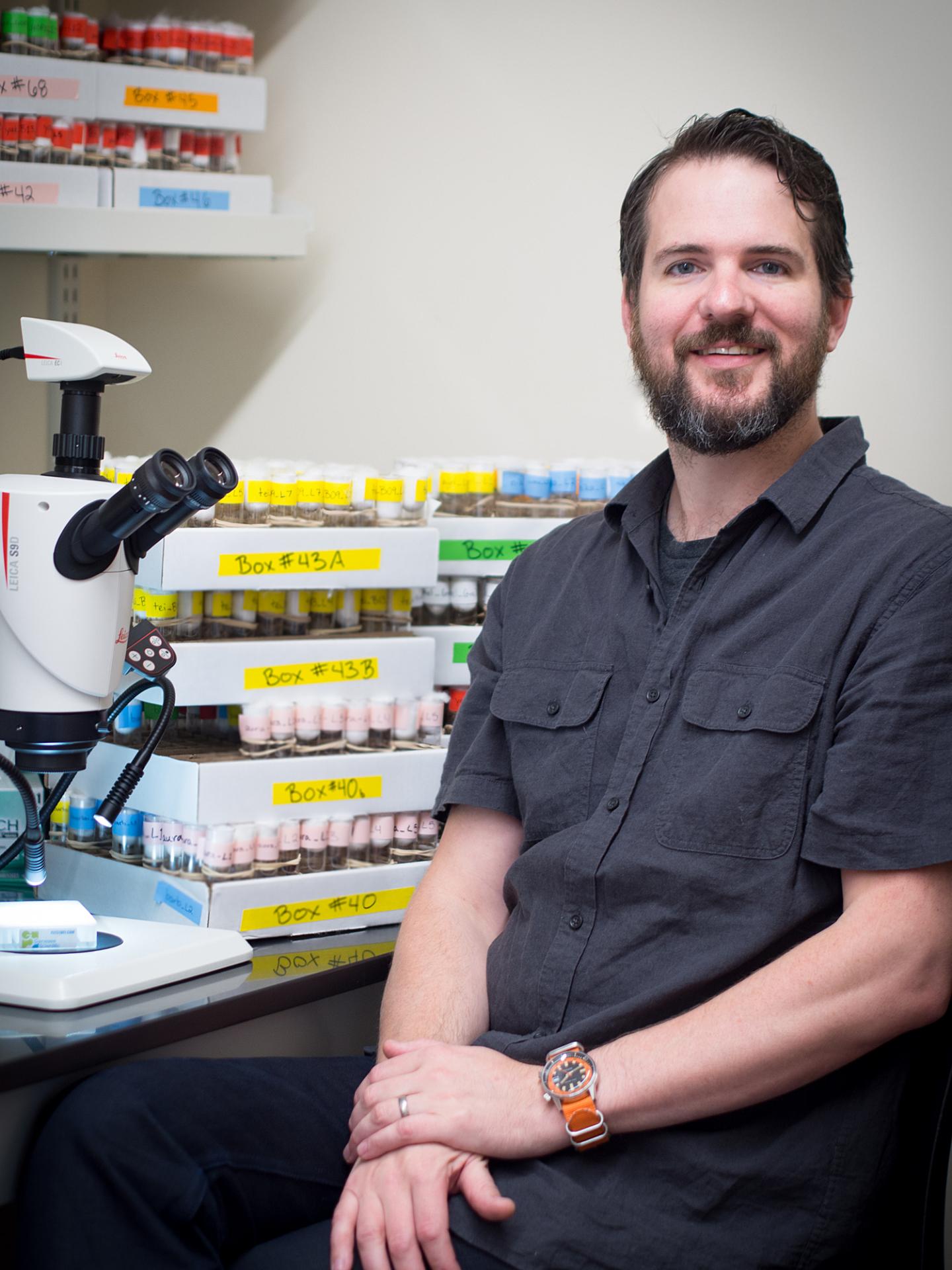
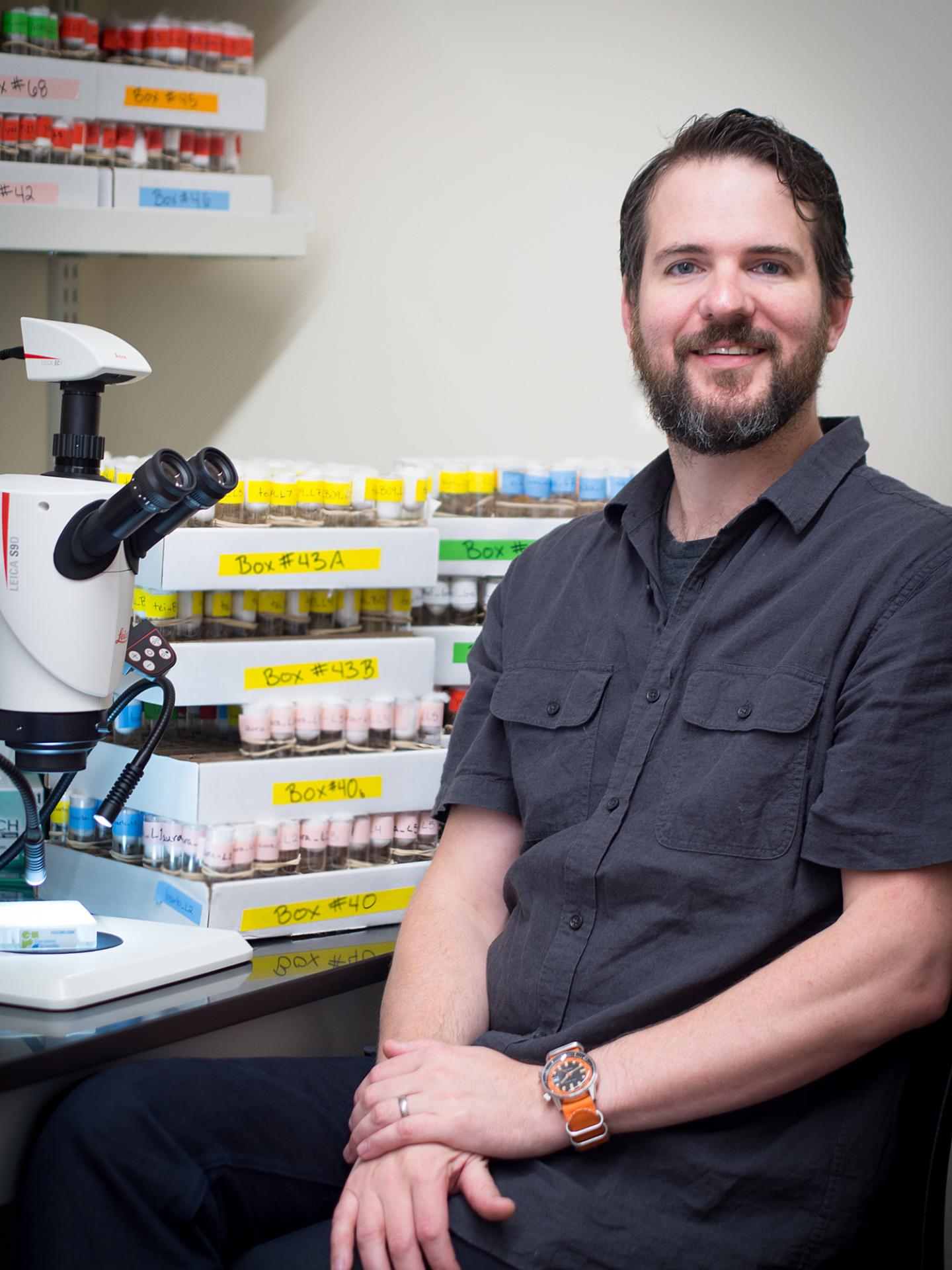
IMAGE

Credit: courtesy

MISSOULA – A new University of Montana faculty member, Brandon Cooper, recently was awarded a five-year, $1.8 million Outstanding Investigator Award from the National Institutes of Health to study how specific intracellular bacteria affect the physiology and fitness of their insect hosts.

Cooper moved into his UM office this fall – with him he brought Drosophila flies sampled from around the world. From his home base in Missoula, he and his team will focus on understanding Wolbachia bacteria spread within and between Drosophila host species.

Maternally transmitted Wolbachia bacteria infect the cells of about half of all insects on the planet, in addition to other arthropods and nematodes.

"Wolbachia are the most prevalent endosymbionts in nature, yet we know very little about how they spread within and between host species to become common," Cooper said. "Our research will fill this gap in knowledge."

Wolbachia became famous for manipulating host reproduction. More recently, it was recognized that Wolbachia can protect their hosts from viruses. When exposed to viruses, flies with Wolbachia infections are more likely to survive than those that are not infected with Wolbachia.

This observation was quickly leveraged and Wolbachia from the Drosophila fly was used as a biocontrol of vector-borne disease. With a target set on mosquitoes notorious for spreading human disease such as Zika or dengue, Wolbachia from Drosophila have been transinfected into the mosquitoes and are being released around the globe. The success of this strategy relies on efficiently spreading Wolbachia infections through host populations.

Cooper's team will use the NIH funding to find the answers to how these bacteria affect host physiology and fitness to spread.

"I am incredibly grateful for this award, which will support my lab's research on Wolbachia over the next five years," Cooper said. "We are thrilled to work on these problems here at UM where we have wonderful colleagues in UM's Cellular, Molecular and Microbial Biology program and the Division of Biological Sciences."

Before coming to UM, Cooper completed his doctorate in evolutionary genetics at Indiana University, Bloomington. He completed his NIH-funded postdoctoral training at the University of California, Davis. He started working at UM in 2016.

When asked why he chose to research at UM, Cooper said it was because of the chance to work with "exceptional colleagues."

###

"In my areas of study, there are not only colleagues working in similar disciplines, but they are some of the best in the world," Cooper said.

For more information on the award visit http://bit.ly/2wpuT62.

Media Contact

Brandon Cooper, assistant professor, UM Division of Biologic
[email protected]
406-243-2174

http://www.umt.edu

Original Source

http://bit.ly/2kl78L1
Share13Tweet7Share2ShareShareShare1

Related Posts

Vitamin D Alters DNA Repair Machinery in Systemic Sclerosis Patients

Vitamin D Alters DNA Repair Machinery in Systemic Sclerosis Patients

September 5, 2026
Genome sequencing reveals chromosomal fusion behind early XY sex chromosome evolution in catfish

Genome sequencing reveals chromosomal fusion behind early XY sex chromosome evolution in catfish

September 5, 2026

Early-life stress and teen alcohol alter rat behavior and brain lipids by sex

September 5, 2026

Male bumblebees show greater activity and behavioural flexibility than workers

September 5, 2026
Please login to join discussion

POPULAR NEWS

  • Dual GnRH agonist and low-dose hCG trigger improves outcomes in high responders

    29 shares
    Share 12 Tweet 7
  • Vitamin D Alters DNA Repair Machinery in Systemic Sclerosis Patients

    29 shares
    Share 12 Tweet 7
  • Microfluidic technique boosts CAR T cell transduction at low viral doses

    29 shares
    Share 12 Tweet 7
  • Multimodal fusion boosts recognition of teen sports and abnormal health behaviors

    29 shares
    Share 12 Tweet 7

About

We bring you the latest biotechnology news from best research centers and universities around the world. Check our website.

Follow us

Recent News

Dual GnRH agonist and low-dose hCG trigger improves outcomes in high responders

Vitamin D Alters DNA Repair Machinery in Systemic Sclerosis Patients

Microfluidic technique boosts CAR T cell transduction at low viral doses

Subscribe to Blog via Email

Enter your email address to subscribe to this blog and receive notifications of new posts by email.

Join 85 other subscribers
  • Contact Us

Bioengineer.org © Copyright 2023 All Rights Reserved.

Welcome Back!

Login to your account below

Forgotten Password?

Retrieve your password

Please enter your username or email address to reset your password.

Log In
No Result
View All Result
  • Homepages
    • Home Page 1
    • Home Page 2
  • News
  • National
  • Business
  • Health
  • Lifestyle
  • Science

Bioengineer.org © Copyright 2023 All Rights Reserved.