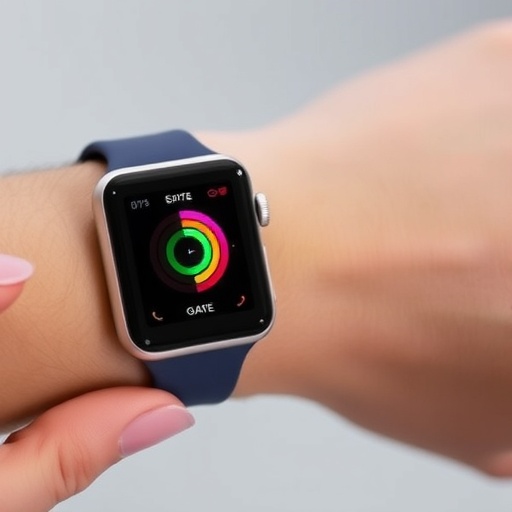
A groundbreaking study recently published in Neurology Open Access introduces a revolutionary leap in epileptic seizure detection technology. Researchers have developed a smartwatch application capable of accurately identifying tonic-clonic seizures, those marked by significant convulsions, while maintaining an exceptionally low false alarm rate. This innovation promises to transform the landscape of epilepsy management, offering real-time, dependable alerts for caregivers and reducing risks associated with these potentially life-threatening events.
Tonic-clonic seizures are characterized by violent muscle contractions and loss of consciousness, frequently accompanied by transient muscle tone loss and airway obstruction. These manifestations contribute directly to the elevated risk of sudden unexpected death in epilepsy (SUDEP). SUDEP remains a critical concern within neurology, particularly for patients experiencing uncontrolled tonic-clonic seizures, especially when seizures occur during sleep and in isolation. The urgent need for reliable, user-friendly seizure detection devices has driven this research, which confronts the limitations observed in current technologies.
Unlike existing seizure monitoring tools that often suffer from high false alarm rates leading to user frustration and abandonment, the new EpiWatch app, developed for smartwatches, demonstrates superior accuracy coupled with minimal false alerts. Such performance enhances sustained user engagement, ensuring continuous protection and timely intervention. By providing instantaneous notifications to caregivers, this technology could significantly mitigate the adverse outcomes associated with delayed responses after seizure onset.
This comprehensive study involved 242 participants, both adults and children, averaging 23 years of age, all diagnosed with epilepsy or at risk for tonic-clonic seizures. Each subject was equipped with a smartwatch running the EpiWatch app and subjected to continuous video-electroencephalographic (EEG) monitoring within a specialized inpatient epilepsy unit. This dual surveillance allowed precise comparison between clinically verified seizure events and app-detected episodes, ensuring rigorous validation.
During the monitoring period, which averaged approximately two and a half days per participant, a total of 47 tonic-clonic seizures were documented via EEG. Impressively, the EpiWatch app successfully detected 46 of these events, missing one seizure attributed to caregiver intervention that physically restricted the participant’s arm movement, thereby confounding the smartwatch sensors. This near-perfect sensitivity is a milestone, representing a detection rate of 98%, which exceeds the performance range of current detection devices, typically between 76% and 94%.
Moreover, the app’s false alarm rate—calculated from over 16,000 cumulative monitoring hours—was remarkably low at 0.08 per day, equaling one false alert every 12.4 days on average. In stark contrast, competing devices report false alarm rates ranging from 0.67 to as high as 2.52 per day, underscoring the technological advancements embedded in EpiWatch’s algorithms. This reduction drastically minimizes unnecessary caregiver disruptions and diminishes the exhaustion often cited as a barrier to consistent device use.
An analysis of false alarms revealed that most were triggered by repetitive, physiologically similar movements such as playing video games, which can mimic the motion patterns of seizures. Nevertheless, no adverse effects or safety concerns emerged during the study, reinforcing the smartwatch’s practicality and comfort in a real-world clinical environment. The design ensures discreet wearability, averting the stigmatization sometimes associated with conventional seizure monitoring apparatus.
One of the paramount advantages of using a smartwatch as the platform for this detection technology lies in the widespread acceptance and penetration of smartwatches as fashionable, multifunctional devices. This ubiquity facilitates seamless integration into patients’ daily lives. It also lowers psychological barriers to continuous use, which is crucial for managing chronic conditions like epilepsy, where unpredictable seizure onset necessitates vigilant monitoring.
Seizure detection and real-time caregiver alerts can be lifesaving interventions. By rapidly notifying caregivers, seizure-first aid—including airway support or emergency medical contact—can be administered promptly, potentially decreasing the incidence of SUDEP. This paradigm shift from passive epilepsy management to proactive monitoring signifies a vital clinical advance supported by cutting-edge biomedical engineering.
Nonetheless, the authors acknowledge that the controlled hospital setting of the study may limit the generalizability of results to broader populations in naturalistic environments. The challenges posed by variable daily activities, environmental factors, and differing patient adherence outside of a medical unit warrant further research. Future trials must evaluate the app’s performance in diverse real-world conditions to confirm its robustness and efficacy.
The study’s support from EpiWatch, Inc., the app’s developer, highlights a collaborative intersection between clinical neurology and technology innovation. This partnership exemplifies how interdisciplinary efforts can catalyze the development of transformative health tools that empower patients and healthcare providers alike.
With over 44,000 members, the American Academy of Neurology endorses advances that improve diagnostic accuracy and patient quality of life. The EpiWatch app’s ability to accurately detect seizures with fewer false alarms represents a significant stride forward. It marries clinical necessity with technological ingenuity, heralding a new era where wearable health technology actively contributes to patient safety and seizure management.
Subject of Research: People
Article Title: Smartwatch Application Achieves High Accuracy in Detecting Tonic-Clonic Seizures with Minimal False Alarms
News Publication Date: May 27, 2026
Web References: Neurology® Open Access Journal, American Academy of Neurology
Keywords: Epilepsy, Tonic-Clonic Seizures, Seizure Detection, Smartwatch, EpiWatch, Sudden Unexpected Death in Epilepsy (SUDEP), Wearable Technology, Video-EEG Monitoring, Biomedical Engineering, False Alarm Reduction
Tags: accurate tonic-clonic seizure monitoringcaregiver seizure alert systemscontinuous epilepsy patient protectionepilepsy management wearable devicesepilepsy wearable health technologylow false alarm epilepsy devicereal-time epilepsy alertsseizure detection technology advancementssmartwatch seizure detection appsudden unexpected death in epilepsy preventionSUDEP risk reduction toolsuser-friendly seizure monitoring solutions