

• HOME
  • NEWS
  • EXPLORE
    • CAREER
      • Companies
      • Jobs
    • EVENTS
    • iGEM
      • News
      • Team
    • PHOTOS
    • VIDEO
    • WIKI
  • BLOG
  • COMMUNITY
    • FACEBOOK
    • INSTAGRAM
    • TWITTER
Thursday, January 1, 2026
BIOENGINEER.ORG
No Result
View All Result
  • Login
  • HOME
  • NEWS
  • EXPLORE
    • CAREER
      • Companies
      • Jobs
        • Lecturer
        • PhD Studentship
        • Postdoc
        • Research Assistant
    • EVENTS
    • iGEM
      • News
      • Team
    • PHOTOS
    • VIDEO
    • WIKI
  • BLOG
  • COMMUNITY
    • FACEBOOK
    • INSTAGRAM
    • TWITTER
  • HOME
  • NEWS
  • EXPLORE
    • CAREER
      • Companies
      • Jobs
        • Lecturer
        • PhD Studentship
        • Postdoc
        • Research Assistant
    • EVENTS
    • iGEM
      • News
      • Team
    • PHOTOS
    • VIDEO
    • WIKI
  • BLOG
  • COMMUNITY
    • FACEBOOK
    • INSTAGRAM
    • TWITTER
No Result
View All Result
Bioengineer.org
No Result
View All Result
Home NEWS Science News Science

New study shows racial/ethnic variations in quitline reach among US smokers

Bioengineer by Bioengineer
November 15, 2016
in Science
Reading Time: 2 mins read
0
Share on FacebookShare on TwitterShare on LinkedinShare on RedditShare on Telegram

Quitlines, hotlines that provide free cessation services for smokers, appear to be reaching minority populations that typically underutilize cessation treatments and have high smoking prevalence, particularly African Americans and American Indians/Alaska Natives. This study, publishing today in the journal Nicotine & Tobacco Research, is the first to use multi-state data to compare the reach of quitlines for different racial/ethnic groups.

Researchers used a database of over 1.2 million quitline callers across 45 states to determine reach of the service. By comparing the number of quitline callers to the number of tobacco users in a particular minority group, the study shows that quitline reach was highest for American Indians/Alaskan Natives in 27 states, for African Americans in 14 states, and for non-Hispanic whites in 4 states. However, the actual percentage of these quitline callers of overall tobacco users is relatively low. 0.27% to 9.98% of American Indian/Alaskan Native tobacco users have called a quitline, compared to 0.17% to 3.85% of African American tobacco users, 0.08% to 3.42% of non-Hispanic white tobacco users, and 0.08% to 3.18% of Hispanic tobacco users.

The findings support the conclusion that although overall reach remains low across racial/ethnic populations, quitlines have the potential to reach a broad range of racial/ethnic minority populations that experience disproportionate rates of smoking and its associated diseases.

"Ongoing monitoring of the use of state quitlines can help and guide outreach to all race/ethnic groups with the goal of increasing the overall proportion and number of tobacco users that use quitlines," says lead author LaTisha L. Marshall. "These efforts should be complemented by comprehensive tobacco control initiatives that increase cessation, including mass media campaigns, smoke-free policies, increased tobacco prices, expansion of health insurance coverage, and health systems change."

###

The paper "Race/ Ethnic Variations in Quitline Use among US Adult Tobacco Users in 45 States, 2011-2013" is available at: http://ntr.oxfordjournals.org/lookup/doi/10.1093/ntr/ntw281

Direct correspondence to:
LaTisha L. Marshall, DrPH
Email: [email protected]
Office on Smoking and Health
National Center for Chronic Disease Prevention and Health Promotion
Centers for Disease Control and Prevention
4770 Buford Highway, MS F-79
Atlanta, Georgia 30341

To request a copy of the study, please contact: Daniel Luzer- [email protected] or 212-743-6113

Sharing on social media? Find Oxford Journals online at @OxfordJournals

Media Contact

Daniel Luzer
[email protected]
212-726-6113

http://global.oup.com/academic/;jsessionid=13378C4

############

Story Source: Materials provided by Scienmag
Share12Tweet8Share2ShareShareShare2

Related Posts

Five or more hours of smartphone usage per day may increase obesity

July 25, 2019
IMAGE

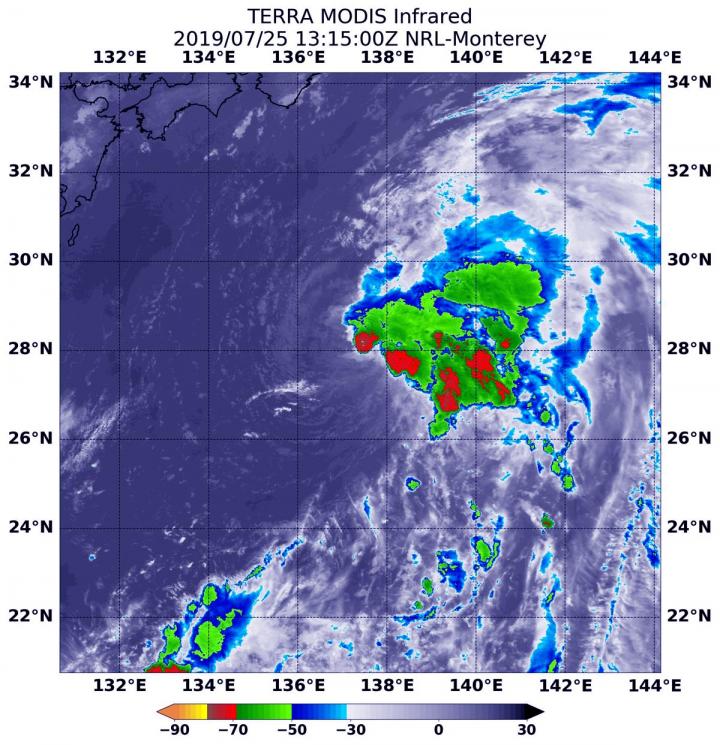
NASA’s terra satellite finds tropical storm 07W’s strength on the side

July 25, 2019

NASA finds one burst of energy in weakening Depression Dalila

July 25, 2019

Researcher’s innovative flood mapping helps water and emergency management officials

July 25, 2019
Please login to join discussion

POPULAR NEWS

  • blank

    PTSD, Depression, Anxiety in Childhood Cancer Survivors, Parents

    108 shares
    Share 43 Tweet 27
  • NSF funds machine-learning research at UNO and UNL to study energy requirements of walking in older adults

    71 shares
    Share 28 Tweet 18
  • Exploring Audiology Accessibility in Johannesburg, South Africa

    52 shares
    Share 21 Tweet 13
  • SARS-CoV-2 Subvariants Affect Outcomes in Elderly Hip Fractures

    44 shares
    Share 18 Tweet 11

About

We bring you the latest biotechnology news from best research centers and universities around the world. Check our website.

Follow us

Recent News

Gestational Diabetes Alters Weight Gain’s Impact on Outcomes

Dual Delayed Fluorescence and Phosphorescence in Organics

Coping Strategies in Rural Seniors with Chronic Illness

Subscribe to Blog via Email

Success! An email was just sent to confirm your subscription. Please find the email now and click 'Confirm' to start subscribing.

Join 71 other subscribers
  • Contact Us

Bioengineer.org © Copyright 2023 All Rights Reserved.

Welcome Back!

Login to your account below

Forgotten Password?

Retrieve your password

Please enter your username or email address to reset your password.

Log In
No Result
View All Result
  • Homepages
    • Home Page 1
    • Home Page 2
  • News
  • National
  • Business
  • Health
  • Lifestyle
  • Science

Bioengineer.org © Copyright 2023 All Rights Reserved.
