Credit: Manueal Leal, MU Division of Biological Sciences
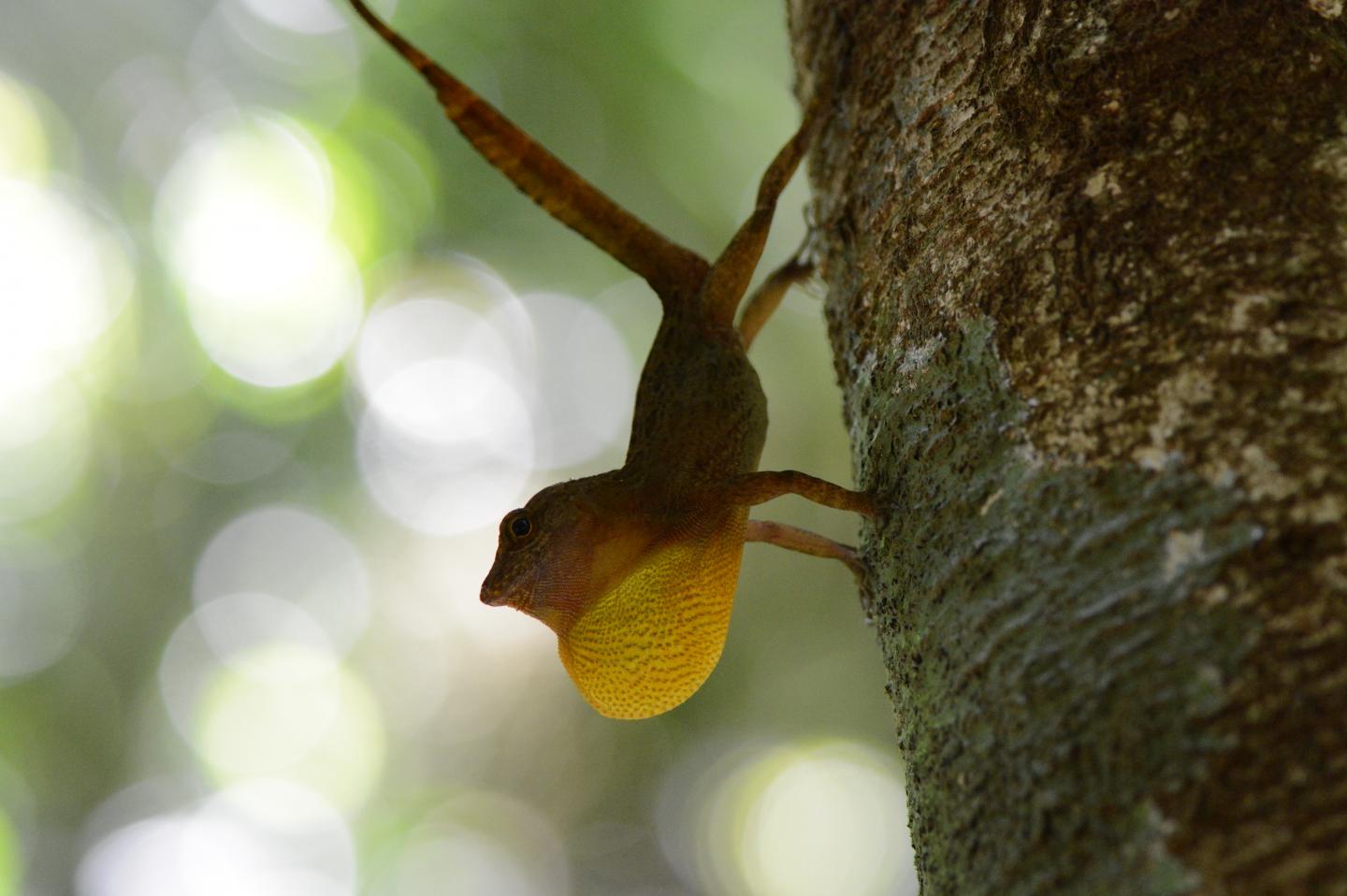
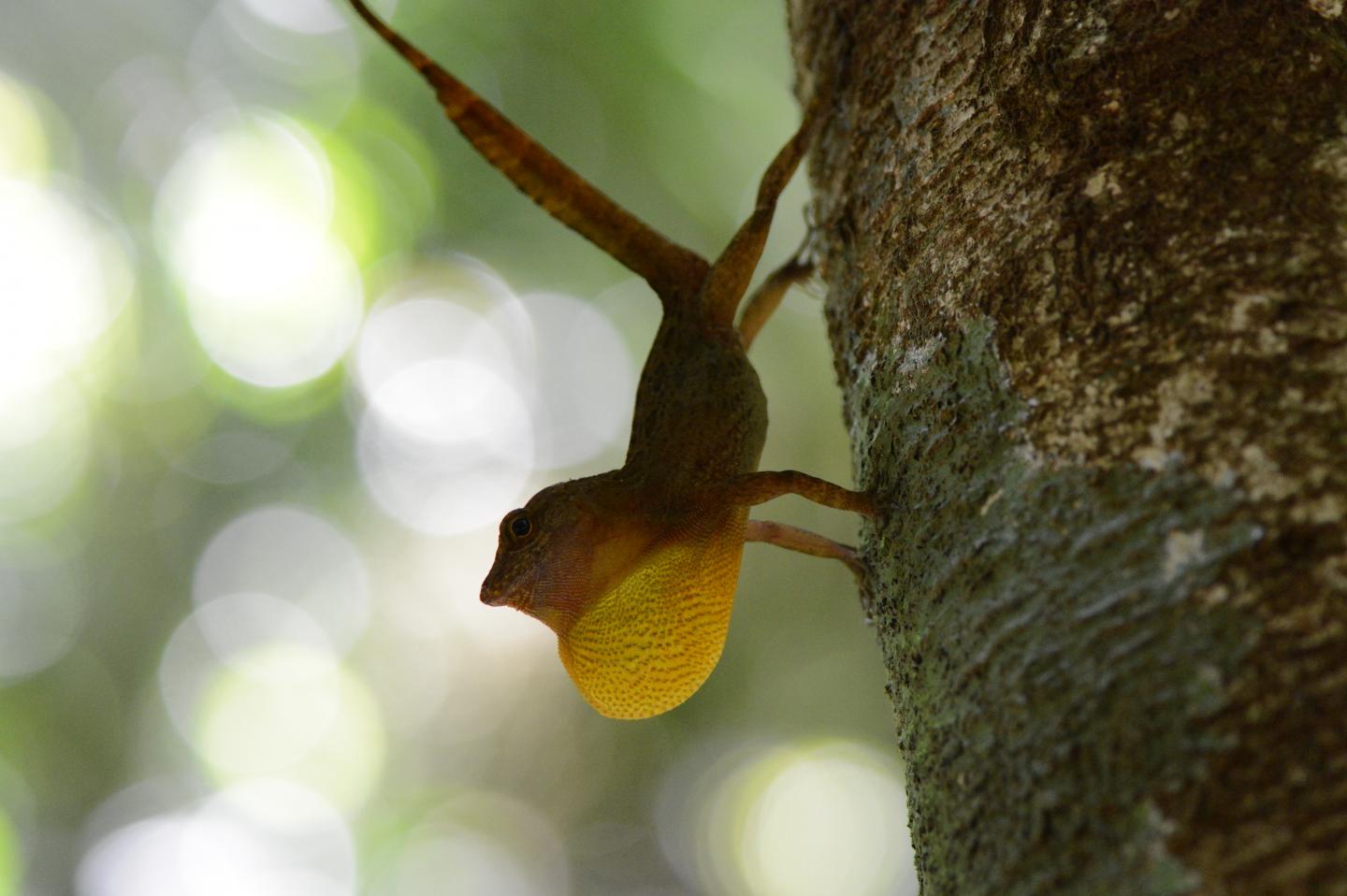
The islands of Puerto Rico, Cuba, Hispaniola, and Jamaica — collectively known as the Greater Antilles — are home to more than 100 species of Anolis lizards. The success of this colorful group of reptiles is often attributed to the evolution of distinct body shapes and behaviors that allow species to occupy different ecological niches. A new study from an international team of biologists including from the University of Missouri reports that the evolution of physiological differences that allow these lizards to take advantage of different microclimates (e.g., sun vs. shade) may have been just as important as these physical differences. The study, which was published recently in The Proceedings of the Royal Society B, has implications for predicting how well these lizards will cope with climate change.
"Why are there so many species of anoles? That's the big question," says Manuel Leal, an associate professor of biological sciences at MU and one of the authors of the report. "The notion that morphological differences alone drove the amazing diversity of anoles is missing an important part of the puzzle."
For scientists, the Greater Antillean anoles represent a classic example of an evolutionary process known as adaptive radiation. After appearing on each of the four islands about 50 million years ago, the colorful lizards quickly diversified to exploit different niches on the island's trees, including the canopy, trunk near the ground, mid-trunk, and other twigs. Each new species developed its own distinct body type, called an ecomorph, adapted to the niche where it lived. According to Leal, this focus on differences in appearance leaves some important questions unanswered.
"How can similar species coexist without outcompeting one another? One of the tenants of evolutionary ecology is that when a structural niche is filled, species diversification should either slow or come to an end due to competition. There must be some other way they are sharing that habitat to avoid competition," he said.
The researchers hypothesized that the evolution of physiological traits related to temperature tolerance also facilitated the maintenance of biological diversity by providing an additional axis of co-existence.
Working with Alex Gunderson with the University of California at Berkeley and D. Luke Mahler with the University of Toronto, Leal set out to test this hypothesis. The team caught and collected thermal physiological data on over 300 anoles. Most of the anoles belonged to the Puerto Rican cristatellus group, which includes four pairs of sister species, each of which occupies a different thermal niche. They also included data on Jamaican anoles. The researchers measured two aspects of thermal physiology: maximum thermal tolerance and optimal temperature for sprint performance, which they used as a measure of fitness. They asked if a species heat tolerance correlated with its optimal sprint performance. They expected that sister species would diverge in one or both of these physiological traits.
They found that all Puerto Rican species pairs diverged in at least one of the two physiological traits. In three of the four pairs, the species that preferred the warmer environment had a higher thermal maximum temperature. In two cases, the species that preferred the warmer environment also had had a higher optimal temperature. They found a similar pattern among the Jamaican anoles.
"These findings show that when morphologically similar species co-occur in Puerto Rico and Jamaica, they differ in thermal physiology. We can say that thermal physiological differentiation is important for increasing local species richness," said Leal.
An additional insight was that thermal physiology evolved slower than morphology. This evolutionary interplay, Leal said, has real-world implications when one considers the rate at which the world's climate is warming.
"This is not good news for the ability of anoles to adapt to climate change," said Leal. "The data suggest that the rate at which physiology changes in anoles is not fast enough to cope with how fast temperatures are rising."
###
The study, titled "Thermal niche evolution across replicated Anolis lizard adaptive radiations," was funded by the National Science Foundation.
Media Contact
Melody Kroll
[email protected]
573-884-4144
@mizzounews
http://www.missouri.edu
Original Source
http://biology.missouri.edu/news/new-study-from-leal-lab-sheds-new-light-and-some-shade-on-anole-diversification/