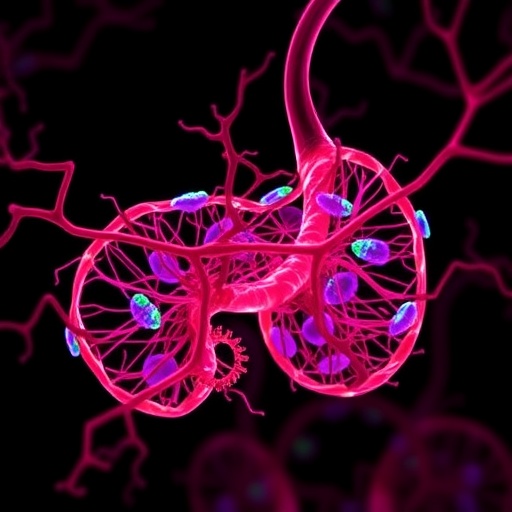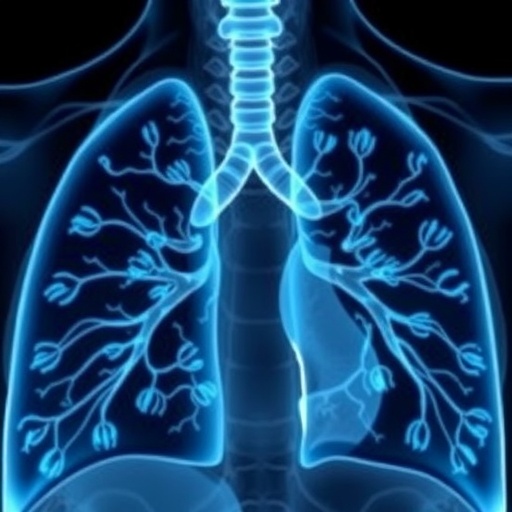
In a groundbreaking preclinical study that could redefine therapeutic approaches to lung cancer, researchers at The University of Texas MD Anderson Cancer Center have uncovered a critical mechanism behind radiation resistance in lung tumors. This investigation, led by Dr. Boyi Gan, unveils how the mitochondrial enzyme dihydroorotate dehydrogenase (DHODH) plays a pivotal role in protecting cancer cells from ferroptosis, an iron-dependent form of cell death, and how targeting this enzyme can enhance the efficacy of radiation therapy.
Radiation therapy remains a cornerstone in the clinical management of lung cancer, yet its effectiveness is frequently compromised by the tumor cells’ capacity to develop resistance. While DNA damage induction and apoptosis have long been recognized as primary mechanisms through which radiation exerts its cytotoxic effects, recent advances have highlighted ferroptosis as another vital modality of radiation-induced cell death. Ferroptosis involves iron-dependent lipid peroxidation leading to cell membrane damage, a process that tumor cells can circumvent to ensure survival. Dr. Gan’s team focused on unraveling how lung cancer cells evade ferroptosis, thereby contributing to treatment failure.
At the heart of this resistance mechanism lies DHODH, a mitochondrial enzyme well-known for its role in de novo pyrimidine biosynthesis, essential for RNA and DNA synthesis. The researchers discovered that increased DHODH activity not only supports the synthesis of nucleotides needed for DNA repair after radiation-induced damage but also leads to the production of ubiquinol, a powerful antioxidant molecule that inhibits ferroptosis by preventing lipid peroxidation. This dual functionality of DHODH positions it as a central player in facilitating tumor cell survival under the assault of radiation therapy.
This insight propelled the hypothesis that inhibiting DHODH could dismantle the cancer cells’ defense against ferroptosis, restoring their susceptibility to radiation-induced death. Fortunately, leflunomide, an FDA-approved drug primarily prescribed for rheumatoid arthritis, is a known DHODH inhibitor. The study leveraged leflunomide to examine its potential to sensitize lung tumors to radiation, providing immediate translational appeal given the drug’s established clinical approval.
Yet, the story does not end with the DHODH inhibitor alone. The research team designed an innovative triple combination therapy that integrates radiation therapy with immune checkpoint blockade—a form of immunotherapy utilizing anti-PD-1 antibodies—to potentiate the killing of radioresistant lung cancer cells. Although the binary combination of radiation and immunotherapy was insufficient to halt tumor progression in preclinical models, it primed the tumor microenvironment by inducing interferon-gamma (IFN-γ), a cytokine known to promote ferroptosis.
Incorporating leflunomide into this regimen disrupted DHODH-driven ferroptosis suppression, thereby allowing the cancer cells to succumb to lipid peroxidation-induced death. The triple combination exhibited a synergistic effect, re-sensitizing lung tumors to radiation and overcoming prior resistance that limited therapeutic outcomes. Dr. Gan emphasized that while DHODH inhibition alone modestly enhanced radiosensitivity, it was the integrative approach that yielded robust anti-tumor responses.
The mechanistic insights revealed by this study stitch together complex biochemical pathways involving mitochondrial metabolism, immune modulation, and cell death regulation. The upregulation of DHODH serves a protective role by ensuring a supply of pyrimidine nucleotides essential for DNA repair processes and by generating ubiquinol to neutralize oxidative stress from lipid peroxidation. Simultaneously, the immune-stimulating environment created by checkpoint inhibitors and radiation-induced IFN-γ amplifies ferroptosis signaling, creating a therapeutic window exploitable by DHODH inhibition.
These findings resonate beyond lung cancer, as ferroptosis resistance is increasingly acknowledged in various malignancies and therapeutic contexts. The identification of DHODH as a suppressor of ferroptosis not only elucidates a fundamental resistance pathway but also offers an actionable target harnessed by exploiting existing pharmacological agents. Leflunomide’s repositioning as a radiosensitizer exemplifies the power of translational research bridging molecular discovery with clinical potential.
Importantly, the preclinical nature of this research underscores the need for clinical trials to validate the safety, optimal dosing, and efficacy of this triple combination therapy in human patients. However, the immediacy of translational prospects that FDA approval of leflunomide affords positions this strategy for rapid clinical evaluation. This study exemplifies precision oncology’s trajectory toward dissecting resistance mechanisms and developing targeted interventions to improve cancer therapy outcomes.
The multi-institutional research team received support from several prestigious funding agencies, including the National Institutes of Health (NIH) and the Cancer Prevention and Research Institute of Texas (CPRIT), underlining the broad scientific acknowledgment of this work’s significance. Their published article in the American Association for Cancer Research’s journal Cancer Research offers an extensive account of the experimental design, molecular analyses, and therapeutic implications, setting a foundation for further exploration in ferroptosis biology and mitochondrial metabolism within oncology.
In the relentless battle against lung cancer, the discovery of DHODH’s role in ferroptosis suppression and radiation resistance shines a beacon on new therapeutic horizons. Combining radiotherapy with immunomodulation and targeted metabolic inhibition produces a formidable triad that could revolutionize treatment paradigms for patients plagued by resistant tumors. As precision medicine evolves, studies like Dr. Gan’s propel the field toward more effective, tailored interventions that overcome resistance and improve survival outcomes.
This pioneering work not only enriches the scientific understanding of radioresistance mechanisms but also vividly illustrates the translational potential that lies in repurposing existing drugs to tackle unmet clinical challenges. The integration of metabolic inhibitors with immunotherapy and radiotherapy heralds a new chapter in cancer treatment strategies, ushering hope for improved efficacy against formidable malignancies like lung cancer.
Subject of Research: Animals
Article Title: DHODH-Mediated Suppression of Ferroptosis Supports Radioresistance and Represents a Therapeutic Vulnerability in Lung Cancer Available
News Publication Date: 8-Apr-2026
Web References: https://aacrjournals.org/cancerres/article/doi/10.1158/0008-5472.CAN-25-3728
References: DOI 10.1158/0008-5472.CAN-25-3728
Image Credits: The University of Texas MD Anderson Cancer Center
Keywords: Radiation therapy, lung cancer, DHODH, ferroptosis, radioresistance, leflunomide, immunotherapy, immune checkpoint blockade, anti-PD-1, interferon-gamma, mitochondrial metabolism, cancer treatment
Tags: cancer cell survival mechanismsDHODH enzyme in cancerDHODH inhibitors in oncologyferroptosis and radiation therapyferroptosis in lung tumorsiron-dependent cell death in cancerlung cancer radiation resistancemitochondrial enzymes in cancer therapynovel lung cancer treatmentsovercoming tumor cell resistanceradiation therapy efficacy improvementtargeting DHODH to enhance radiation