Credit: Boston Medical Center
Early diagnosis and intervention for a child with autism spectrum disorder (ASD) can help change the trajectory of their life. While children can be diagnosed with autism as early as 18-24 months of age, most children are diagnosed between 4-5 years old. Among low income, minority and rural families, the gap is even wider- as a diagnosis typically happens up to one and a half years later than the average. This means that many families are missing the window for early intervention, educational and behavioral services that have been shown to vastly improve outcomes for these children as well as reduce health care costs both in the short and long-term.
Researchers from Boston Medical Center (BMC), in conjunction with researchers from Florida State University and others across the country, are collaborating on a study that aims to get parents involved with early intervention services sooner. The study is funded as part of a five-year $10.2 million grant from the National Institutes of Health, who awarded nearly $100 million to Autism Centers of Excellence across the country.
The research team will test a two-part intervention to engage parents with problem solving educational tools that will help them better adapt to caring for their child's needs and access the necessary support services available to them. Some parents will also receive training in early social interaction, which teaches parents to support their child's communication and social skills in everyday activities and routines.
Researchers will then evaluate if families with the added training in early social interaction are seeing more growth in social communication skills, development, and other ASD symptoms. From there, they will use the data to create a hybrid intervention and test how feasible it is to implement in a health system.
Patient navigators, who live in the communities where participants reside, will receive training to implement the intervention. Training patient navigators to deliver an evidence- based treatment for ASD has never been done before. If successful, this approach has the potential to address the shortage of linguistically diverse ASD service providers and provide culturally tailored services to traditionally underserved families. Testing the feasibility of the intervention will allow researchers to determine if it could be scaled up and implemented at other locations.
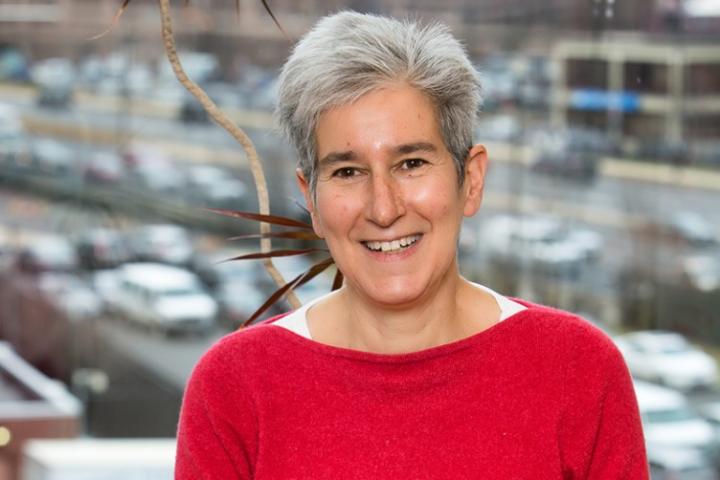
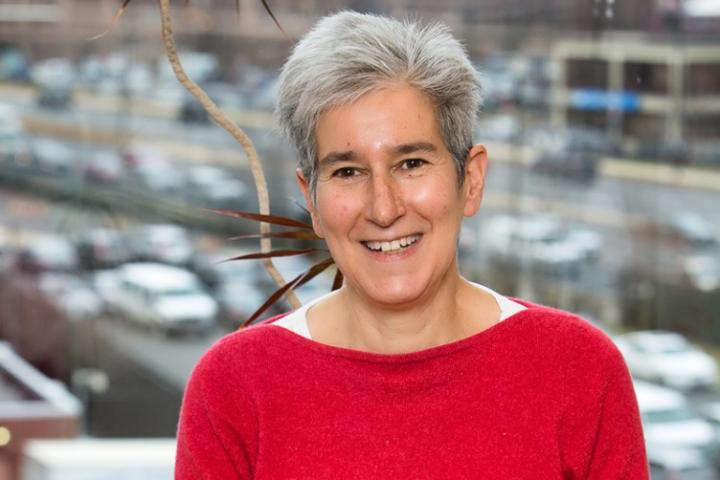
"We know we can diagnose ASD at an early age, and now we need to figure out how to make that happen more frequently and also provide families with the support, education, and treatments they need to ensure their child thrives," said Emily Feinberg, a pediatric researcher at BMC, associate professor of community health sciences at Boston University School of Public Health, and associate professor of pediatrics at BU School of Medicine.
Patients and families will be recruited at BMC and affiliated health centers for the first phase of the study. As an urban, safety-net hospital, BMC's diverse patient population will address the disparities seen in ASD diagnosis and early intervention. Marilyn Augustyn, MD, director of development and behavioral pediatrics at BMC and Lisa Fortuna, MD, medical director for child and adolescent psychiatry at BMC are co-investigators on the study.
###
About Boston Medical Center
Boston Medical Center is a private, not-for-profit, 487-bed, academic medical center that is the primary teaching affiliate of Boston University School of Medicine. It is the largest and busiest provider of trauma and emergency services in New England. Committed to providing high-quality health care to all, the hospital offers a full spectrum of pediatric and adult care services including primary and family medicine and advanced specialty care with an emphasis on community-based care. Boston Medical Center offers specialized care for complex health problems and is a leading research institution, receiving more than $117 million in sponsored research funding in fiscal year 2016. It is the 13th largest recipient of funding in the U.S. from the National Institutes of Health among independent hospitals. In 1997, BMC founded Boston Medical Center Health Plan, Inc., now one of the top ranked Medicaid MCOs in the country, as a non-profit managed care organization. It does business in Massachusetts as BMC HealthNet Plan and as Well Sense Health Plan in New Hampshire, serving 290,000 people, collectively. Boston Medical Center and Boston University School of Medicine are partners in the Boston HealthNet – 14 community health centers focused on providing exceptional health care to residents of Boston. For more information, please visit http://www.bmc.org.
Media Contact
Jessica Lyons
[email protected]
617-638-6838
http://www.bmc.org