• HOME
  • NEWS
  • EXPLORE
    • CAREER
      • Companies
      • Jobs
    • EVENTS
    • iGEM
      • News
      • Team
    • PHOTOS
    • VIDEO
    • WIKI
  • BLOG
  • COMMUNITY
    • FACEBOOK
    • INSTAGRAM
    • TWITTER
Tuesday, August 4, 2026
BIOENGINEER.ORG
No Result
View All Result
  • Login
  • HOME
  • NEWS
  • EXPLORE
    • CAREER
      • Companies
      • Jobs
        • Lecturer
        • PhD Studentship
        • Postdoc
        • Research Assistant
    • EVENTS
    • iGEM
      • News
      • Team
    • PHOTOS
    • VIDEO
    • WIKI
  • BLOG
  • COMMUNITY
    • FACEBOOK
    • INSTAGRAM
    • TWITTER
  • HOME
  • NEWS
  • EXPLORE
    • CAREER
      • Companies
      • Jobs
        • Lecturer
        • PhD Studentship
        • Postdoc
        • Research Assistant
    • EVENTS
    • iGEM
      • News
      • Team
    • PHOTOS
    • VIDEO
    • WIKI
  • BLOG
  • COMMUNITY
    • FACEBOOK
    • INSTAGRAM
    • TWITTER
No Result
View All Result
Bioengineer.org
No Result
View All Result
Home NEWS Science News Biology

New study finds US oil & gas methane emissions 60 percent higher than estimated

Bioengineer by Bioengineer
June 21, 2018
in Biology
Reading Time: 2 mins read
0
Share on FacebookShare on TwitterShare on LinkedinShare on RedditShare on Telegram
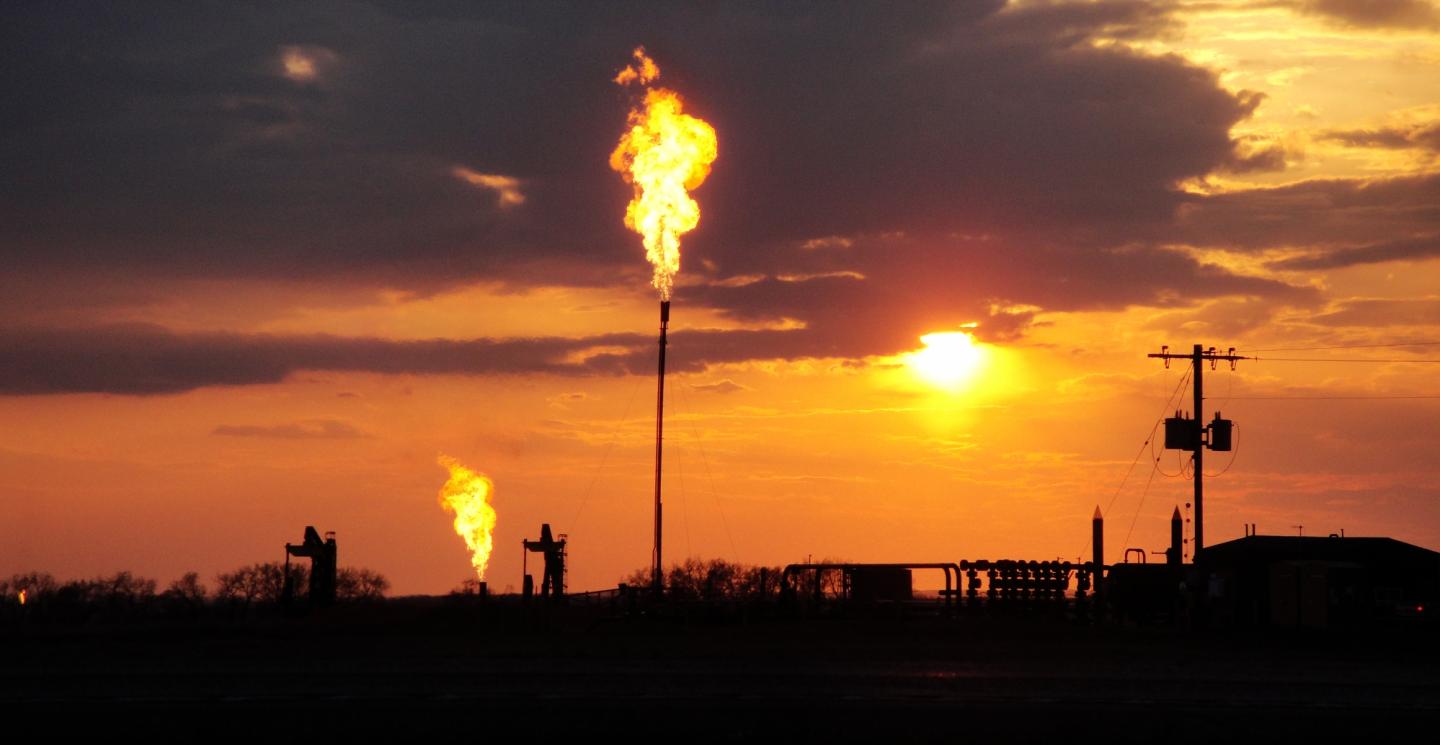
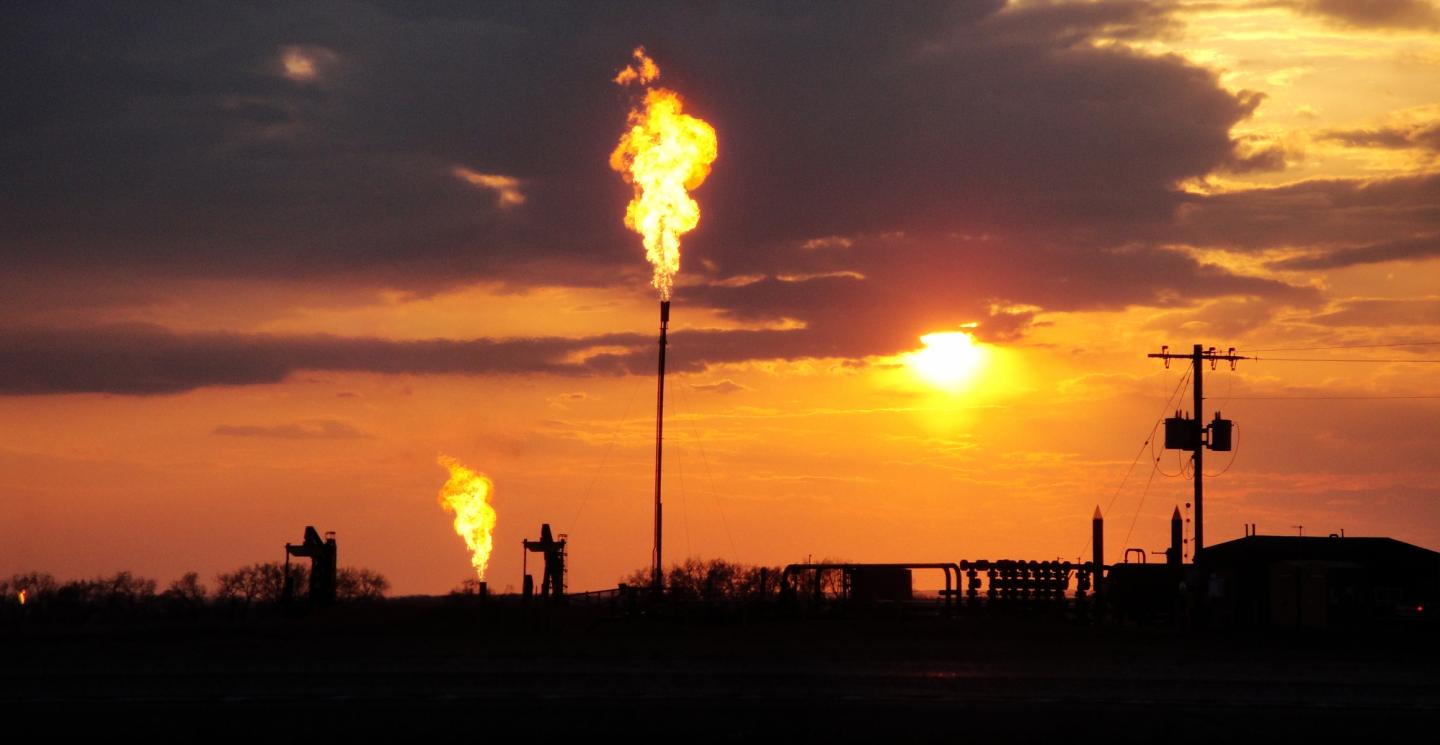
IMAGE

Credit: Jeff Peischl/CIRES and NOAA

The U.S. oil and gas industry emits 13 million metric tons of the potent greenhouse gas methane from its operations each year, 60 percent more than estimated by the U.S. Environmental Protection Agency, according to a new study published today in the journal Science.

Significantly, researchers found most of the emissions came from leaks, equipment malfunctions and other "abnormal" operating conditions. The climate impact of these leaks in 2015 was roughly the same as the climate impact of carbon dioxide emissions from all all U.S. coal-fired power plants operating in 2015, they found.

"This study provides the best estimate to date on the climate impact of oil and gas activity in the United States," said co-author Jeff Peischl, a CIRES scientist working in NOAA's Chemical Sciences Division in Boulder, Colorado. "It's the culmination of 10 years of studies by scientists across the country, many of which were spearheaded by CIRES and NOAA."

The new paper assessed measurements made at more than 400 well pads in six oil and gas production basins and scores of midstream facilities; measurements from valves, tanks and other equipment; and aerial surveys covering large swaths of the U.S. oil and gas infrastructure. The research was organized by the Environmental Defense Fund and drew on science experts from 16 research institutions including the University of Colorado Boulder and the University of Texas Austin.

Methane, the main ingredient of natural gas, is a potent greenhouse gas that has more than 80 times the warming impact of carbon dioxide over the first 20 years after its release. The new study estimates total US emissions at 2.3 percent of production, enough to erode the potential climate benefit of switching from coal to natural gas over the past 20 years. The methane lost to leakage is worth an estimated $2 billion, according to the Environmental Defense Fund, enough to heat 10 million homes in the U.S.

The assessment does suggest that repairing leaks and addressing other conditions that result in the accidental release of salrable methane could be effective. "Natural gas emissions can, in fact, be significantly reduced if properly monitored," said co-author Colm Sweeney, an atmospheric scientist in NOAA's Global Monitoring Division. "Identifying the biggest leakers could substantially reduce emissions that we have measured."

###

Read more from the Environmental Defense Fund at https://www.edf.org/climate/methane-studies.

Media Contact

Katy Human
[email protected]
303-735-0196
@cubouldernews

http://www.colorado.edu/news

Original Source

https://cires.colorado.edu/news/new-study-finds-us-oil-gas-methane-emissions-60-higher-estimated

Share12Tweet8Share2ShareShareShare2

Related Posts

3D Genome Mapping of Rare Immune Cells Uncovers New Crohn’s Disease Genes

3D Genome Mapping of Rare Immune Cells Uncovers New Crohn’s Disease Genes

August 4, 2026
Immune cells could help combat obesity-related muscle dysfunction

Immune cells could help combat obesity-related muscle dysfunction

August 4, 2026

China’s First Cave-Dwelling Freshwater Snail Named for Mythical Mountain God

August 4, 2026

Evolutionary history may explain why COVID-19 affects some people more severely

August 4, 2026
Please login to join discussion

POPULAR NEWS

  • Novel method enables genetic risk studies in rare immune cells

    29 shares
    Share 12 Tweet 7
  • 3D Genome Mapping of Rare Immune Cells Uncovers New Crohn’s Disease Genes

    29 shares
    Share 12 Tweet 7
  • Australian twin study reveals new insights into immune health

    29 shares
    Share 12 Tweet 7
  • Immune cells could help combat obesity-related muscle dysfunction

    29 shares
    Share 12 Tweet 7

About

We bring you the latest biotechnology news from best research centers and universities around the world. Check our website.

Follow us

Recent News

Novel method enables genetic risk studies in rare immune cells

3D Genome Mapping of Rare Immune Cells Uncovers New Crohn’s Disease Genes

Australian twin study reveals new insights into immune health

Subscribe to Blog via Email

Enter your email address to subscribe to this blog and receive notifications of new posts by email.

Join 86 other subscribers
  • Contact Us

Bioengineer.org © Copyright 2023 All Rights Reserved.

Welcome Back!

Login to your account below

Forgotten Password?

Retrieve your password

Please enter your username or email address to reset your password.

Log In
No Result
View All Result
  • Homepages
    • Home Page 1
    • Home Page 2
  • News
  • National
  • Business
  • Health
  • Lifestyle
  • Science

Bioengineer.org © Copyright 2023 All Rights Reserved.