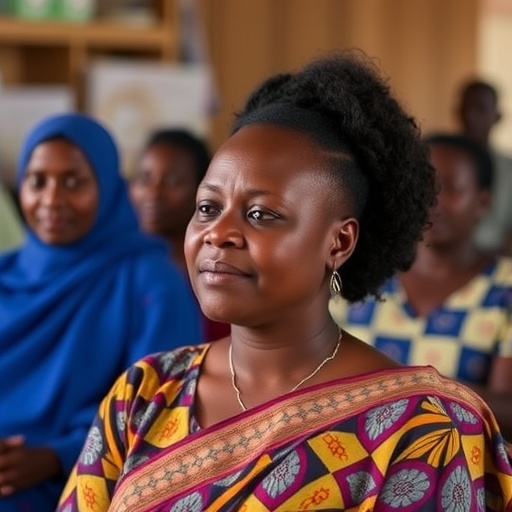
In a groundbreaking study published in Health Care for Women International, researchers have revealed the profound benefits of Transcendental Meditation® (TM®) on alleviating psychological distress and enhancing coping mechanisms among women living in the impoverished urban slums of Uganda. Conducted in the aftermath of two prolonged COVID-19 lockdowns—which heavily exacerbated economic and social hardships—the study offers compelling evidence that TM can serve as a vital mental health intervention in resource-limited settings, empowering women to navigate extreme stress with renewed resilience.
The study encompassed 199 women between the ages of 16 and 73, most of whom were mothers facing considerable socio-economic adversities heightened by the pandemic-induced lockdowns. With low literacy rates and limited formal education among participants, the researchers designed a single-blind, randomized controlled trial that sought to rigorously evaluate the mental health impact of TM over a three-month training period. The participants were divided into a TM group and a waitlist control group; following the immediate study, the control group was also given the opportunity to learn TM, with unanimous uptake observed.
Remarkably, the TM technique demonstrated statistically significant reductions in perceived stress—the primary psychological metric studied—as well as in associated conditions of anger and fatigue. These reductions are critical, given how chronic stress and emotional dysregulation not only impair mental well-being but also carry deleterious effects on physical health. The calming physiological effects of TM, which involves twice-daily 20-minute meditation sessions using a simple, natural technique, allow for a deep mental rest that reduces the body’s stress response mechanisms, markedly lowering cortisol and sympathetic nervous system activity.
In addition to stress mitigation, the study showed meaningful improvements in sleep quality and self-efficacy, the latter being a crucial psychological construct representing one’s belief in the ability to manage life’s challenges. Participants reported enhanced confidence and greater emotional control, indicating that TM fosters a self-regulatory capacity pivotal for mental health maintenance in fragile environments. These psychological gains translated into observable improvements in daily functioning and interpersonal relationships.
Follow-up assessments eight months post-intervention revealed sustained benefits. An overwhelming majority of women who continued practicing TM reported marked improvements in mental and physical health. Perhaps most notably, many mothers described improved relationships with their children, highlighting reductions in anger and increased patience and understanding. Enhanced social harmony extended beyond the household, with participants reporting stronger bonds and cooperation with neighbors, signaling broader community-level benefits catalyzed by individual mental health gains.
Witnesses from community leadership roles corroborated these findings through anecdotal evidence of a substantial decline in domestic conflicts and overall community tension. The impact of TM transcended psychological symptoms and manifested as tangible improvements in social stability and cohesion within vulnerable urban communities. Counseling centers and local administrative offices observed fewer cases of domestic violence and emotional distress among women, underscoring TM’s potential as a scalable, culturally adaptable intervention.
The simplicity and accessibility of TM are central to its success in this context. Unlike many psychological therapies that require intensive resources or sustained clinical engagement, TM can be independently practiced after initial instruction, making it an ideal method in under-resourced settings. Its physiological underpinnings—facilitating a state of restful alertness and coherence in brain function—directly counteract the hyperarousal characteristic of chronic stress, thereby promoting homeostasis across multiple biological systems.
Beyond measurable psychological effects, participants reported transformative changes in self-perception and quality of life. Women described newfound inner peace, improved self-control, and a sense of empowerment that permeated their daily routines. These subjective improvements contribute not only to individual well-being but also to breaking intergenerational cycles of trauma and mental health disadvantage, which are often entrenched in marginalized populations.
Importantly, the study’s findings challenge prevailing narratives that individuals living in extreme poverty lack resources or agency to influence their mental health. Instead, TM offers a low-cost, low-barrier tool that taps into intrinsic human capacities for self-regulation and healing. This research adds to an expanding body of evidence supporting meditation-based interventions as viable public health strategies in addressing mental health disparities worldwide, particularly among women disproportionately affected by adversity.
The study was made possible through funding by the Rona and Jeffery Abramson Foundation, with support from local organizations including the Amazing Women Community Organization and the African Women and Girls Organization (AWAGO). These partnerships highlight the critical role of community engagement and culturally sensitive program delivery in achieving successful mental health outcomes in complex social environments.
Transcendental Meditation’s unique attributes distinguish it from other mindfulness or contemplative practices. It does not require focused concentration, active monitoring of thoughts, or adherence to philosophical or religious frameworks. Instead, it effortlessly facilitates the mind’s natural tendency to transcend active thinking, fostering deep rest and inner silence. This physiological and cognitive state is associated with measurable benefits, including reductions in systemic inflammation, improved cardiovascular markers, and enhanced cognitive function, thereby yielding holistic health improvements.
The implications of this study resonate far beyond the Ugandan context. Amid a global mental health crisis exacerbated by the pandemic, scalable and effective interventions like TM can provide critical relief, especially in low-income and conflict-affected regions. The empowerment of women through enhanced coping capacity holds promise not only for individual and family health but also for community resilience and social progress, framing TM as a catalyst for transformative societal change.
In conclusion, this rigorous randomized controlled trial demonstrates that Transcendental Meditation constitutes a powerful, evidence-based approach to mitigating psychological distress and fostering coping in women facing extreme hardship. As mental health professionals and policymakers seek sustainable solutions to global mental health challenges, TM’s incorporation into public health initiatives could mark a pivotal advance in improving outcomes for vulnerable populations worldwide.
Subject of Research: People
Article Title: The Impact of Transcendental Meditation on Psychological Distress and Coping in the Lives of Women in Uganda: A Randomized Controlled Trial
News Publication Date: 5-Feb-2026
Web References: https://www.tm.org
References: DOI: 10.1080/07399332.2025.2611927
Image Credits: African Women’s And Girls Organization (AWAGO)
Keywords: Transcendental Meditation, psychological distress, coping, randomized controlled trial, mental health, women’s health, Uganda, COVID-19 pandemic, stress reduction, self-efficacy, sleep quality, domestic violence, community resilience
Tags: coping mechanisms for womenCOVID-19 impact on mental healthempowerment through meditationmaternal mental health supportpsychological distress reductionrandomized controlled trial TMresource-limited mental health interventionssocio-economic challenges Ugandastress reduction techniquesTranscendental Meditation benefitsUganda women’s mental healthurban slums mental health