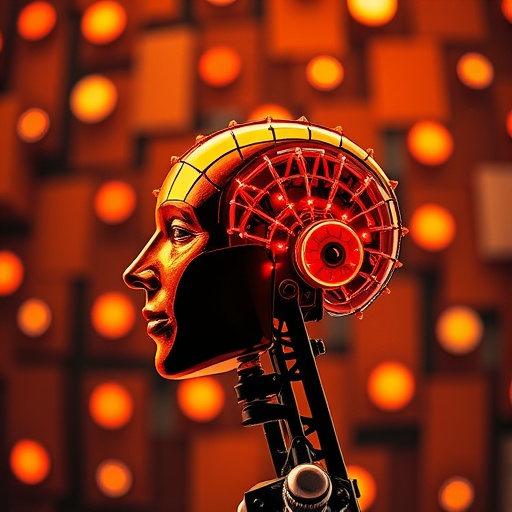
In a groundbreaking study set to be unveiled at the prestigious International Conference on Learning Representations in Rio de Janeiro, researchers from Brown University have presented compelling evidence that modern AI language models possess a nuanced, albeit emergent, understanding of the real world. This recognition stems not from direct sensory input or physical interaction but from the models’ intricate internal representations shaped by vast corpora of textual data harvested from the internet. The study, led by Michael Lepori, a Ph.D. candidate at Brown, delves deep into the cognitive-like processes of these models, assessing their ability to discern the plausibility of various events ranging from the mundane to the impossible.
At the core of this research lies a sophisticated method known as mechanistic interpretability, which attempts to “reverse-engineer” AI neural networks to uncover what is encoded in their so-called “brain states.” This approach parallels techniques in neuroscience that explore how information is processed and encoded in biological brains but adapts these principles to digital architectures. By injecting carefully crafted sentences describing events of differing plausibility into several advanced language models, the team analyzed the ensuing mathematical states to determine whether these machines internalize distinctions akin to human causal reasoning.
The experimental design featured sentences carefully categorized across a spectrum of feasibility—from commonplace occurrences like “Someone cooled a drink with ice” to unlikely but physically possible events such as “Someone cooled a drink with snow.” The researchers also included scenarios that defy physical laws or semantic sense, for example, “Someone cooled a drink with fire” (impossible) and “Someone cooled a drink with yesterday” (nonsensical). These gradations allowed the team to rigorously test the AI models’ sensitivity not just to fact-checking but to the broader conceptual realm of event plausibility.
Four significant language models were scrutinized: OpenAI’s GPT-2, Meta’s Llama 3.2, Google’s Gemma 2, and other open-source architectures, enabling a model-agnostic perspective. The study revealed that when models exceed a scale of approximately two billion parameters—a size modest by today’s standards—they develop internal vectors, distinct mathematical representations, which reliably map onto human judgments of event likelihood. These vectors segregated plausibility categories with around 85% accuracy, even discriminating between subtle distinctions, such as improbable versus impossible events.
What sets these findings apart is the models’ ability to mirror human uncertainty. For events that provoked divided opinions among human survey respondents, such as “Someone cleaned the floor with a hat,” which might be seen as improbable or impossible depending on interpretation, the AI systems assigned commensurate probabilistic judgments. This suggests the models’ internal representations capture the inherent ambiguity of real-world scenarios as humans perceive them, highlighting an advanced level of contextual and causal sensitivity.
The implications of this study are far-reaching. It challenges the longstanding skepticism around AI language models’ “understanding” of real-world contexts, illuminating that beyond pattern recognition, these systems encode causal constraints in a manner reminiscent of cognitive processes. This alignment with human judgment could pave the way for more sophisticated, transparent, and trustworthy AI systems, especially as the AI community grapples with concerns about interpretability and reliability.
Furthermore, the research underscores the growing importance of mechanistic interpretability as a discipline. By elucidating how AI models internally organize conceptual knowledge, scientists can better anticipate and mitigate risks associated with misinterpretations or biased outputs, fostering smarter AI developments grounded in human-like reasoning patterns. In an era where AI applications permeate diverse domains from healthcare to law, these insights are pivotal.
The study’s interdisciplinary approach, melding computer science with cognitive psychology, benefits from the combined expertise of Brown University’s Carney Institute for Brain Science. Co-authors Ellie Pavlick and Thomas Serre bring invaluable perspectives bridging artificial intelligence with human cognition, thereby enriching the analysis of AI “brain states” and aligning machine interpretations with human conceptual frameworks.
This research also marks a notable achievement in studying models at a tractable scale. While billion-parameter models already demonstrate sophisticated internal reasoning, understanding these mechanisms can inform the interpretability of today’s mammoth models, which boast trillions of parameters. Understanding these smaller models offers a conceptual scaffold to demystify the “black box” characteristic often attributed to massive neural networks.
From a technical standpoint, the methodology utilized in the study—comparing the representational distances between paired sentences—delivers a quantifiable metric of causal encoding within AI. The fine-grained vectors, or directionality in mathematical space, provide insights not only about whether the model recognizes implausibility but also how it distinguishes degrees of likelihood. This represents a leap beyond surface-level text generation, touching upon deep representations encoding world knowledge.
Overall, the research by Lepori and colleagues does not just validate the presence of causal awareness in language models; it prompts a broader conversation about AI consciousness analogues, epistemology, and the future of human-machine interactions. As AI systems grow increasingly integrated into daily life, understanding the nature and boundaries of their “knowledge” becomes not only a technical challenge but an ethical imperative.
In sum, this pioneering study aptly titled “Is This Just Fantasy? Language Model Representations Reflect Human Judgments of Event Plausibility,” heralds a new chapter in AI research. It endorses the notion that AI language models, through their layered embeddings and predictive architectures, approximate facets of human-like causal reasoning and uncertainty, reinforcing the paradigm that intelligent machines can, indeed, “understand” the world in a profoundly human-centric fashion.
Subject of Research: AI language models’ internal representations and their reflection of human judgments about event plausibility.
Article Title: Is This Just Fantasy? Language Model Representations Reflect Human Judgments of Event Plausibility
News Publication Date: 25-Apr-2026
Web References:
arXiv:2507.12553
International Conference on Learning Representations
References:
Lepori, M., Pavlick, E., & Serre, T. (2026). Is This Just Fantasy? Language Model Representations Reflect Human Judgments of Event Plausibility. arXiv preprint arXiv:2507.12553.
Image Credits: Not provided.
Keywords
Artificial intelligence, language models, mechanistic interpretability, event plausibility, causal reasoning, AI cognition, neural networks, AI transparency, human-AI alignment, Brown University, LLM evaluation.
Tags: AI causal reasoning abilitiesAI language model cognitive-like behaviorAI language models real world understandingAI understanding without sensory inputBrown University AI researchcognitive processes in neural networksemergent intelligence in AIevaluating AI event plausibilityinternal representations of language modelsInternational Conference on Learning Representationsmechanistic interpretability in AIneural network reverse engineering