A groundbreaking special issue of Proceedings of the Royal Society B is challenging longstanding conceptions in biology and the social sciences by offering new perspectives on the complex process of domestication. The volume, titled Shifting Paradigms Towards Integrated Perspectives in Domestication Studies, unites leading experts across disciplines like archaeology, evolutionary biology, and plant science to rethink traditional definitions and narratives surrounding domestication. This collection of studies seeks to illuminate the diverse trajectories through which humans and other species have co-evolved over millennia, advancing a more nuanced and integrated understanding of one of humanity’s most significant biological and cultural transformations.
At the core of this special issue is a reevaluation of domestication beyond the standardized examples that dominate popular discourse—such as wheat, rice, and sheep. Instead, contributors explore lesser-studied plants and animals, shedding light on domestication’s varied manifestations across different species, landscapes, and historical periods. This breadth exemplifies the increasingly accepted view that domestication is not a monolithic event but rather a spectrum of interrelated processes influenced by ecological, technological, and social factors, all unfolding over extensive timescales.
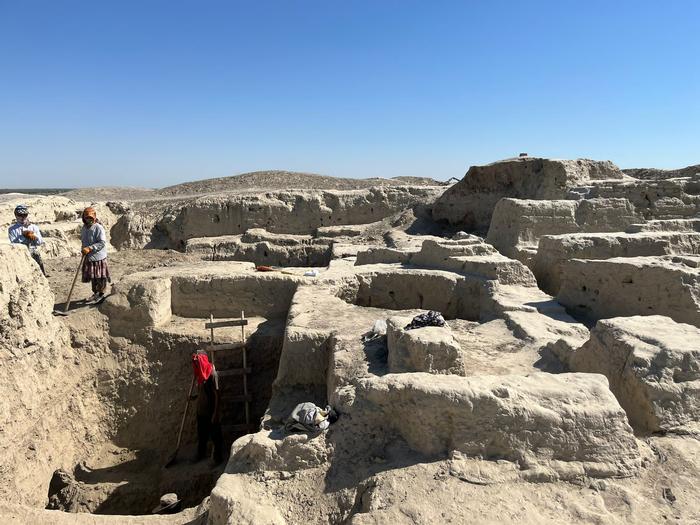
Dr. Robert Spengler, head of the Domestication and Anthropogenic Evolution research group at the Max Planck Institute of Geoanthropology, serves as the lead editor for this collection. His work epitomizes the issue’s interdisciplinary approach, drawing upon archaeological excavations, ancient botanical remains, and evolutionary theory to interrogate the mechanics behind domestication. This special issue builds on the pivotal 2024 “Domesticating Earth” conference held at Ringberg Castle in Bavaria, which catalyzed international collaboration and fostered the synthesis of diverse methodological frameworks.
One of the most ambitious contributions comes from Dr. Rita Dal Martello of Ca’Foscari University in Venice, who compiled the largest dataset of cereal grain metrics spanning from the 9th millennium BCE to the present. Her article, “Contrasting diachronic regional trends in cereal grain evolution across Eurasia,” provides compelling evidence of the independent emergence of increased grain sizes in geographically disparate regions. By analyzing size fluctuations in crops such as wheat, barley, and Chinese millets, Dal Martello reveals nuanced evolutionary pathways shaped by both cultural selection and environmental constraints. These findings disrupt the simplistic narrative of linear crop improvement and highlight the complexity inherent in agricultural evolution.
A fundamental challenge addressed in this issue concerns the very definition of domestication. In the article “Seeking consensus on the domestication concept,” Spengler and his colleagues critically examine extant definitions, exposing inherent biases that privilege intentional human intervention over subtler, unconscious evolutionary dynamics. Their argument pushes for an expanded conceptual framework recognizing that domestication can occur incrementally and unintentionally, through long-term ecological interactions and co-adaptations. This paradigm shift invites reconsideration of how archaeologists, biologists, and social scientists interpret domestication evidence.
The implications of redefining domestication transcend academic debate, touching on how humanity perceives its relationship with the natural world. According to Spengler, domestication is “the foundation of modern civilization,” and understanding its intricate pathways has profound relevance for contemporary challenges. The intricate co-evolutionary processes that shaped early agricultural societies continue to influence present-day species adaptations and human-ecosystem dynamics, underscoring the importance of integrating historical insight into policy and sustainability initiatives.
Beyond grains and large mammals, the volume gives voice to the domestication trajectories of hidden and overlooked species, from minor crops to commensal animals, emphasizing the diversity of domestication processes. This broad scope also reveals how domestication intersects with varying local knowledge systems, cultural practices, and climatic pressures. The emergent view suggests that domestication is best understood as a mosaic of evolutionary events, each informed by particular ecological and social contexts, challenging universalist assumptions that have long pervaded the field.
In parallel, evolutionary biology provides theoretical models explaining how domesticated traits arise and stabilize within populations. The issue’s integrative approach bridges gaps between ancient artifact analysis and modern genetic studies, allowing researchers to interpret morphological changes in the archaeological record alongside molecular data. Such synthesis deepens insight into selection pressures, gene flow, and hybridization events that define the continuum from wild progenitors to fully domesticated species.
Moreover, the special issue emphasizes the dynamic and ongoing nature of domestication. With current trends such as urbanization, climate change, and globalization drastically reshaping ecosystems, human-driven selective pressures continue to influence species’ evolutionary trajectories. Recognizing the incremental and unconscious nature of many domestication processes opens avenues for applying historical lessons to modern conservation and agricultural innovation strategies—highlighting the potential to foster sustainable, resilient food systems attuned to complex socio-ecological realities.
The editors’ collective insight underscores that domestication is a multidimensional process shaped by interaction networks spanning genetics, culture, and environment. This reframing disrupts entrenched disciplinary silos and introduces a holistic narrative emphasizing adaptability, responsiveness, and long-term co-evolution. As a result, new methodologies and analytical frameworks emerge to better capture the subtleties of domestication, fostering cross-disciplinary dialogue and innovation.
This special issue stands at the vanguard of contemporary domestication studies, setting a new research agenda that embraces complexity and challenges reductionist thinking. By integrating archaeological data with evolutionary theory and ethnobotanical knowledge, it offers a robust platform from which to explore humanity’s deepest connections with the biotic world. The implications extend beyond scholarship, prompting renewed reflection on how society engages with biodiversity and manages the legacies of ancient human-environment entanglements.
In conclusion, Shifting Paradigms Towards Integrated Perspectives in Domestication Studies opens a transformative intellectual terrain, encouraging scientists, historians, and policymakers alike to rethink domestication as a pluralistic and evolving phenomenon fundamental to understanding human history and shaping future sustainability. This vital reassessment invites ongoing inquiry and collaboration, ensuring that the study of domestication remains a dynamic field equipped to meet twenty-first-century challenges.
Subject of Research: Not applicable
Article Title: Seeking consensus on the domestication concept
News Publication Date: 15-May-2025
Web References: http://dx.doi.org/10.1098/rstb.2024.0188
Image Credits: Robert N. Spengler III
Keywords: Domestication, evolutionary biology, archaeology, plant science, cereal grains, co-evolution, anthropogenic evolution, human-environment interaction, agricultural history, phenotypic evolution, sustainability, integrated perspectives
Tags: archaeology and domesticationcultural transformations in domesticationdomestication studiesecological influences on domesticationevolution of domesticated specieshistorical perspectives on domesticationinterdisciplinary perspectives on domesticationinterrelated processes in domesticationlesser-known domesticated plantsplant science and domesticationreevaluating domestication narrativestechnological impacts on domestication