

• HOME
  • NEWS
  • EXPLORE
    • CAREER
      • Companies
      • Jobs
    • EVENTS
    • iGEM
      • News
      • Team
    • PHOTOS
    • VIDEO
    • WIKI
  • BLOG
  • COMMUNITY
    • FACEBOOK
    • INSTAGRAM
    • TWITTER
Sunday, March 29, 2026
BIOENGINEER.ORG
No Result
View All Result
  • Login
  • HOME
  • NEWS
  • EXPLORE
    • CAREER
      • Companies
      • Jobs
        • Lecturer
        • PhD Studentship
        • Postdoc
        • Research Assistant
    • EVENTS
    • iGEM
      • News
      • Team
    • PHOTOS
    • VIDEO
    • WIKI
  • BLOG
  • COMMUNITY
    • FACEBOOK
    • INSTAGRAM
    • TWITTER
  • HOME
  • NEWS
  • EXPLORE
    • CAREER
      • Companies
      • Jobs
        • Lecturer
        • PhD Studentship
        • Postdoc
        • Research Assistant
    • EVENTS
    • iGEM
      • News
      • Team
    • PHOTOS
    • VIDEO
    • WIKI
  • BLOG
  • COMMUNITY
    • FACEBOOK
    • INSTAGRAM
    • TWITTER
No Result
View All Result
Bioengineer.org
No Result
View All Result
Home Headlines

New smart sensor to help farmers spot lameness in sheep

Bioengineer.org by Bioengineer.org
January 20, 2018
in Headlines, Health, Science News
Reading Time: 2 mins read
0
Share on FacebookShare on TwitterShare on LinkedinShare on RedditShare on Telegram
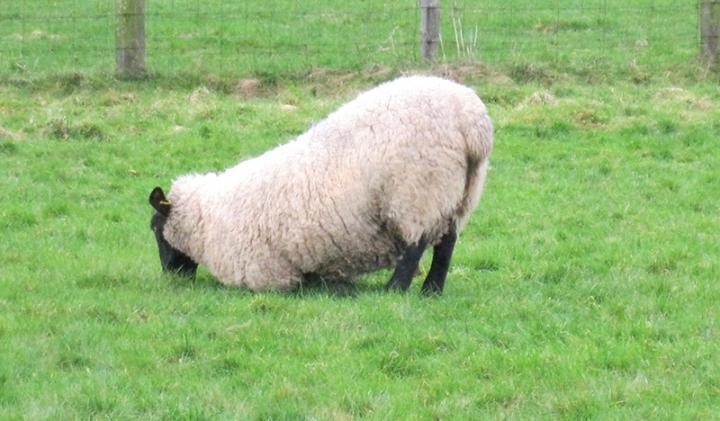
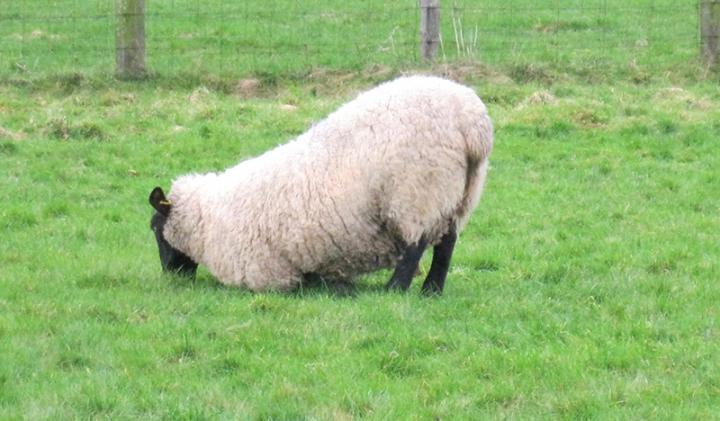
IMAGE

Credit: University of Nottingham

A new smart wearable device that can automatically detect lameness in sheep is being developed by veterinary researchers at the University of Nottingham and industry partners Intel and Farm Wizard.

Lameness is the biggest health and welfare problem on sheep farms, costing the sector around £80m a year. More than 90% of farmers in the UK report lameness in their flocks, most of which is caused by footrot – a bacterial infection. If spotted early enough in individual sheep, cases can be treated which in turn can prevent the problem spreading in the flock.

As sheep are a 'prey' species they are likely to mask signs of lameness when they feel threatened, or enlivened by the presence of observing farmers and vets. It means that up to now, diagnosis has been difficult and relies on visual inspection because there are no validated commercial tools available.

The new technical feasibility study and prototype tagging and monitoring system has been developed by Nottingham Vet School researcher, Associate Professor Jasmeet Kaler, with industry giant Intel and agricultural software developer Farm Wizard.

Dr Kaler said: "Our new system is a smart device – a wearable technology that we hope will be a game-changing investment for sheep farmers and a first for the industry. It consists of a sensing device worn on a sheep's ear tag that gathers accelerometer and gyroscope data effectively tracking the animal's behaviour and movement, as well as its gait. The algorithms we have developed are used to create different alerts for farmers. So far they have provided high accuracy in predicting various behaviours of the sheep, including differentiating lameness. We are very excited as our first paper from this work has been accepted in the journal of Royal Society Open Science and will be be available soon.

"I think what is very novel about this technology is that it utilises edge processing which means it doesn't necessarily need to send all the data to the Cloud because it does the thinking on the device. This is an advantage when it comes to battery life.. We are currently validating the results in a larger trial and we hope the technology will be available after some further work."

Dr Kaler's previous research has found that to date only around 20% of farmers are able to spot and treat lameness in sheep early. It was also found that the prevalence of lameness caused by footrot was much lower in groups of sheep where individual sheep had been treated early with parenteral and topical antibiotics.

The sheep lameness smart sensor project has been funded by Innovate UK and the BBSRC and was recently presented at the Oxford Farming Conference's Innovation Hub. The first paper from this project will be available soon in the upcoming issue in the journal Royal Society Open Science.

###

Media Contact

Emma Rayner
01-159-515-793
@UoNPressOffice

http://www.nottingham.ac.uk

Original Source

https://www.nottingham.ac.uk/news/pressreleases/2018/january/new-smart-sensor-to-help-farmers-spot-lameness-in-sheep.aspx

Share12Tweet8Share2ShareShareShare2

Related Posts

Microtubules Found to Actively Ensure Accurate Chromosome Distribution During Cell Division

March 25, 2026

Aversive Learning Hijacks Brain Sugar Sensor

March 25, 2026

Isolated H2-Reduced Clusters Boost CO2-to-Methanol Catalysis

March 25, 2026

In-Sensor Cryptography Links Physical Process to Digital Identity

March 25, 2026
Please login to join discussion

POPULAR NEWS

  • blank

    Revolutionary AI Model Enhances Precision in Detecting Food Contamination

    96 shares
    Share 38 Tweet 24
  • Imagine a Social Media Feed That Challenges Your Views Instead of Reinforcing Them

    1004 shares
    Share 397 Tweet 248
  • Uncovering Functions of Cavernous Malformation Proteins in Organoids

    54 shares
    Share 22 Tweet 14
  • Promising Outcomes from First Clinical Trials of Gene Regulation in Epilepsy

    51 shares
    Share 20 Tweet 13

About

We bring you the latest biotechnology news from best research centers and universities around the world. Check our website.

Follow us

Recent News

In-Sensor Cryptography Links Physical Process to Digital Identity

Can Psychosocial Factors Influence Cancer Risk?

Depression Factors in Elderly: Pre vs. Post-COVID Analysis

Subscribe to Blog via Email

Success! An email was just sent to confirm your subscription. Please find the email now and click 'Confirm' to start subscribing.

Join 78 other subscribers
  • Contact Us

Bioengineer.org © Copyright 2023 All Rights Reserved.

Welcome Back!

Login to your account below

Forgotten Password?

Retrieve your password

Please enter your username or email address to reset your password.

Log In
No Result
View All Result
  • Homepages
    • Home Page 1
    • Home Page 2
  • News
  • National
  • Business
  • Health
  • Lifestyle
  • Science

Bioengineer.org © Copyright 2023 All Rights Reserved.
