• HOME
  • NEWS
  • EXPLORE
    • CAREER
      • Companies
      • Jobs
    • EVENTS
    • iGEM
      • News
      • Team
    • PHOTOS
    • VIDEO
    • WIKI
  • BLOG
  • COMMUNITY
    • FACEBOOK
    • INSTAGRAM
    • TWITTER
Saturday, May 16, 2026
BIOENGINEER.ORG
No Result
View All Result
  • Login
  • HOME
  • NEWS
  • EXPLORE
    • CAREER
      • Companies
      • Jobs
        • Lecturer
        • PhD Studentship
        • Postdoc
        • Research Assistant
    • EVENTS
    • iGEM
      • News
      • Team
    • PHOTOS
    • VIDEO
    • WIKI
  • BLOG
  • COMMUNITY
    • FACEBOOK
    • INSTAGRAM
    • TWITTER
  • HOME
  • NEWS
  • EXPLORE
    • CAREER
      • Companies
      • Jobs
        • Lecturer
        • PhD Studentship
        • Postdoc
        • Research Assistant
    • EVENTS
    • iGEM
      • News
      • Team
    • PHOTOS
    • VIDEO
    • WIKI
  • BLOG
  • COMMUNITY
    • FACEBOOK
    • INSTAGRAM
    • TWITTER
No Result
View All Result
Bioengineer.org
No Result
View All Result
Home NEWS Science News Biology

New role for death molecule

Bioengineer by Bioengineer
February 11, 2019
in Biology
Reading Time: 2 mins read
0
IMAGE
Share on FacebookShare on TwitterShare on LinkedinShare on RedditShare on Telegram

To unravel programmed cell death pathways, investigators examine a molecule deemed unimportant, and find new function
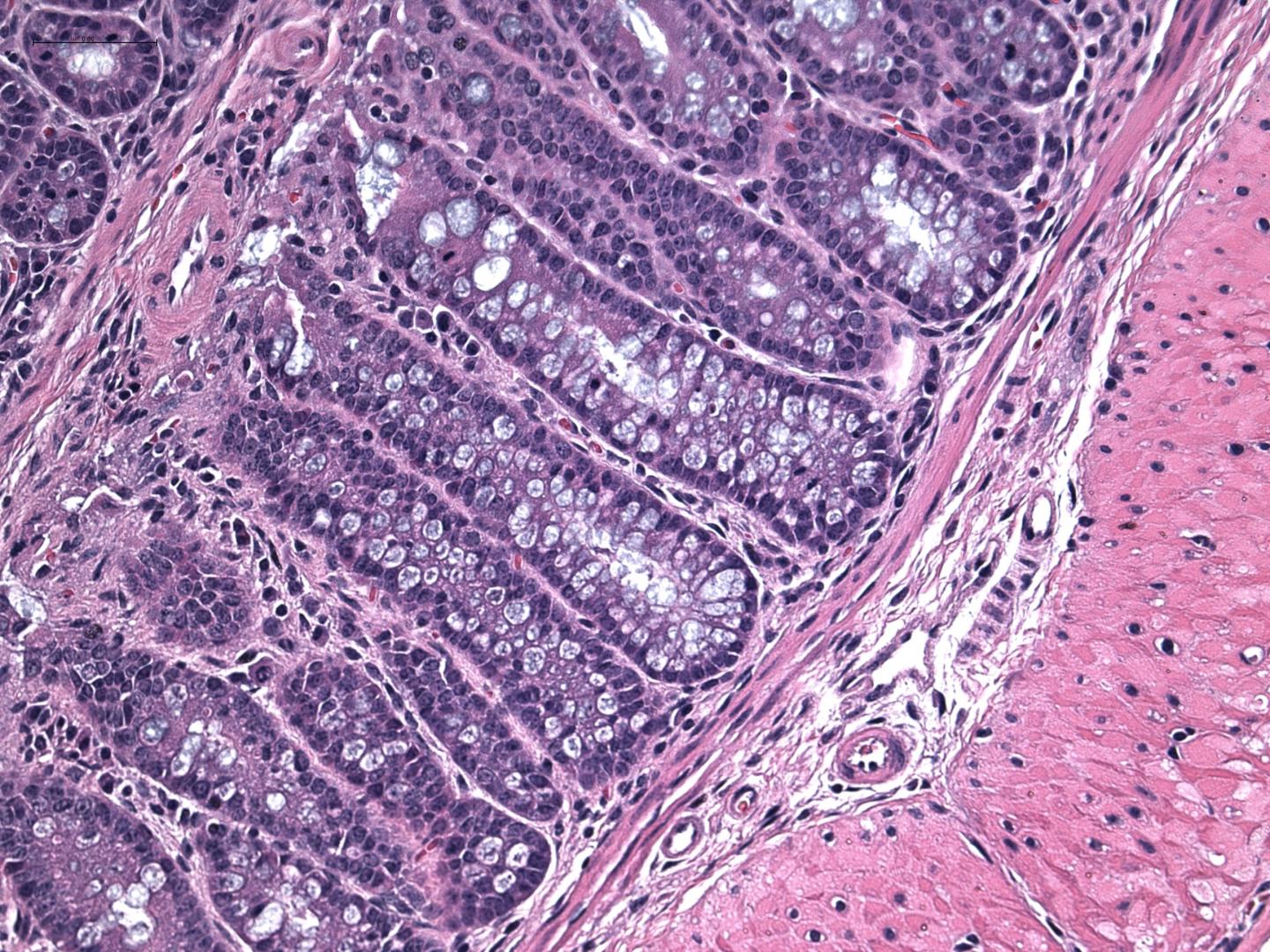
IMAGE

Credit: John Dowling, Jefferson (Philadelphia University + Thomas Jefferson University).


PHILADELPHIA – Cellular death is vital for health. Without it, we could develop autoimmune diseases or cancers. But a cell’s decision to self-destruct is tightly regulated, so that it only happens to serve the best interests of the body. Now researchers have discovered a novel role for a signaling molecule that was once considered a dispensable player, a discovery that could inform fields of research as diverse as cancer, autoimmunity, and in-utero development. The research was published in Nature Communications, February 11th.

Years ago, researchers in the field discovered receptors on the surfaces of cells they called “death receptors.” These molecules would send the cell into a cascade of cellular reactions that ended in death. Soon after, three molecules were discovered that contained “death domains,” areas on the molecule that directly interacted with the death receptors and helped relay the message. These molecules proved so essential that without them mice lacking these death-domain molecules died young. At least that was the case in two of the three molecules.

Of the three major death-relaying molecules, RIPK1, FADD, and TRADD, it seemed TRADD was less essential. Without FADD, mice died in utero. Without RIPK1, mice die shortly before or after birth. Without TRADD, mice seemed to do just fine. TRADD had a death domain – it clearly was connected to cell-death pathways – but its main purpose was unclear.

Senior author, Jianke Zhang, PhD, a Professor of Microbiology and Immunology at Jefferson (Philadelphia University + Thomas Jefferson University) has been studying cell-death pathways for decades. Through the work of Dr. Zhang and others, it became clear that the roles of these molecules wasn’t simply to turn on the death signal. Rather, in certain combinations they could protect a cell from death, rather than spur suicide.

Through the work of first author and postdoctoral fellow John Dowling, their most recent paper, the researchers showed that TRADD serves a dual function. In cells lacking the RIPK1 protein, having two copies of the gene TRADD or no copies of it would result in cell death. On the other hand, when only one copy of TRADD gene was present in cells lacking RIPK1, the cells tended to turn off the death signal, and promote cell survival.

“The work sheds new light on the regulation of cell death and survival,” said Dr. Zhang. “In certain contexts, such as in cells that have naturally low RIPK1 expression, TRADD could drive death or promote survival.”

###

Article reference: John P. Dowling, Mohamed Alsabbagh, Christina Del Casale, Zheng-Gang Liu, Jianke Zhang, “TRADD regulates perinatal development and adulthood survival in mice lacking RIPK1 and RIPK3,” Nature Communications, DOI: 10.1038/s41467-019-08584-5, 2019.

Media Contact: Edyta Zielinska, 215-955-7359, [email protected].

Media Contact
Edyta Zielinska
[email protected]
215-955-7359

Related Journal Article

http://dx.doi.org/10.1038/s41467-019-08584-5

Tags: BiologyCell BiologyMolecular Biology
Share12Tweet8Share2ShareShareShare2

Related Posts

Single mother must adapt swiftly — the survival of her colony depends on it — Biology

Single mother must adapt swiftly — the survival of her colony depends on it

May 15, 2026
Why Are Nearly Everyone Right-Handed? It Might Be Linked to How We Learned to Walk — Biology

Why Are Nearly Everyone Right-Handed? It Might Be Linked to How We Learned to Walk

May 15, 2026

Excessive Neuronal Activity Initiates Severe Autoimmune Brain Disorder

May 15, 2026

Precision Anti-Aging Strategies Focus on Eliminating Harmful Senescent Cells While Preserving Beneficial Ones

May 15, 2026
Please login to join discussion

POPULAR NEWS

  • Research Indicates Potential Connection Between Prenatal Medication Exposure and Elevated Autism Risk

    843 shares
    Share 337 Tweet 211
  • New Study Reveals Plants Can Detect the Sound of Rain

    730 shares
    Share 291 Tweet 182
  • Salmonella Haem Blocks Macrophages, Boosts Infection

    62 shares
    Share 25 Tweet 16
  • Breastmilk Balances E. coli and Beneficial Bacteria in Infant Gut Microbiomes

    58 shares
    Share 23 Tweet 15

About

We bring you the latest biotechnology news from best research centers and universities around the world. Check our website.

Follow us

Recent News

Naïve CD4+ T-Cells Predict CAR T Therapy Success

REM Sleep Breathing, Metabolism, and Memory Linked

Machine Learning Detects Flow Instability in Channels

Subscribe to Blog via Email

Enter your email address to subscribe to this blog and receive notifications of new posts by email.

Join 82 other subscribers
  • Contact Us

Bioengineer.org © Copyright 2023 All Rights Reserved.

Welcome Back!

Login to your account below

Forgotten Password?

Retrieve your password

Please enter your username or email address to reset your password.

Log In
No Result
View All Result
  • Homepages
    • Home Page 1
    • Home Page 2
  • News
  • National
  • Business
  • Health
  • Lifestyle
  • Science

Bioengineer.org © Copyright 2023 All Rights Reserved.