• HOME
  • NEWS
  • EXPLORE
    • CAREER
      • Companies
      • Jobs
    • EVENTS
    • iGEM
      • News
      • Team
    • PHOTOS
    • VIDEO
    • WIKI
  • BLOG
  • COMMUNITY
    • FACEBOOK
    • INSTAGRAM
    • TWITTER
Thursday, May 14, 2026
BIOENGINEER.ORG
No Result
View All Result
  • Login
  • HOME
  • NEWS
  • EXPLORE
    • CAREER
      • Companies
      • Jobs
        • Lecturer
        • PhD Studentship
        • Postdoc
        • Research Assistant
    • EVENTS
    • iGEM
      • News
      • Team
    • PHOTOS
    • VIDEO
    • WIKI
  • BLOG
  • COMMUNITY
    • FACEBOOK
    • INSTAGRAM
    • TWITTER
  • HOME
  • NEWS
  • EXPLORE
    • CAREER
      • Companies
      • Jobs
        • Lecturer
        • PhD Studentship
        • Postdoc
        • Research Assistant
    • EVENTS
    • iGEM
      • News
      • Team
    • PHOTOS
    • VIDEO
    • WIKI
  • BLOG
  • COMMUNITY
    • FACEBOOK
    • INSTAGRAM
    • TWITTER
No Result
View All Result
Bioengineer.org
No Result
View All Result
Home NEWS Science News Biology

New research on why mutations in a gene leads to mitochondrial disease

Bioengineer by Bioengineer
April 27, 2021
in Biology
Reading Time: 2 mins read
0
IMAGE
Share on FacebookShare on TwitterShare on LinkedinShare on RedditShare on Telegram

IMAGE

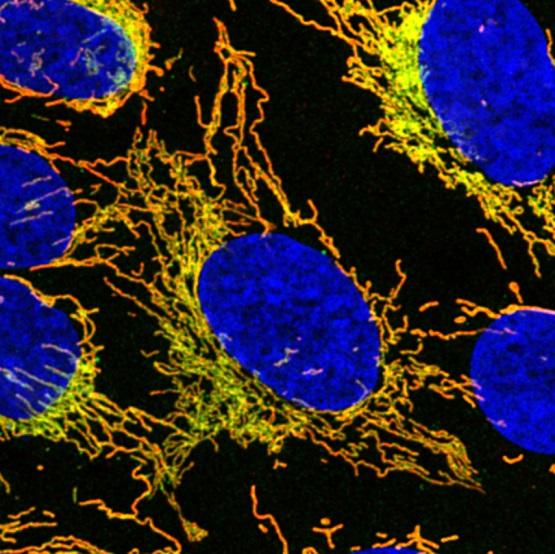
Credit: (C) Dr Matthew Eramo

Monash University researchers have uncovered for the first time the reason mutations in a particular gene lead to mitochondrial disease.

The finding, published in PNAS journal and led by Professor Mike Ryan from Monash University’s Biomedicine Discovery Institute, shows that a gene responsible for causing loss of vision and hearing, TMEM126A, makes a protein that helps build an important energy generator in mitochondria. So, if this gene is defective, it reduces mitochondrial function and impares energy production, uncovering why mutations lead to the disease.

Mitochondria are critical structures within living cells that play a central role in energy conversion and their job is to process oxygen and take in the sugars and proteins from the food we eat to produce the energy our bodies need to function properly. Mitochondria produce 90 per cent of the energy our body needs to function.

Mitochondrial disease is an inherited, chronic illness that can present at birth or develop later in life and occurs when mitochondria fail to produce enough energy for the body to function properly. The cells of the optic nerve and the inner ear are particularly sensitive to mitochondrial defects due to the high energy requirements to transfer information to the brain, but Mitochondrial diseases can affect almost any part of the body.

Using a combination of cutting-edge technologies, the study found that loss of TMEM126A results in an isolated complex I deficiency – a common form of mitochondrial disease where a critical enzyme called complex I is reduced – and that the TMEM126A protein binds to a number of complex I subunits and additional proteins that help build the enzyme, known as assembly factors.

“Now we know that TMEM126A is important in helping to build this protein needed to provide energy for the mitochondria organelles, we can look at future therapies that can perhaps bypass TMEM126A function and find other ways to help cells make energy,” Professor Ryan said.

First author Dr Luke Formosa adds: “Now that we know what TMEM126A does in mitochondria, we can start to investigate treatments that might work for individuals with mutations in this gene, which could lead to less severe loss of vision and hearing.”

Read the full paper in PNAS journal titled: Optic atrophy-associated TMEM126A is an assembly factor for the ND4-module of mitochondrial complex I

Media Contact
Wendy Smith
[email protected]

Related Journal Article

http://dx.doi.org/10.1073/pnas.2019665118

Tags: BiologyCell Biology
Share12Tweet8Share2ShareShareShare2

Related Posts

Apical Polar Ring Crucial in Plasmodium Blood Stage — Biology

Apical Polar Ring Crucial in Plasmodium Blood Stage

May 14, 2026
Cryo-ET Reveals Physcomitrium Patens Plasmodesmata Structure — Biology

Cryo-ET Reveals Physcomitrium Patens Plasmodesmata Structure

May 14, 2026

“‘Last Titan’: Discovery of Southeast Asia’s Largest Dinosaur Unveiled”

May 14, 2026

Study Offers In-Depth Analysis of Changes in Toxin-Producing Phytoplankton Populations

May 14, 2026
Please login to join discussion

POPULAR NEWS

  • Research Indicates Potential Connection Between Prenatal Medication Exposure and Elevated Autism Risk

    842 shares
    Share 337 Tweet 211
  • New Study Reveals Plants Can Detect the Sound of Rain

    729 shares
    Share 291 Tweet 182
  • Salmonella Haem Blocks Macrophages, Boosts Infection

    62 shares
    Share 25 Tweet 16
  • Breastmilk Balances E. coli and Beneficial Bacteria in Infant Gut Microbiomes

    57 shares
    Share 23 Tweet 14

About

We bring you the latest biotechnology news from best research centers and universities around the world. Check our website.

Follow us

Recent News

Social Support Factors in Singapore’s Older Adults

Human Blood NAD+ Levels Stable Across Ages, Lifestyles

Single-Cell Map Reveals Immune Shift in ALS

Subscribe to Blog via Email

Enter your email address to subscribe to this blog and receive notifications of new posts by email.

Join 82 other subscribers
  • Contact Us

Bioengineer.org © Copyright 2023 All Rights Reserved.

Welcome Back!

Login to your account below

Forgotten Password?

Retrieve your password

Please enter your username or email address to reset your password.

Log In
No Result
View All Result
  • Homepages
    • Home Page 1
    • Home Page 2
  • News
  • National
  • Business
  • Health
  • Lifestyle
  • Science

Bioengineer.org © Copyright 2023 All Rights Reserved.