Credit: Photo: Nuala Moore
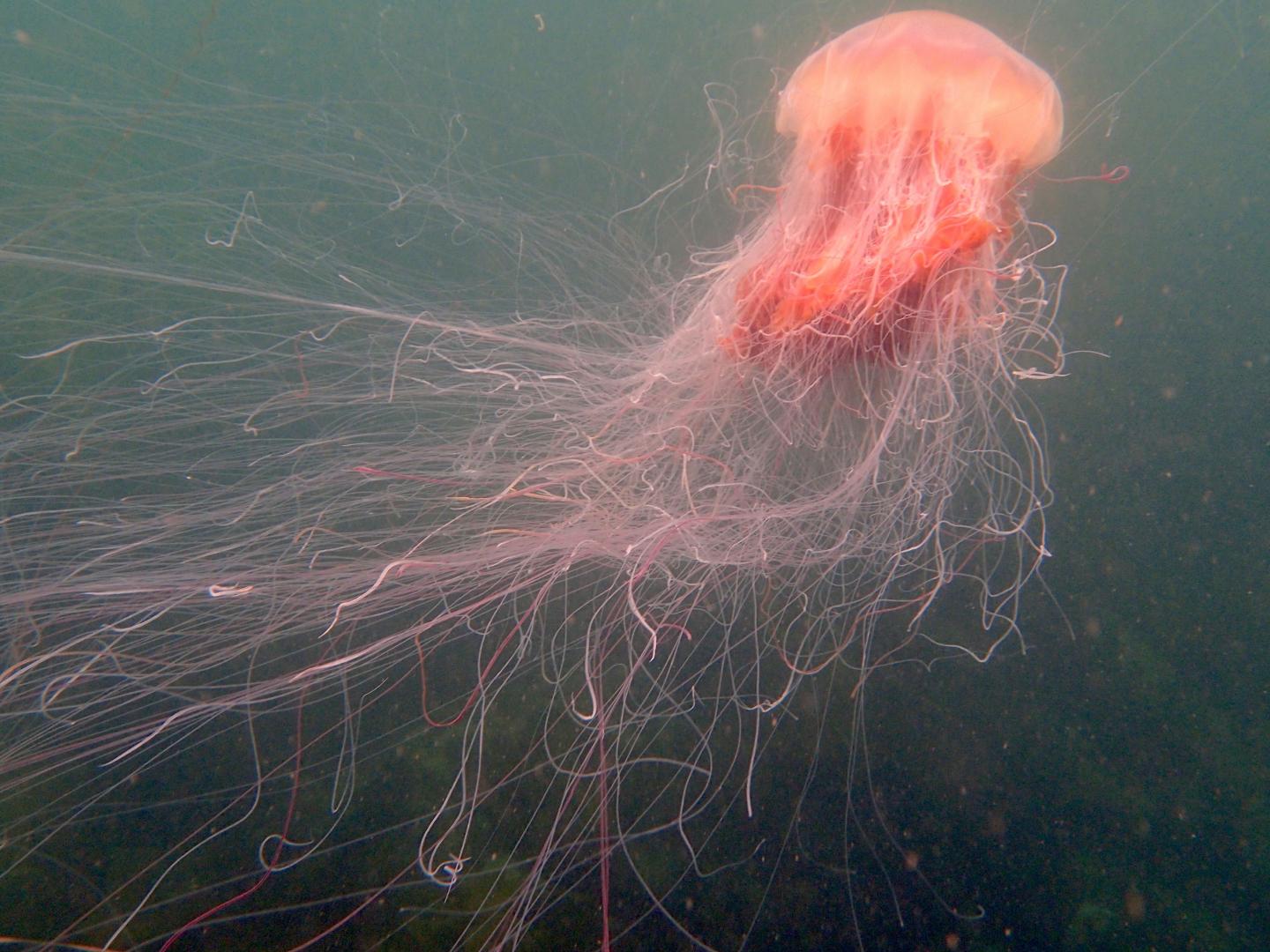
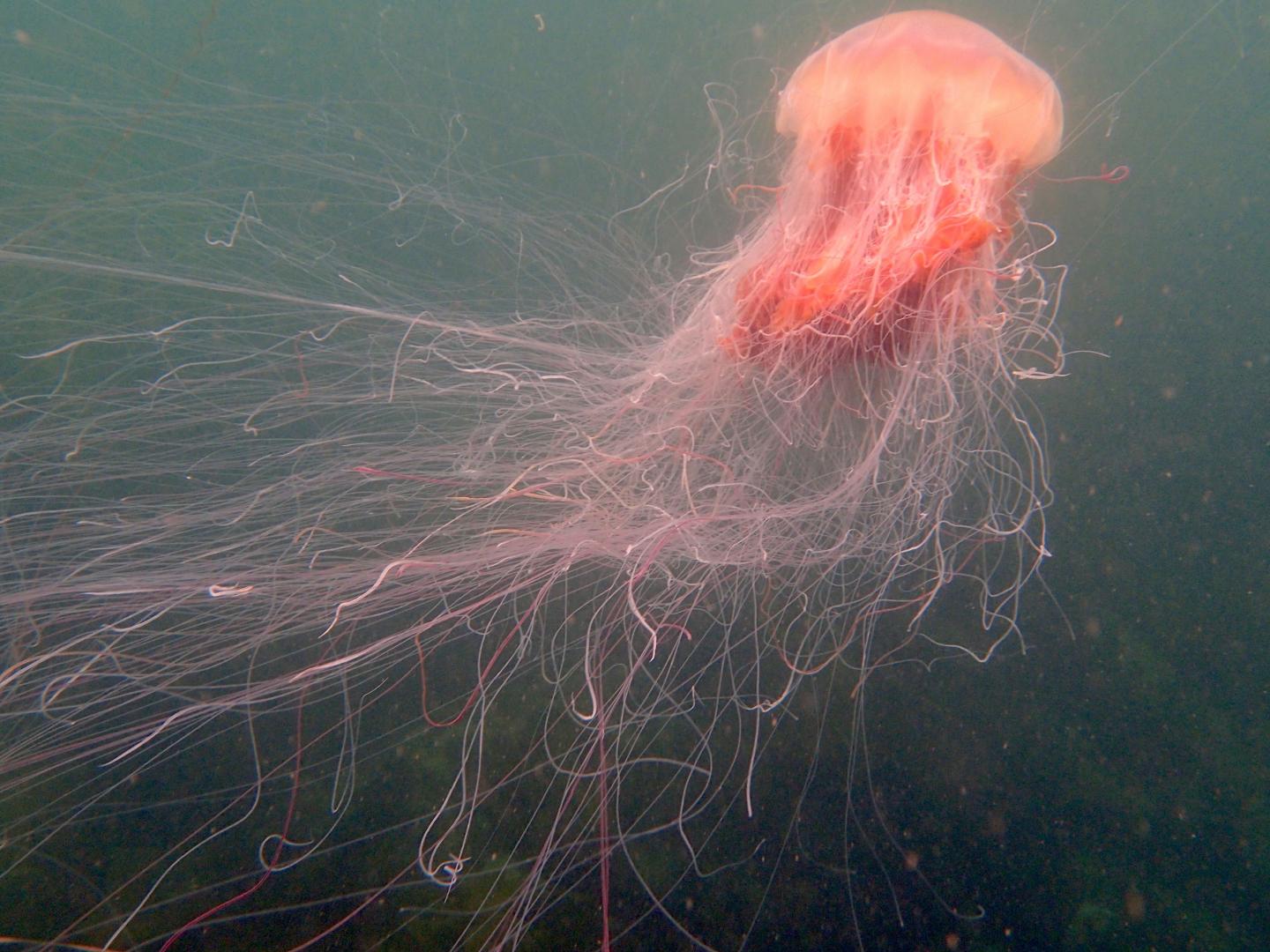
New research from NUI Galway and the University of Hawaii at Manoa has identified the best way to treat a sting from the lions mane jellyfish (Cyanea capillata). The lions mane jellyfish is the most problematic jellyfish in Ireland and the UK with 1000s of bathers being badly stung each year. With over a 1,000 tentacles that can stretch up to four or five metres in length, a bad sting from a lions mane jellyfish can cause severe local reactions and extreme pain.
The research, published in the international journal Toxins shows that the best first aid for a lions mane sting is to rinse with vinegar (or the commercial product Sting No More® Spray) to remove tentacles, and then immerse in 45°C (113°F) hot water (or apply a heat pack) for 40 minutes. The results mirror a recent NUI Galway and University of Hawaii study on stings from the Portuguese man o war and previous work on box jellyfish stings.
Dr Tom Doyle, lead author of the study and Lecturer in Zoology from the School of Natural Sciences at NUI Galway, said: "What most people don't understand is that these jellyfish — the lions mane, the Portuguese man o war and a box jellyfish, are as different from each other as a dog and a snake.
"Therefore when developing first aid treatment for a jellyfish sting it is very important to test different treatments on these very different types of jellyfish. Now that we have shown that vinegar and hot water work on these three jellyfish species, it will be much easier to standardise and simplify first aid for jellyfish stings where many different types of jellyfish occur."
In Ireland and the UK, current best practices recommend using sea water and cold packs, which is not the correct action for treating these jellyfish stings as it induces significant increases in venom delivery, while rinsing with vinegar or Sting No More® Spray did not.
Dr Doyle now hopes to bring together members of the Jellyfish Advisory Group in Ireland to discuss his latest findings. However, it is important to remember that most jellyfish stings in Ireland and the UK are no worse than a nettle sting.
###
To support research on the distribution and abundance of jellyfish in Ireland, members of the public can record any sightings at: http://records.biodiversityireland.ie/record/jellyfish
To read the full study in Toxins, visit: http://www.mdpi.com/2072-6651/9/7/215
Video of lions mane jellyfish: https://www.youtube.com/watch?v=r9bzjAWtNgI&feature=youtu.be
For more information about the study contact Dr Tom Doyle, School of Natural Sciences, NUI Galway at [email protected] or 091 493744.
For Press contact Gwen O Sullivan, Press & Information Executive, NUI Galway at [email protected] or 091 495695.
Photo NMDH_Lion's Mane.jpg: Lions mane jellyfish in Dingle harbour. Photo: Nuala Moore
Photo DSC_1794.jpg: Lion's mane jellyfish in Dublin bay. Photo: Nigel Motyer
About NUI Galway
The University was established in the heart of Galway City, on the west coast of Ireland, in 1845. Since then it has advanced knowledge teaching and learning, through research and innovation, and community engagement.
Over 18,000 students study at NUI Galway, where 2,600 staff provide the very best in research-led education.
NUI Galway's teaching and research is recognised through its consistent rise in international rankings. The University is placed in the Top 250 of both the Times Higher Education (THE) World University Rankings 2016/2017 and the QS World University Rankings 2016/17.
With an extensive network of industry, community and academic collaborators around the world, NUI Galway researchers are tackling some of the most pressing issues of our times. Internationally renowned research centres based here include CÚRAM Centre for Research in Medical Devices, Insight Centre for Data Analytics, Moore Institute, Institute for Life course and Society and The Ryan Institute for Environmental, Marine and Energy.
NUI Galway has been listed as one of the most beautiful universities in Europe according to Business Insider. For more information visit http://www.nuigalway.ie or view all NUI Galway news here.
*The University's official title is National University of Ireland Galway. Please note that the only official abbreviation is NUI Galway.
Visit: http://www.nuigalway.ie
Media Contact
Dr Tom Doyle
[email protected]
353-914-93744
@NUIGalwayPress
http://www.nuigalway.ie/
Original Source
http://www.nuigalway.ie/about-us/news-and-events/news-archive/2017/july2017/new-research-findings-to-standardise-first-aid-treatment-of-jellyfish-stings-1.html http://dx.doi.org/10.3390/toxins9070215