• HOME
  • NEWS
  • EXPLORE
    • CAREER
      • Companies
      • Jobs
    • EVENTS
    • iGEM
      • News
      • Team
    • PHOTOS
    • VIDEO
    • WIKI
  • BLOG
  • COMMUNITY
    • FACEBOOK
    • INSTAGRAM
    • TWITTER
Sunday, May 31, 2026
BIOENGINEER.ORG
No Result
View All Result
  • Login
  • HOME
  • NEWS
  • EXPLORE
    • CAREER
      • Companies
      • Jobs
        • Lecturer
        • PhD Studentship
        • Postdoc
        • Research Assistant
    • EVENTS
    • iGEM
      • News
      • Team
    • PHOTOS
    • VIDEO
    • WIKI
  • BLOG
  • COMMUNITY
    • FACEBOOK
    • INSTAGRAM
    • TWITTER
  • HOME
  • NEWS
  • EXPLORE
    • CAREER
      • Companies
      • Jobs
        • Lecturer
        • PhD Studentship
        • Postdoc
        • Research Assistant
    • EVENTS
    • iGEM
      • News
      • Team
    • PHOTOS
    • VIDEO
    • WIKI
  • BLOG
  • COMMUNITY
    • FACEBOOK
    • INSTAGRAM
    • TWITTER
No Result
View All Result
Bioengineer.org
No Result
View All Result
Home NEWS Science News Health

New research aims to help catch child killers

Bioengineer by Bioengineer
October 1, 2018
in Health
Reading Time: 2 mins read
0
Share on FacebookShare on TwitterShare on LinkedinShare on RedditShare on Telegram
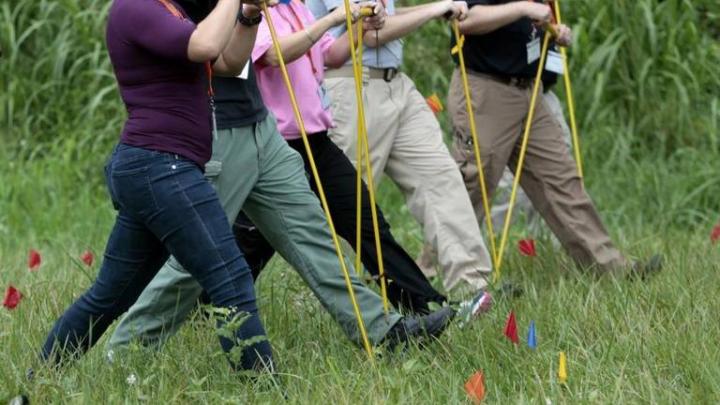
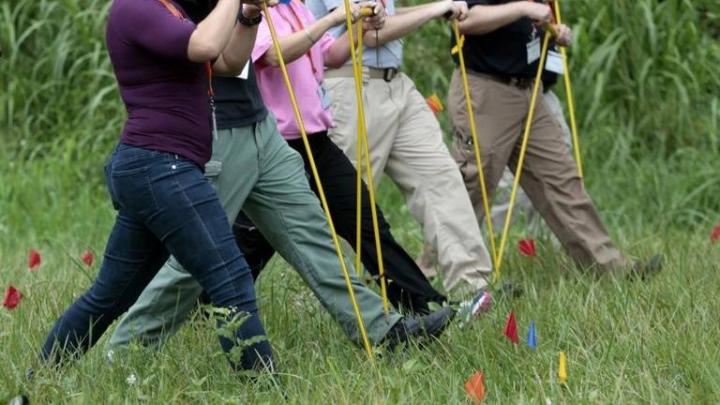
IMAGE

Credit: Ann Ross

Violent crimes against children are especially abhorrent. New research from North Carolina State University will help law enforcement learn more from juvenile and infant remains in order to help bring perpetrators to justice.

"There is very little research on the decomposition of juvenile and infant remains, but it's important to understand the rate and progress of this process – it can provide crucial information about when victims died and their remains disposed of," says Ann Ross, a professor of biological sciences at NC State and first author of a paper on the work.

"We have worked on a number of cases involving very young victims, and we knew this was a subject that needed investigation," says Ross, who is also the principal investigator of the NC Human Identification and Forensic Analysis Laboratory.

"It's particularly important because it has been widely assumed that juvenile remains would decompose more quickly than adult remains, due to differences in body size and the way the bodies are disposed of," says Amanda Hale, a Ph.D. student at NC State and corresponding author of the paper. "But until now there's been little or no evidence-based research to support those assumptions."

To study the issue, the researchers used the remains of 35 pigs, ranging in size from 1.8 kilograms (4 pounds) to 22.7 kilograms (50 pounds). The smaller remains served as surrogates for infant humans, up to one year old. The larger remains served as surrogates for juveniles, between the ages of one and nine.

The surrogate infants were left at an outdoor research site in one of three conditions: placed in a plastic bag, wrapped in a blanket, or fully exposed to the elements. Surrogate juveniles were either left exposed or buried in a shallow grave.

"We chose those deposition methods because they are the most common circumstances in which infant or juvenile remains are found," Hale says.

The researchers assessed the remains daily for two years to record decomposition rate and progression.

"We found that the assumptions about decomposition in juvenile and infant remains were broadly true, but were able to establish substantial details that will help us better determine when children or infants died," Ross says. "We may not be able to pinpoint a precise date of death, but we can certainly narrow the time window down more than we could before this research.

"However, it's important to note that the utility of this work is largely confined to the southeastern United States, because remains decompose at different rates depending on temperature, humidity and other variables that vary by geographic region."

"We've made this work publicly available in hopes that it can be used to help resolve criminal cases involving children," Hale says.

###

The paper, "Decomposition of juvenile-sized remains: a macro- and microscopic perspective," is published open access in the journal Forensic Sciences Research. The work was done with support from the National Institute of Justice.

Media Contact

Matt Shipman
[email protected]
919-515-6386
@NCStateNews

Why Not Us?

Original Source

https://news.ncsu.edu/2018/10/catching-child-killers/ http://dx.doi.org/10.1080/20961790.2018.1489362


Share12Tweet8Share2ShareShareShare2

Related Posts

Impact of Immigration Restrictions on the US Healthcare Workforce

May 31, 2026

Innovative AI Technique Predicts Radiation Dosage Prior to Treatment in Advanced Prostate Cancer

May 31, 2026

COXFA4L2 Boosts Cytochrome C Oxidase in Leigh Syndrome

May 31, 2026

Precise Gene Control Using FDA-Approved RNA Splicing Drug

May 30, 2026
Please login to join discussion

POPULAR NEWS

  • ESMO 2025: mRNA COVID Vaccines Enhance Efficacy of Cancer Immunotherapy

    319 shares
    Share 128 Tweet 80
  • Multi-Hospital Study Reveals Long Covid Burden Is Twice as High as Current Estimates

    81 shares
    Share 32 Tweet 20
  • Common Food Preservatives Associated with Elevated Blood Pressure and Increased Heart Disease Risk

    56 shares
    Share 22 Tweet 14
  • AI-Powered Atlas Uncovers Extensive Whole-Body Damage Linked to Obesity

    53 shares
    Share 21 Tweet 13

About

We bring you the latest biotechnology news from best research centers and universities around the world. Check our website.

Follow us

Recent News

Impact of Immigration Restrictions on the US Healthcare Workforce

Study Reveals Cancer Diagnostic Delays Linked to Population-Based Screening Using Cell-Free DNA Multicancer Early Detection Test

Innovative AI Technique Predicts Radiation Dosage Prior to Treatment in Advanced Prostate Cancer

Subscribe to Blog via Email

Success! An email was just sent to confirm your subscription. Please find the email now and click 'Confirm' to start subscribing.

Join 82 other subscribers
  • Contact Us

Bioengineer.org © Copyright 2023 All Rights Reserved.

Welcome Back!

Login to your account below

Forgotten Password?

Retrieve your password

Please enter your username or email address to reset your password.

Log In
No Result
View All Result
  • Homepages
    • Home Page 1
    • Home Page 2
  • News
  • National
  • Business
  • Health
  • Lifestyle
  • Science

Bioengineer.org © Copyright 2023 All Rights Reserved.