• HOME
  • NEWS
  • EXPLORE
    • CAREER
      • Companies
      • Jobs
    • EVENTS
    • iGEM
      • News
      • Team
    • PHOTOS
    • VIDEO
    • WIKI
  • BLOG
  • COMMUNITY
    • FACEBOOK
    • INSTAGRAM
    • TWITTER
Thursday, July 9, 2026
BIOENGINEER.ORG
No Result
View All Result
  • Login
  • HOME
  • NEWS
  • EXPLORE
    • CAREER
      • Companies
      • Jobs
        • Lecturer
        • PhD Studentship
        • Postdoc
        • Research Assistant
    • EVENTS
    • iGEM
      • News
      • Team
    • PHOTOS
    • VIDEO
    • WIKI
  • BLOG
  • COMMUNITY
    • FACEBOOK
    • INSTAGRAM
    • TWITTER
  • HOME
  • NEWS
  • EXPLORE
    • CAREER
      • Companies
      • Jobs
        • Lecturer
        • PhD Studentship
        • Postdoc
        • Research Assistant
    • EVENTS
    • iGEM
      • News
      • Team
    • PHOTOS
    • VIDEO
    • WIKI
  • BLOG
  • COMMUNITY
    • FACEBOOK
    • INSTAGRAM
    • TWITTER
No Result
View All Result
Bioengineer.org
No Result
View All Result
Home NEWS Science News Biology

New proposal for a subspecies definition triggered by a new longhorn beetle subspecies

Bioengineer by Bioengineer
August 17, 2017
in Biology
Reading Time: 2 mins read
0
Share on FacebookShare on TwitterShare on LinkedinShare on RedditShare on Telegram
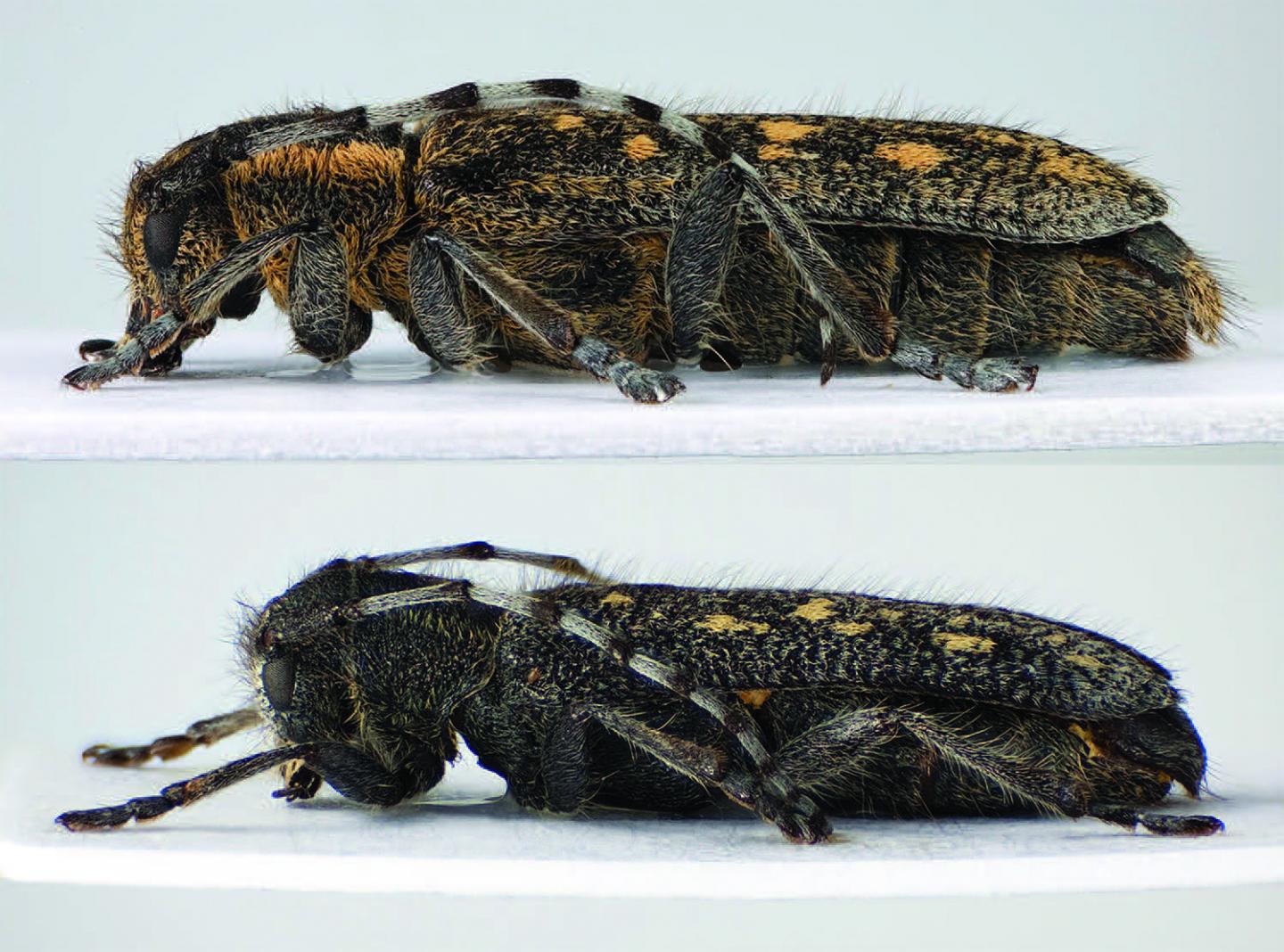
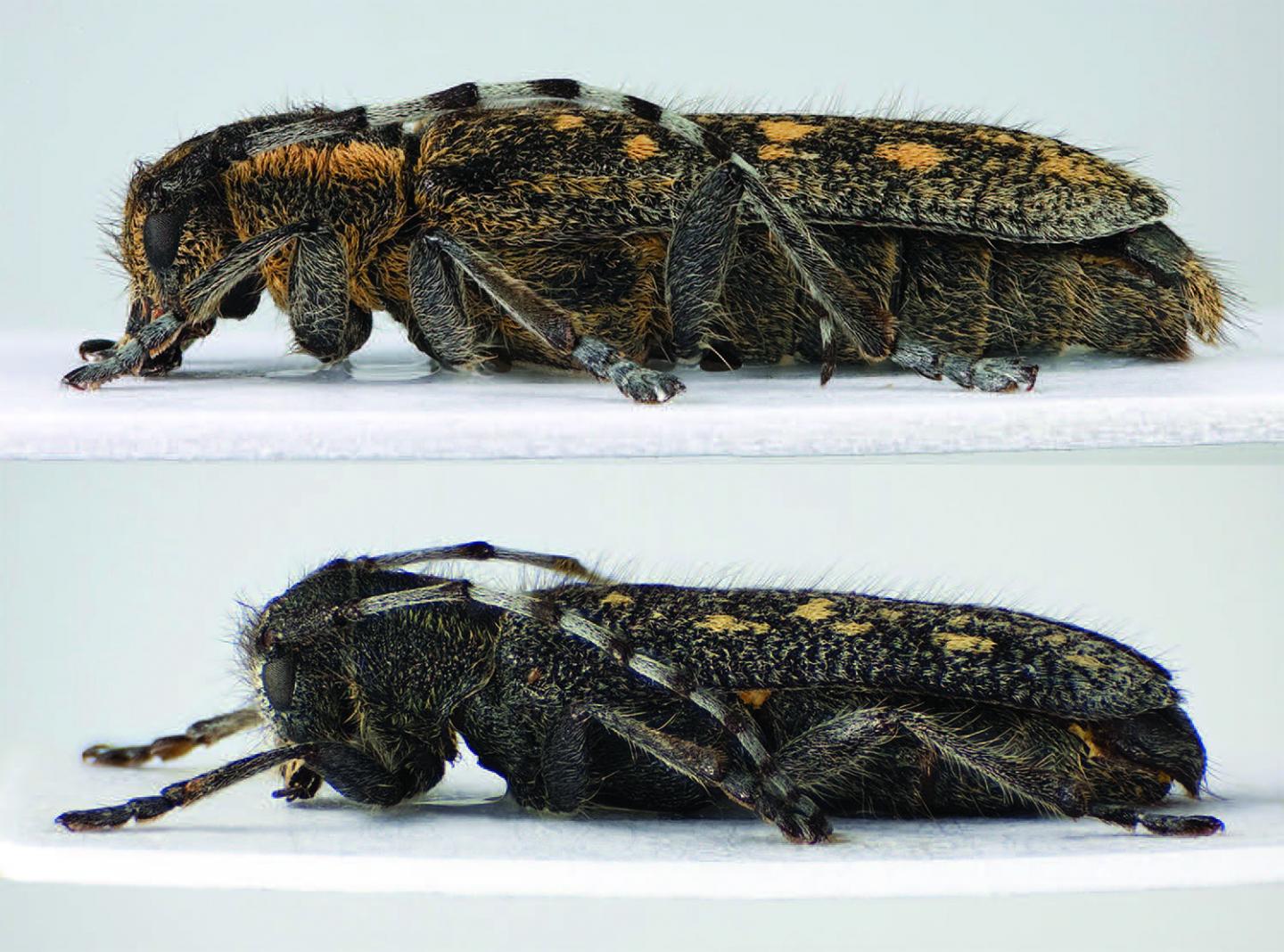
IMAGE

Credit: Karsten Sund

The discovery of a new subspecies of longhorn beetle from Scandinavia triggered a discussion on the vague organism classification rank 'subspecies'.

As a result, a newly proposed definition of subspecies has been published along with the description of the taxon in the open access journal ZooKeys by the research team of Henrik Wallin and Johannes Bergsten from the Swedish Museum of Natural History and Torstein Kvamme from the Norwegian Institute of Bioeconomy Research.

The northernmost populations of Saperda populnea display a number of divergent traits, including a shorter male antenna and reduced pubescens. In contrast with their most closely related subspecies (Saperda populnea populnea), whose favourite host plant, amongst others, is the European aspen, the new subspecies (Saperda populnea lapponica) specialised exclusively on downy willow (Salix lapponum).

According to the once no less disputed definition of species, regardless of their unique traits, populations cannot be considered as separate species until they are no longer able to produce fertile offspring according to the Biological Species concept, this being one of a number of proposed species concepts. A consensus is emerging around the unified species concept defining species as separately evolving (meta) population lineages.

However, differentiating between subspecies nowadays is a significantly tougher task, since there is no stable definition of the rank yet. Through the years, there have been various explanations of what a subspecies is and what criteria it needs to meet in order to be classified as one.

Compared to previous definitions, the researchers decode it quite simply. To them, the only necessary attributes a population needs to possess before being deemed a subspecies are that they are a potentially incipient new species; diagnosed by at least one heritable trait; and either partially or completely isolated geographically.

Furthermore, they refute a number of factors, including reciprocal monophyly in neutral markers, the "75% rule", reproductive compatibility and the degree of gene flow.

The concept of subspecies has been so problematic that there have been even those scientists who have argued that taxonomy needs to discard it altogether.

However, the authors note that it is already formally recognised by the International Commission on Zoological Nomenclature (ICZN 1999), "albeit without giving any advice or criteria for its recognition."

"The concept is more than a mere academic debate as subspecies are recognized in various Red Lists and conservation programs, and hence the recognition as a subspecies or not can have legal and monetary consequences."

###

Original source:

Wallin H, Kvamme T, Bergsten J (2017) To be or not to be a subspecies: description of Saperda populnea lapponica ssp. n. (Coleoptera, Cerambycidae) developing in downy willow (Salix lapponum L.). ZooKeys 691: 101-148. https://doi.org/10.3897/zookeys.691.12880

Media Contact

Johannes Bergsten
[email protected]
@Pensoft

http://www.pensoft.net

Related Journal Article

http://dx.doi.org/10.3897/zookeys.691.12880
Share12Tweet8Share2ShareShareShare2

Related Posts

Scientists Discover Key Mechanism Driving Nerve Cell Growth

Scientists Discover Key Mechanism Driving Nerve Cell Growth

July 9, 2026
Falling Mediterranean reservoir levels increase methane emissions, study finds

Falling Mediterranean reservoir levels increase methane emissions, study finds

July 9, 2026

Decades-Old Fossils Reveal Extinct Giant Salamander Species Rediscovered

July 9, 2026

Macrophages Key to Organ Transplant Rejection and New Treatments

July 9, 2026
Please login to join discussion

POPULAR NEWS

  • Detection of EDCs in Breast Milk and Infant Urine Up to Six Months Highlights Early Exposure Risks

    77 shares
    Share 31 Tweet 19
  • New Drug Candidate Developed at McMaster Shows Potential for Treating Brain Cancer

    58 shares
    Share 23 Tweet 15
  • KTU Researchers Explore Ultrasound’s Role in Enhancing Blood Flow Beyond Diagnostics

    53 shares
    Share 21 Tweet 13
  • 高齢者の骨粗鬆症治療の持続性比較

    51 shares
    Share 20 Tweet 13

About

BIOENGINEER.ORG

We bring you the latest biotechnology news from best research centers and universities around the world. Check our website.

Follow us

Recent News

Dental Chairs Pose Risks for Haemophilia Patients Without Proper Care

Hidden Metastases Uncover Clues to Colorectal Cancer Return

New Tool Accelerates Discovery of 2D Quantum Materials

Subscribe to Blog via Email

Enter your email address to subscribe to this blog and receive notifications of new posts by email.

Join 84 other subscribers
  • Contact Us

Bioengineer.org © Copyright 2023 All Rights Reserved.

Welcome Back!

Login to your account below

Forgotten Password?

Retrieve your password

Please enter your username or email address to reset your password.

Log In
No Result
View All Result
  • Homepages
    • Home Page 1
    • Home Page 2
  • News
  • National
  • Business
  • Health
  • Lifestyle
  • Science

Bioengineer.org © Copyright 2023 All Rights Reserved.