Researchers at Chonnam National University in South Korea have developed a new polymerizable deep eutectic solvent electrolyte designed to address critical safety and stability limitations in sodium metal batteries. The study, led by Professor Chan-Jin Park from the Department of Materials Science and Engineering, reports that the new electrolyte is non-flammable, leakage-proof, and capable of enhancing the long-term stability of these energy storage devices. The findings were published in the journal Energy Storage Materials, with the article made available online on August 2, 2026. This experimental study focuses on creating a more robust interface for sodium metal batteries, which are increasingly viewed as cost-effective alternatives to current commercial lithium-ion batteries due to the abundance and low cost of sodium reserves.
Sodium metal batteries have gained significant attention in recent years as potential next-generation energy storage technologies. However, their practical application remains limited by severe safety and stability issues inherent to the materials involved. The high reactivity of sodium metal, the growth of dendrites, and unwanted side reactions all contribute to shortened battery life. When deployed at scale in energy storage systems, high operating temperatures can lead to catastrophic failure. Furthermore, conventional organic liquid electrolytes used in these systems are volatile, highly flammable, and toxic, adding to both safety and environmental concerns.
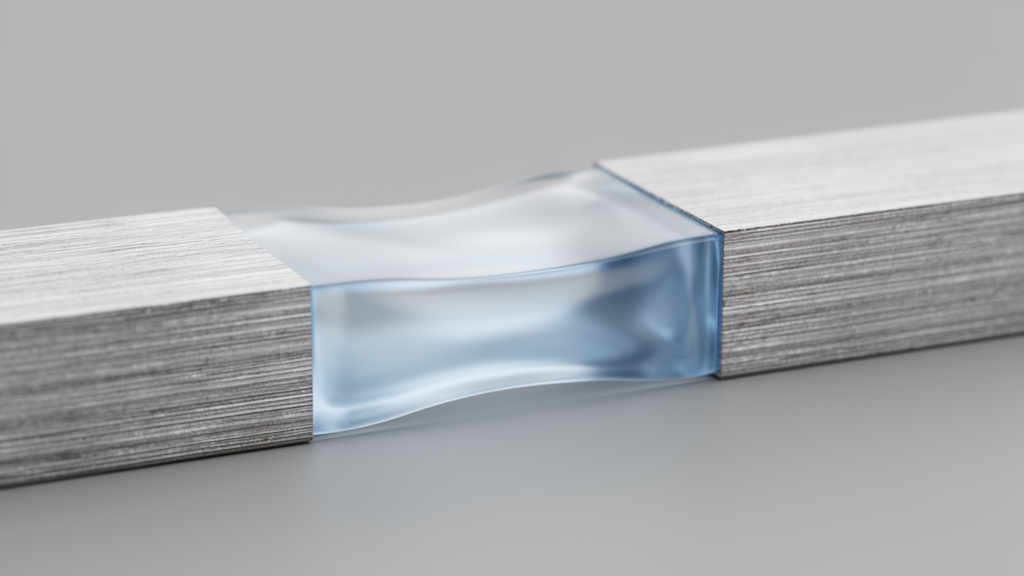
To resolve these challenges, the research team developed a polymerizable deep eutectic solvent electrolyte, referred to as PDES. The proposed electrolyte is composed of sodium perchlorate, N-isopropylacrylamide, and succinonitrile. When mixed, these components form a homogeneous liquid stabilized by intermolecular interactions, including noncovalent interactions such as hydrogen bonding and ion-dipole interactions. This mixture, known as a deep eutectic solvent, possesses attractive properties like non-flammability, chemical stability, and thermal stability. However, deep eutectic solvents are typically prone to leakage when used as electrolytes. To address this specific limitation, the researchers conducted in-situ polymerization of the mixture, creating a more robust, leakage-free solid matrix known as PDES.
The intermolecular interactions within the proposed PDES play a crucial role in enhancing sodium-ion transport and addressing the issues associated with conventional sodium metal battery electrolytes. Sodium perchlorate is employed as the sodium-ion source owing to the weak coordination between the perchlorate anion and the sodium ion, which is favorable for salt dissociation. N-isopropylacrylamide, through ion-dipole interactions, promotes sodium-ion dissociation while also generating a robust polymer matrix. Meanwhile, succinonitrile offers plasticity and further assists with sodium-ion dissociation. Together, these interactions contribute to a favorable environment for efficient sodium-ion transport within the battery cell.
The optimized PDES composition demonstrated a high ionic conductivity of 1.39 mS cm–1 at 30 degrees Celsius, along with a high sodium-ion transference number of 0.58. Importantly, the PDES showed high flame retardance upon direct exposure to fire and demonstrated significant leakage resistance.
When tested in full cells, the PDES electrolyte formed a robust electrode-electrolyte interface on the cathode during cycling. This robust interface suppressed parasitic side reactions and irregular sodium growth, which are common causes of battery degradation. Consequently, the full cell with the optimized PDES electrolyte delivered an initial discharge capacity of 110.2 mAh g-1 at a rate of 0.1 C, with nearly 99% coulombic efficiency.
The researchers also fabricated a pouch cell using the PDES electrolyte to demonstrate its mechanical robustness and safety in a practical form factor. Interestingly, the pouch cell could maintain power supply to an LED even when folded and cut.
Professor Chan-Jin Park explained that the electrolyte combines efficient sodium-ion transport with improved safety, leakage resistance, and interfacial stability, making it a promising candidate for practical sodium metal batteries. He noted that this electrolyte design for sodium metal batteries can lead to safer, lower-cost, and more sustainable rechargeable batteries. The research team believes that such batteries could support renewable energy storage at the grid level, backup power systems, and low-cost rechargeable battery systems in the future.
By leveraging hydrogen bonding and ion-dipole interactions, the researchers were able to create a homogeneous liquid that could be polymerized into a robust solid matrix.
Chonnam National University is a leading public research university in Gwangju, Republic of Korea, renowned for its strengths in life sciences, biotechnology, agriculture, engineering, and medical and dental research. The university advances scientific innovation to address global challenges in food security, environmental sustainability, and human health. Through interdisciplinary research and international collaborations, its researchers develop technologies and practical solutions that enhance agricultural productivity, resilience, and societal well-being.
Professor Chan-Jin Park is Dean of the College of Engineering and a Professor in the School of Materials Science and Engineering at Chonnam National University. He received his B.S., M.S., and Ph.D. in Materials Engineering from KAIST. His research focuses on materials electrochemistry, including rechargeable batteries, solid-state electrolytes, corrosion, and electrode-electrolyte interfaces. He has served as Director of the BK21 Energy Convergence Materials Education Research Group and as a secondary-battery expert committee member at the National Research Foundation of Korea. He is also Editor-in-Chief of Corrosion Science and Technology. The authors declared that they have no known competing financial interests or personal relationships that could have appeared to influence the work reported in this paper.
Subject of Research: Chonnam National University researchers develop a new non-flammable and more durable electrolyte for sodium metal batteries
Article Title: Chonnam National University researchers develop a new non-flammable and more durable electrolyte for sodium metal batteries
Article References: Chonnam National University researchers develop a new non-flammable and more durable electrolyte for sodium metal batteries. Original publication (Bibliographic details unavailable.)
Image Credits: AI Generated
DOI: Not provided
Keywords: Chonnam, National, University, researchers, develop, non-flammable, durable, electrolyte, sodium, metal, batteries, scientific research
News Source: Neil Sanderson. (November 7, 2026). New Polymer Electrolyte Makes Sodium Batteries Safer and More Durable. Scienmag.