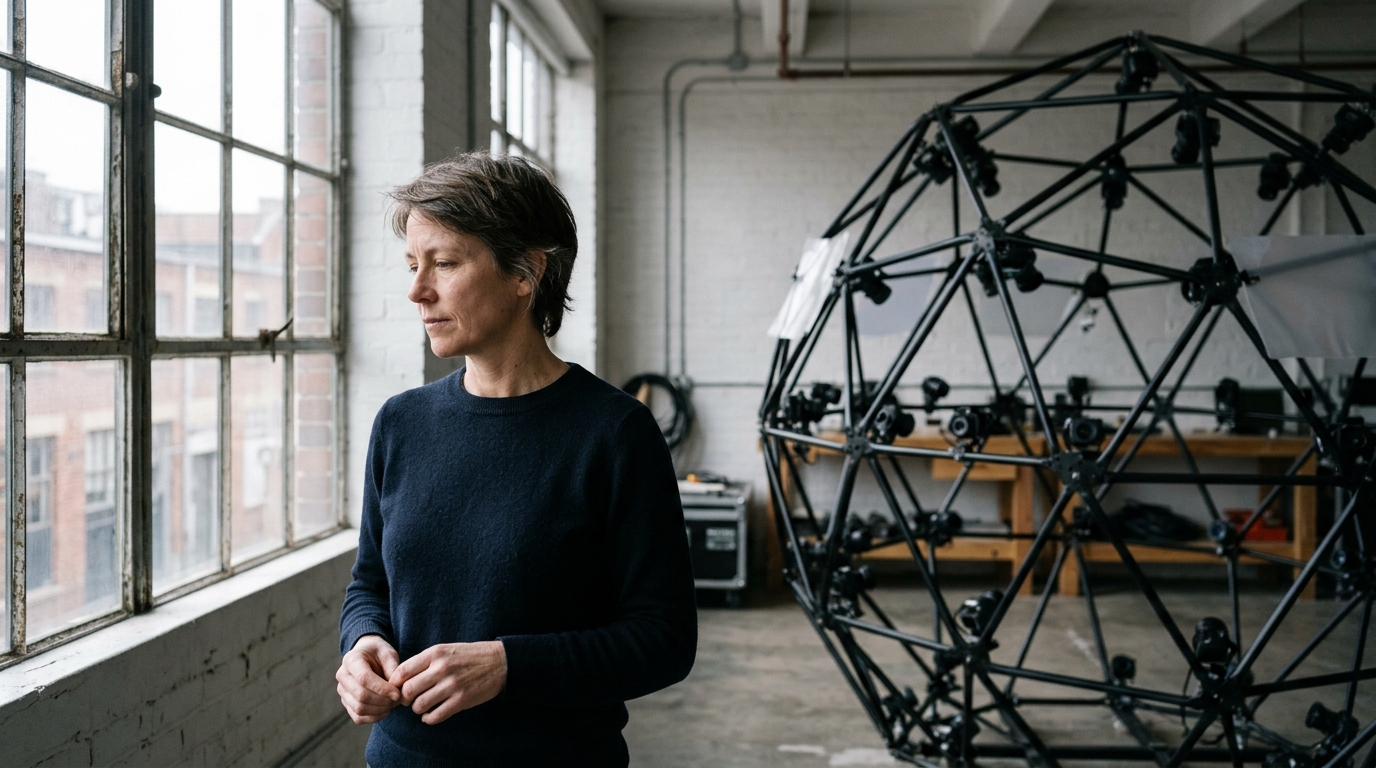
A new hypothesis and theory article published in Frontiers in Genetics proposes a legal and ethical framework known as the Right Not to Be Simulated. The paper, authored by Gareth W. Young of Trinity College Dublin, addresses the emerging capabilities of artificial intelligence and extended reality technologies. These systems increasingly allow for the construction of interactive digital representations of identifiable people. The author argues that these technologies create a distinct problem that extends beyond conventional questions of informational privacy or synthetic likeness.
The paper examines this problem through the lens of relational access. Surveillance is described as providing epistemic access to a person, while profiling is characterized as providing inferential access. In contrast, person-specific simulation offers relational access to an interactive surrogate. This surrogate is capable of supporting social interactions that are associated with the represented person.
The paper uses the Holodeck from the television series Star Trek: The Next Generation as a primary illustrative tool. Specifically, it draws on episodes such as “Hollow Pursuits,” “Booby Trap,” and “Galaxy’s Child” to examine the problem.
A key concern raised in the article is the creation of radically non-reciprocal sociality. The interactive surrogate enables person-specific interaction in the absence of the represented individual. This creates a dynamic in which the individual cannot determine whether or how their identity is made interactively available to others.
The proposed Right Not to Be Simulated is framed as a presumptive autonomy and authority claim. It is intended to protect individuals against the unauthorized creation or use of person-specific interactive surrogates. The paper builds on existing work in the fields of privacy, autonomy, synthetic likeness, and digital replicas.
The article was received on August 31, 2026, and accepted for publication on October 7, 2026. It is distributed under the Creative Commons Attribution License, allowing for its use and distribution provided the original author is credited.
Subject of Research: Proposed legal right against unauthorized person-specific digital simulation
Article Title: “Hollow Pursuits” and the Right Not to Be Simulated: privacy, autonomy, and the holodeck
Article References: Young, G. W. (2026). “Hollow Pursuits” and the Right Not to Be Simulated: privacy, autonomy, and the holodeck. Frontiers in Genetics, 17, Article 1984132. https://doi.org/10.3389/fgene.2026.1984132
Image Credits: AI Generated
DOI: 10.3389/fgene.2026.1984132
Keywords: artificial intelligence, digital humans, extended reality, privacy, simulation, autonomy, Star Trek, relational access, synthetic likeness, digital replicas, Hollow, Pursuits
News Source: Drew Townsend. (November 7, 2026). New Paper Proposes Right Not to Be Simulated. Scienmag.