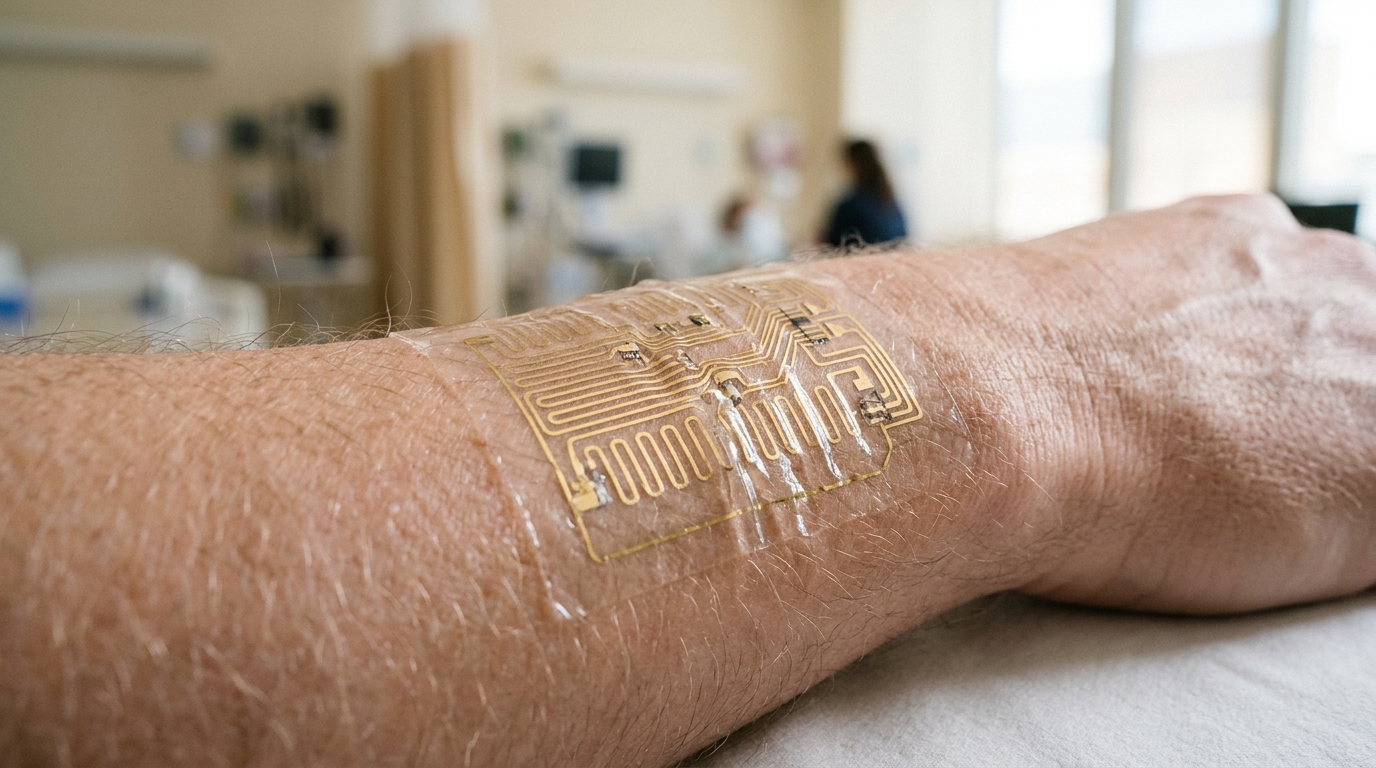
Five new research and partnership hubs are being backed by more than £52 million from the UK government through UK Research and Innovation to develop technologies that help people maintain their health for longer. The investments are designed to support tools that enable individuals to manage their own health, shifting patient care away from acute hospital settings into local communities while helping to alleviate operational pressures on the National Health Service.
The newly announced initiative builds on the demonstrated outcomes of earlier healthcare hubs established under UKRI, whose previous scientific programmes have contributed to advanced medical milestones. Past hub projects supported by the research council have delivered breakthroughs including the world’s first AI-assisted brain tumour surgery as well as novel spacesuits outfitted with artificial muscles for astronauts exploring the Moon and Mars.
Alongside the £52 million government investment, external collaborating partners are contributing an additional £37.5 million in cash and in-kind support. Based across Exeter, London, Southampton, and Sunderland, the national hubs will unite engineering and physical sciences experts from across England, Scotland, Wales, and Northern Ireland. The partner network includes the NHS, charitable bodies such as the Alzheimer’s Society, sports organisations including the Rugby Football League and GB Boxing, and multinational commercial partners such as Google, Siemens, and Medtronic. Research teams will work directly with healthcare professionals and patients with lived experience of the conditions to ensure the technologies deliver clinical benefits.
Reflecting on the funding commitment, Professor Charlotte Deane, Executive Chair of the Engineering and Physical Sciences Research Council at UKRI, stated that the five hubs will improve the lives and livelihoods of patients across the UK. Professor Deane noted that the new hubs build on proven successes in translating physical sciences and engineering research into tangible healthcare applications, helping people live healthier lives and preventing ill health before onset through collaboration with patients, the NHS, and industry.
Among the individual awards, the AI and Emerging Technologies for Next Generation Brain Health Clinics hub, known as BRAINIAC, is led by Professor David Llewellyn at the University of Exeter. The project received £10,884,081.51 from UKRI alongside £10.00 million in partner leverage, working with Dementia UK, the Alzheimer’s Society, and the NIHR HealthTech Research Centre. Although modern blood biomarkers, digital tools, and brain scans can detect pathological signs of dementia years before clinical symptoms manifest, the NHS currently has no reliable framework to integrate these separate tests.
To resolve this integration challenge, BRAINIAC will establish the UK’s first network of NHS brain health clinics across 10 participating sites. The network will evaluate artificial intelligence algorithms that combine memory testing, blood analysis, and neuroimaging into a unified assessment of brain health across more than 1,700 patients to prepare the system for everyday NHS practice. The initiative aims to reduce dementia risk and accelerate diagnostic timelines by up to 50 percent so that patients can receive clinical support at earlier stages.
The Brain Research for Adaptive Traumatic Injury: Simulation, Assessment, Forecasting & Education hub, known as BRAIN-SAFE, is directed by Professor David Sharp at Imperial College London. Supported by a UKRI award of £10,876,447.51 and £12.84 million in partner leverage, the hub brings together clinicians, AI specialists, and engineers in partnership with the Royal Air Force, defence medical sciences, World Rugby, the Rugby Football League, Premiership Women’s Rugby, GB Boxing, and Jaguar Land Rover. Traumatic brain injury currently represents the leading cause of death and disability in individuals under 40, yet clinicians and trainers still lack reliable tools to gauge the immediate severity of a head impact or determine when cumulative blows become harmful.
BRAIN-SAFE is developing computational models capable of forecasting an individual patient’s risk of brain injury following head trauma by evaluating variables such as age, sex, and prior injury history. The underlying technology is intended to enable real-time pitch-side alerts for dangerous impacts in contact sports, vehicle and smartphone collision systems that alert emergency paramedics to potential brain injuries, and improvements to protective sports helmets, military head protection, and civilian vehicle safety ratings.
Targeting cardiovascular conditions, the EPSRC HeartTech Hub: Engineering the Future of Personalised Cardiovascular Care is led by Professor Sebastien Ourselin at King’s College London. Backed by £10,865,643.00 from UKRI—which includes £1 million from the UKRI Life Sciences Programme—and £10.59 million in partner leverage, the project collaborates with Siemens Healthineers, GE Healthcare, Google Health UK, Garmin, Canon, Heartfelt Technologies Ltd, Cardiology Devices Ltd, and Medtronic. Cardiovascular disease affects more than 7 million people across the UK and accounts for a quarter of all domestic deaths, with existing care relying on expensive hospital equipment that can restrict access in certain regions.
The HeartTech hub will aggregate data from personal wearable devices, advanced medical imaging, and electronic health records to detect elevated cardiovascular risks earlier and deliver targeted preventative care. The team is developing home and community monitoring tools, including an AI-powered wellbeing coach designed to provide patients with personalised lifestyle prompts while identifying clinical thresholds that require direct medical evaluation.
Addressing winter pressures on public health services, the Community Respiratory Infection Screening and Prognostics hub, or CRISP, is directed by Associate Professor Alexander Edwards at the University of Southampton. Funded by a UKRI award of £10,892,590.34 and £0.95 million in partner contributions, the hub partners with Nokia, Samsung, the Department of Health and Social Care, South Central Ambulance Service, and Community Pharmacy Hampshire. Acute respiratory infections, including influenza, COVID-19, and general chest infections, generate major strain each winter, resulting in approximately 25 million GP consultations and 850,000 hospital admissions annually in England.
Because it remains difficult for patients to determine when to self-isolate at home versus seeking medical intervention, and challenging for doctors to identify which patients are at risk of severe deterioration, CRISP is developing wearable biometric sensors, smartphone apps that analyse acoustic properties of coughs and breathing, and rapid diagnostic tests for home and community use. Predictive artificial intelligence will combine these data streams to forecast how an infection is likely to progress, providing users with guidance on whether to rest or seek advice from a pharmacist or general practitioner.
The Northern Ophthalmic Research and Innovation hub, known as NORI, is led by Professor Matthew Campbell at the University of Sunderland, backed by £9,154,951.71 in UKRI support and £3.15 million in partner leverage. Partnering with the South Tyneside and Sunderland NHS Foundation Trust, Sunderland City Council, Moorfields Eye Hospital, and Topcon Healthcare, NORI addresses regional health disparities in the North East and North Cumbria, where populations experience some of England’s poorest health outcomes and life expectancy is up to 10 years lower in certain communities.
Because retinal microvessels and neural tissues can reveal early pathological indicators of broader systemic disease before physical symptoms arise, NORI will deploy artificial intelligence algorithms to evaluate routine eye scans in combination with community data and NHS records. The system will detect subtle structural changes in retinal images to assist physicians in identifying patients who require closer clinical monitoring and preventative treatment. The project will focus initially on detecting early signs of diabetes and cardiovascular disease before evaluating potential expansion to stroke and dementia.
Subject of Research: UK government and UKRI funding for healthcare technology and engineering research hubs
Article Title: New technology to spot illness years earlier gets Government and UKRI backing
Article References: New technology to spot illness years earlier gets Government and UKRI backing. Original publication (Bibliographic details unavailable.)
Image Credits: AI Generated
DOI: Not provided
Keywords: UK Research and Innovation, EPSRC, Healthcare Technology, Artificial Intelligence, Brain Health, Cardiovascular Disease, Traumatic Brain Injury, Respiratory Infections, technology, spot, illness, years
News Source: Cassandra Pierce. (November 8, 2026). UKRI Backs Five Research Hubs Developing Health Technologies With £52 Million. Scienmag.