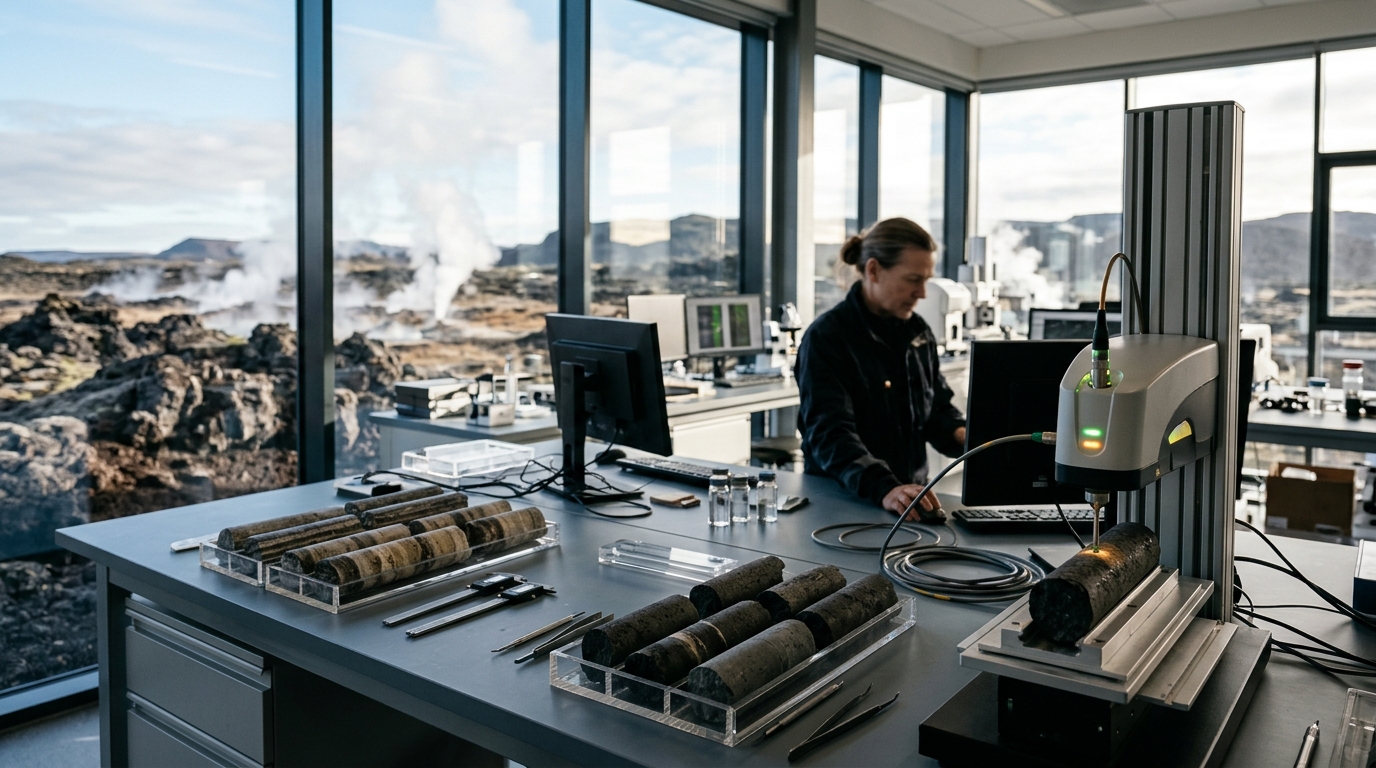
A new open-access journal called GeoEnergy Communications has launched with an editorial laying out an ambitious agenda for the subsurface: smarter, cleaner and more collaborative use of everything beneath our feet. The inaugural article, published on 17 September 2025 as the first paper in Volume 1, is written by Editor-in-Chief Hongpu Kang and frames the journal’s mission around three converging pressures—energy security, decarbonization and rapid urbanization—that all hinge on how humanity manages the ground below.
The editorial opens with a stark accounting of where the world’s energy actually comes from. Coal, oil and gas still supplied roughly 79% of primary global energy consumption in 2023, according to figures the editorial attributes to the International Energy Agency. Against that baseline, the energy transition is accelerating: renewables are projected to account for more than 35% of electricity by 2030, and geothermal capacity is forecast to grow by 150%, per IRENA estimates cited in the piece. The gap between those two trajectories, the editorial argues, is precisely where subsurface innovation becomes pivotal—balancing energy security and decarbonization while societies continue to develop.
Underground hydrogen storage emerges as one of the most concrete illustrations of that pivot. As of 2024, the IEA’s Hydrogen Infrastructure Projects Database listed approximately 59 underground hydrogen storage projects worldwide, spanning concept, design and operational stages. Storing hydrogen in geological formations is a central logistical challenge for a hydrogen economy, and the count suggests the field is moving from theory toward an active project pipeline. The editorial positions such storage alongside enhanced geothermal systems and AI-driven geomechanical modeling as topics the journal actively welcomes.
Urbanization adds a second, less obvious dimension to the subsurface story. By 2050, 70% of the world’s population will live in cities, according to UN figures cited in the editorial, creating demand for transport, storage and resilience solutions that increasingly must go underground. Europe already operates more than 15,000 kilometers of transport tunnels. China is developing so-called sponge cities, where underground reservoirs reduce urban flooding risks—an approach that treats the ground not as an obstacle to building on but as infrastructure in its own right. Together, these examples are presented as evidence that subsurface engineering is a key enabler of sustainable urban futures.
The journal’s defining editorial vision, however, is intelligence: sensing, automation and artificial intelligence applied to subsurface engineering. The editorial is explicit that digital tools are no longer experimental. It cites Allied Market Research figures valuing AI in the global energy market at about USD 5.4 billion in 2023, with a projection to reach USD 14.0 billion by 2029—a compound annual growth rate of 17.2%. Those numbers, the editorial suggests, reflect a sector where algorithms are moving from research demos into operational deployment.
Concrete results back that claim. Digital twin systems are now transforming underground projects by allowing engineers to simulate excavation, stress redistribution and fluid flow in real time—essentially running a live computational replica of a mine or tunnel alongside the physical worksite. In mining, autonomous haulage fleets have demonstrated productivity improvements of 20% to 30% while making operations safer. Geothermal drilling has seen even sharper gains: through the EU-funded Geo-Drill project, advanced drilling technology has cut drilling costs by up to 60%. The editorial presents these as tangible evidence that intelligent technologies are already improving both efficiency and sustainability underground.
Sustainability, though, comes with an ecological bill the editorial does not shy away from. It cites UNEP figures showing that the extraction and processing of materials, fuels and food account for approximately 50% of global greenhouse gas emissions and over 90% of biodiversity loss and water stress. At the same time, demand for critical minerals is surging—lithium demand alone is expected to grow 40-fold by 2040, according to the IEA, driven by electrification and renewable technologies. The tension between extracting more materials for the transition and reducing the environmental footprint of extraction itself is framed as a duality that demands innovation rather than a reason to stop.
Innovation, in this framing, can mean evolving established practices rather than inventing new ones. In-situ leaching currently accounts for over 55% of global uranium production, and biomining already contributes around 20% to 25% of copper and 5% of gold production—microbial and chemical techniques that can extract metals with different environmental profiles than conventional processing. The editorial also points to repurposed coal mines in Germany being adapted as pumped-storage hydropower reservoirs to stabilize grids, a circular-economy twist that turns legacy fossil infrastructure into grid-balancing assets. Circular economy approaches to mining waste are among the contribution types the journal says it seeks.
What ties these threads together is the journal’s self-image as a community project rather than a gatekeeping one. The editorial board unites leading experts from diverse countries and sectors, but the editorial stresses that authors, reviewers and readers will ultimately shape the journal’s trajectory. It welcomes contributions that are ambitious, data-driven and grounded in real-world applications—whether breakthroughs in enhanced geothermal systems, underground hydrogen storage, AI-driven geomechanical modeling or circular approaches to mining waste. The open-access, barrier-free model is presented as deliberate: bold ideas and transformative technologies in geoenergy should be shared without paywalls.
The closing note is almost philosophical. The Earth’s crust, the editorial argues, is more than a repository of resources—it is a foundation for sustainable progress if approached with innovation, intelligence and care. Kang positions the journal as a bridge connecting theory and practice and uniting disciplines, with the aim of reimagining the subsurface not as a frontier of exploitation but as a driver of resilience, prosperity and sustainability. Whether the field delivers on that vision will depend on the data-rich dialogue the editorial calls for—but the starting numbers, from 59 hydrogen storage projects to 60% drilling-cost cuts, suggest the raw material for that conversation already exists.
Subject of Research: Launch of the open-access journal GeoEnergy Communications and its editorial vision for intelligent, sustainable subsurface energy technologies
Article Title: Advancing intelligent and sustainable geoenergy solutions
Article References: Kang, H. (2025). Advancing intelligent and sustainable geoenergy solutions. GeoEnergy Communications, 1(1), Article 1. https://doi.org/10.1007/s44421-025-00006-1
Image Credits: AI Generated
DOI: 10.1007/s44421-025-00006-1
Keywords: geoenergy, geothermal energy, underground hydrogen storage, digital twins, artificial intelligence, mining automation, biomining, in-situ leaching, sponge cities, energy transition, critical minerals, open-access publishing
News Source: Denise Maddox. (November 5, 2026). New open-access journal targets intelligent, sustainable subsurface energy. Scienmag.