


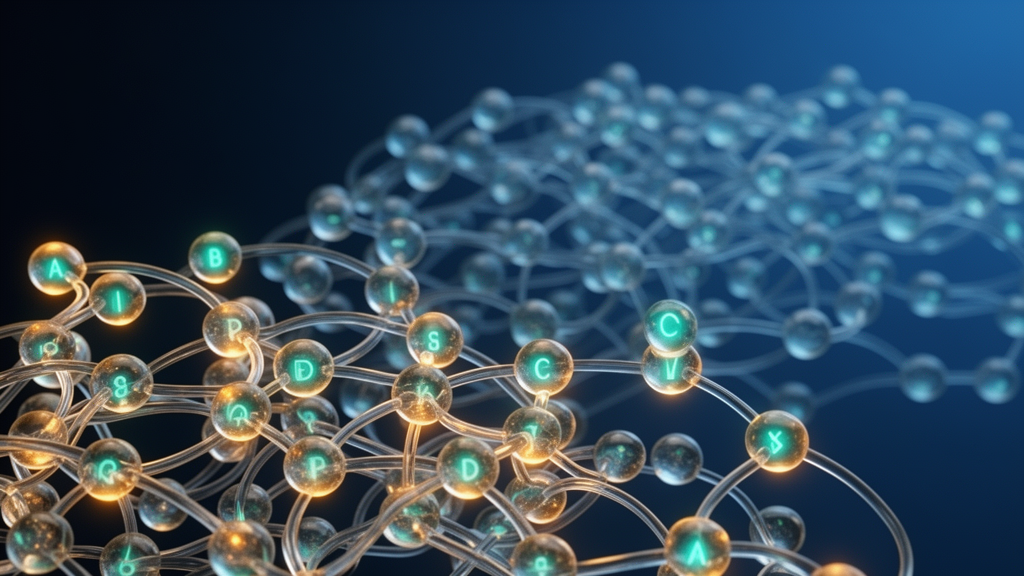
Graph neural networks have become a popular framework for classifying biological sequences when the sequences are represented as De Bruijn graphs, but the way individual nodes in those graphs are encoded has received comparatively little attention. A new study addresses that gap with a method called Contextual Multiscale Expected Density of Nucleotide, or cMSEDN, which converts sequence-level representations into node-level embeddings suitable for graph-based sequence learning.
The challenge the researchers set out to solve is structural. Multiscale Expected Density of Nucleotide (EDN) produces informative representations at the level of whole sequences, yet De Bruijn graphs require representations attached to individual nodes, which correspond to k-mers. A sequence-level encoding cannot simply be dropped into a graph neural network, because the graph needs features for each node rather than one feature vector per sequence.
cMSEDN is described as a lightweight, deterministic framework that adapts multiscale EDN sequence representations into sequence-specific node embeddings while preserving k-mer identity and incorporating occurrence-level context. In other words, the method keeps track of which k-mer a node represents while also capturing information about the contexts in which that k-mer occurs within a given sequence.
A key distinction from conventional encodings lies in how identical k-mers are treated. Static k-mer encodings assign the same representation to a given k-mer regardless of where it appears. cMSEDN instead aggregates occurrence-level contextual features, so that identical k-mers can receive distinct, sequence-specific representations across different biological sequences.
To test the approach, the authors evaluated the framework on seven biological sequence classification datasets. The benchmark suite spans transcription factor binding prediction, promoter recognition, and RNA subcellular localization, covering multiple species and encompassing both DNA and RNA sequence analysis tasks.
The experiments used two graph neural network architectures, GCN and GIN, applied to De Bruijn graph representations of the sequences. The comparisons included conventional context-independent node representations, off-the-shelf foundation models used as static node-feature extractors, and a static EDN-based baseline.
According to the reported results, cMSEDN consistently achieved improved classification performance across the benchmark suite for De Bruijn graph neural networks, while relying on compact deterministic embeddings. The authors note that the method requires no modifications to the underlying graph neural network architecture, meaning it can be adopted as a node-encoding layer without redesigning the models themselves.
The study is published in BioData Mining as an open access article and is currently available as an accepted-manuscript version shared early to provide faster access to peer-reviewed research; this version remains subject to further edits before the final Version of Record replaces it. The work was authored by Saman Zabihi, Eghbal Mansoori and Sattar Hashemi.
For researchers working on biological sequence classification, the findings suggest that sequence-specific k-mer encodings derived from multiscale EDN can serve as an effective, computationally lightweight graph representation for De Bruijn graph learning, offering an alternative to both static k-mer encodings and large foundation-model feature extractors.
Subject of Research: A method for adapting multiscale EDN sequence representations into sequence-specific node embeddings for biological sequence classification with De Bruijn graph neural networks.
Article Title: Adapting multiscale EDN representation into sequence-specific node embeddings for De Bruijn graph learning
Article References: Zabihi, S., Mansoori, E., & Hashemi, S. (2026). Adapting multiscale EDN representation into sequence-specific node embeddings for De Bruijn graph learning. BioData Mining. https://doi.org/10.1186/s13040-026-00616-3
Image Credits: AI Generated
DOI: 10.1186/s13040-026-00616-3
Keywords: De Bruijn graphs, graph neural networks, node embeddings, EDN, biological sequence classification, transcription factor binding, promoter recognition, RNA subcellular localization, GCN, GIN, k-mer encoding, bioinformatics
News Source: Gregory Coleman. (October 27, 2026). New Node Embeddings Bring Multiscale EDN Into De Bruijn Graph Learning. Scienmag.



