• HOME
  • NEWS
  • EXPLORE
    • CAREER
      • Companies
      • Jobs
    • EVENTS
    • iGEM
      • News
      • Team
    • PHOTOS
    • VIDEO
    • WIKI
  • BLOG
  • COMMUNITY
    • FACEBOOK
    • INSTAGRAM
    • TWITTER
Sunday, May 10, 2026
BIOENGINEER.ORG
No Result
View All Result
  • Login
  • HOME
  • NEWS
  • EXPLORE
    • CAREER
      • Companies
      • Jobs
        • Lecturer
        • PhD Studentship
        • Postdoc
        • Research Assistant
    • EVENTS
    • iGEM
      • News
      • Team
    • PHOTOS
    • VIDEO
    • WIKI
  • BLOG
  • COMMUNITY
    • FACEBOOK
    • INSTAGRAM
    • TWITTER
  • HOME
  • NEWS
  • EXPLORE
    • CAREER
      • Companies
      • Jobs
        • Lecturer
        • PhD Studentship
        • Postdoc
        • Research Assistant
    • EVENTS
    • iGEM
      • News
      • Team
    • PHOTOS
    • VIDEO
    • WIKI
  • BLOG
  • COMMUNITY
    • FACEBOOK
    • INSTAGRAM
    • TWITTER
No Result
View All Result
Bioengineer.org
No Result
View All Result
Home NEWS Science News Science

New method developed to detect and trace homemade bombs

Bioengineer by Bioengineer
May 10, 2019
in Science
Reading Time: 2 mins read
0
Share on FacebookShare on TwitterShare on LinkedinShare on RedditShare on Telegram

Researchers at King’s College London, in collaboration with Northumbria University, have developed a new way of detecting homemade explosives which will help forensic scientists trace where it came from.

The approach uses ion chromatography – high resolution mass spectrometry, published today in Analytica Chimica Acta. Scientists show that through using this technique, they can detect a very large number of components of homemade explosives down to very low trace amounts.

Homemade explosives are frequently used in a number of different crimes, including the Boston Marathon bombing in 2013 and the Oslo attacks in 2011. They are also used in ATM robberies. They have traditionally been very challenging to detect and trace in samples submitted for forensic analysis.

Lead author Dr Matteo Gallidabino said: “The method we developed is less time consuming and represents a viable solution for challenging explosives like these. By combining this approach with advanced data analytics, added intelligence can be retrieved from any evidence recovered. This has the potential to significantly impact criminal investigations and further enhance the role of forensics in the administration of justice.”

The team successfully went on to use the new approach to interpret the time since explosives materials were handled by the original maker, analysing sweat. They were also able to analyse gunshot residue to trace the type of ammunition used.

Dr Leon Barron from King’s College London said: “The technique is able to tell us so much more than just the explosives content. It detects thousands of different compounds simultaneously, which means there is an element of in-built future-proofing capability to detect new types of explosives if needed or provide critical information about where a device came from or who it belongs to.”

###

Media Contact
Tanya Wood
[email protected]
Tags: BiochemistryBiomedical/Environmental/Chemical EngineeringChemical/Biological WeaponsChemistry/Physics/Materials SciencesResearch/DevelopmentTechnology/Engineering/Computer Science
Share12Tweet8Share2ShareShareShare2

Related Posts

Five or more hours of smartphone usage per day may increase obesity

July 25, 2019
IMAGE

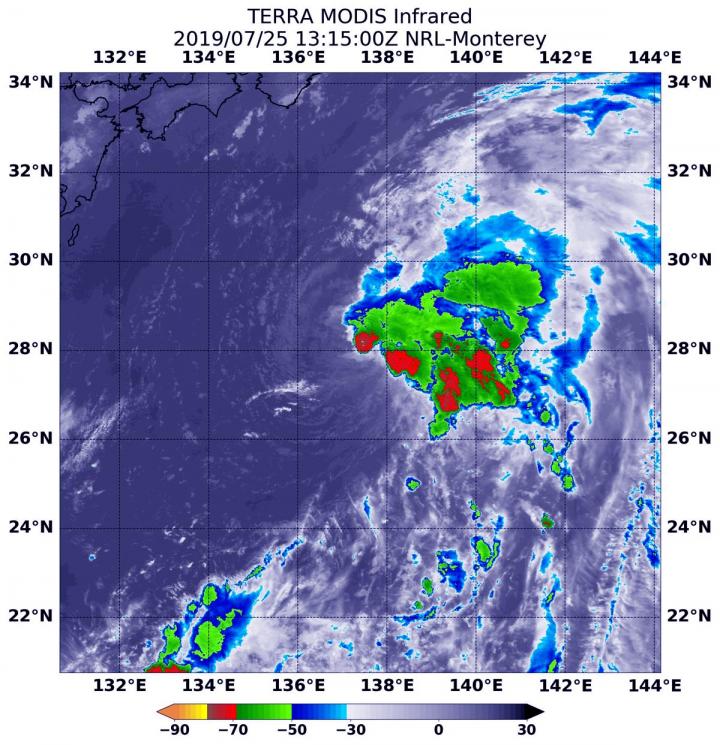
NASA’s terra satellite finds tropical storm 07W’s strength on the side

July 25, 2019

NASA finds one burst of energy in weakening Depression Dalila

July 25, 2019

Researcher’s innovative flood mapping helps water and emergency management officials

July 25, 2019
Please login to join discussion

POPULAR NEWS

  • Research Indicates Potential Connection Between Prenatal Medication Exposure and Elevated Autism Risk

    840 shares
    Share 336 Tweet 210
  • New Study Reveals Plants Can Detect the Sound of Rain

    727 shares
    Share 290 Tweet 181
  • Scientists Investigate Possible Connection Between COVID-19 and Increased Lung Cancer Risk

    68 shares
    Share 27 Tweet 17
  • Salmonella Haem Blocks Macrophages, Boosts Infection

    61 shares
    Share 24 Tweet 15

About

We bring you the latest biotechnology news from best research centers and universities around the world. Check our website.

Follow us

Recent News

Evaluating Digoxin Use in Patients with Symptomatic Rheumatic Heart Disease

Evaluating the Effectiveness and Safety of Digitalis Glycosides in Treating Heart Failure

Urdu Fall Risk Questionnaire Adapted for Elderly

Subscribe to Blog via Email

Enter your email address to subscribe to this blog and receive notifications of new posts by email.

Join 82 other subscribers
  • Contact Us

Bioengineer.org © Copyright 2023 All Rights Reserved.

Welcome Back!

Login to your account below

Forgotten Password?

Retrieve your password

Please enter your username or email address to reset your password.

Log In
No Result
View All Result
  • Homepages
    • Home Page 1
    • Home Page 2
  • News
  • National
  • Business
  • Health
  • Lifestyle
  • Science

Bioengineer.org © Copyright 2023 All Rights Reserved.