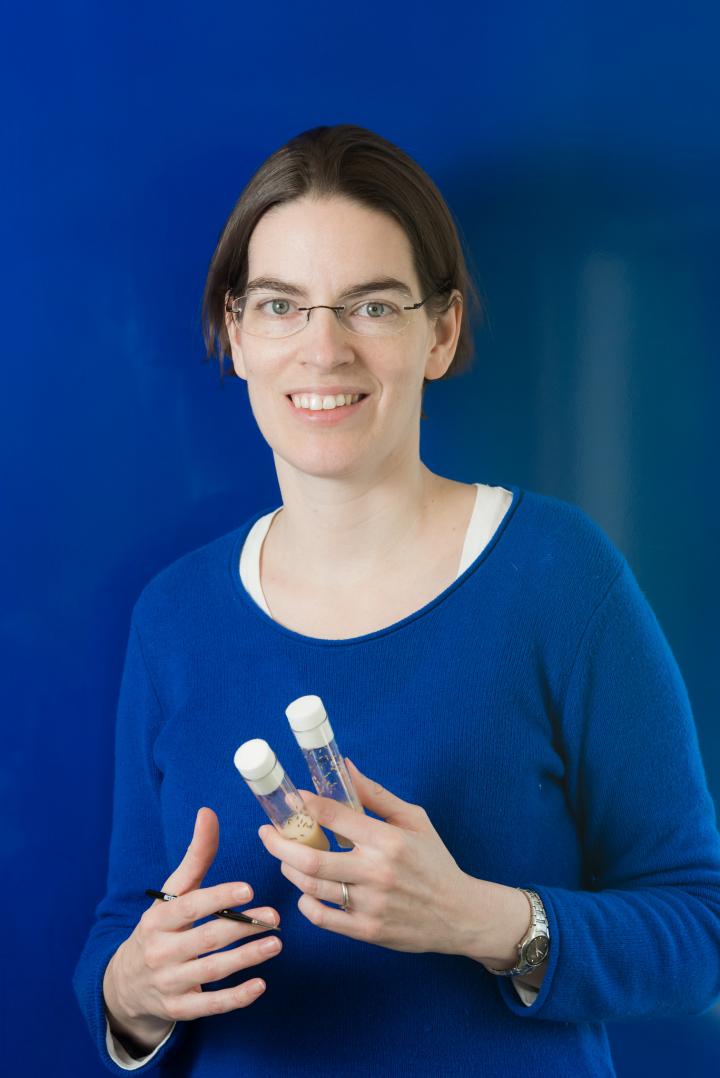
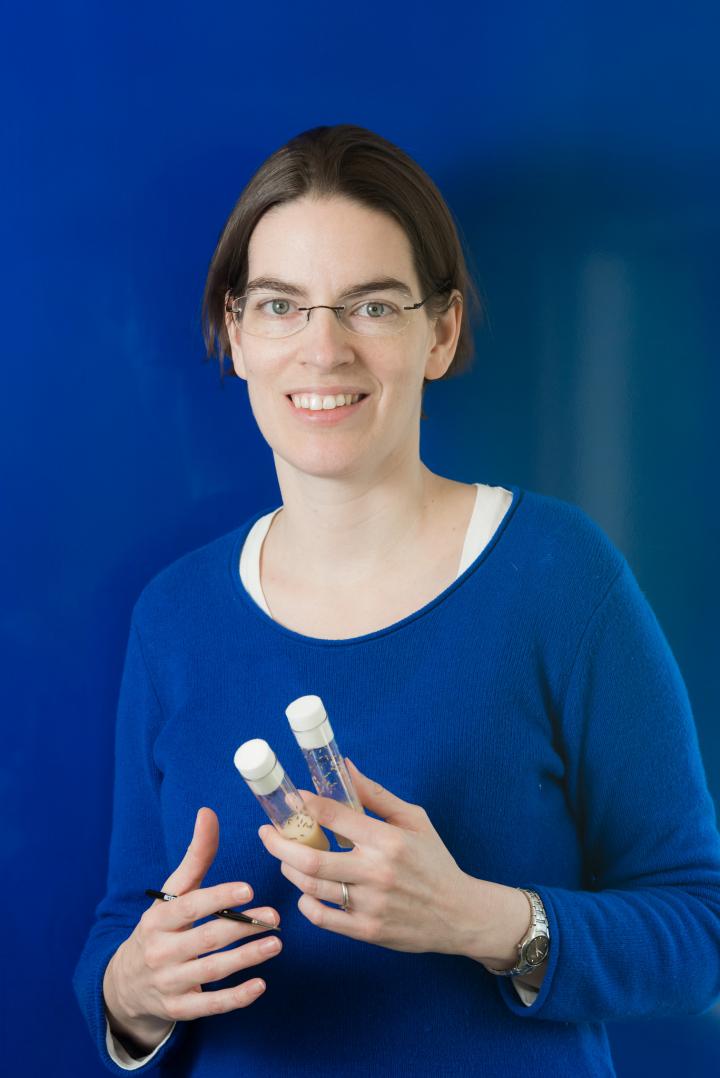
BAR HARBOR, MAINE – Wound healing is not a one-size-fits-all process. MDI Biological Laboratory Assistant Professor, Vicki P. Losick, Ph.D, has recently discovered a new healing mechanism, which she has called wound-induced polyploidy (WIP).
The typical response of organisms to healing is to grow more cells through cell division to compensate for the cell loss that occurs as a result of injury, disease or aging. But the cells in many higher organisms, including humans, have a limited capacity to divide. WIP maintains the size and functional capacity of injured or diseased tissue by enlarging existing cells, rather than by making more of them.
The fact that some cells grow in size — a phenomenon called cellular hypertrophy – in response to injury has been known for some time. But what wasn’t previously known is that these cells are a mechanism to respond to injury, and that their size is due to polyploidization, or an increase in the amount of DNA: instead of the usual two sets of chromosomes, polyploid cells have three or more.
Losick collaborated with Albert S. Jun, M.D., a professor at the Wilmer Eye Institute at Johns Hopkins Medical School in Baltimore, on her research. Jun is the co-author of Losick’s recent paper, which was published in the peer-reviewed journal PLOS ONE.
“The MDI Biological Laboratory is committed to the discovery of new therapies to repair and regenerate tissue,” said President Kevin Strange, Ph.D. “Rather than taking a disease-by-disease approach, however, we are focused on the common mechanisms underlying these processes. Dr. Losick’s discovery of a new mechanism for healing is a significant contribution to the field that has wide-ranging therapeutic potential.”
The MDI Biological Laboratory is an independent, non-profit biomedical research institution focused on increasing healthy lifespan and increasing our natural ability to repair and regenerate tissues damaged by injury or disease. The institution develops solutions to complex human health problems through research, education and ventures that transform discoveries into cures.
Losick originally identified the mechanism regulating WIP in the fruit fly. With Jun’s help, she has now shown that WIP occurs in mammals. Using a mouse model of a human eye disease, Fuchs endothelial corneal dystrophy, she discovered that cells enlarge by polyploidization to precisely compensate for cells that are lost, indicating that the extra-large cells are likely playing a beneficial role, not pathological one as previously thought.
“Our findings suggest that the cellular damage caused by cell loss or wounding leads to different mechanisms of tissue repair – cell proliferation or cell growth — depending on context,” said Losick. “Now that we have discovered that WIP is a widely used part of the body’s healing arsenal, we can look for genes or drugs that promote healing by boosting the body’s ability to generate these extra-large cells.”
Since joining the MDI Biological Laboratory faculty, Losick has continued her studies of WIP in the fruit fly at the Kathryn W. Davis Center for Regenerative Biology and Medicine. The goal of her research is to further characterize the molecular mechanisms underlying WIP with the aim of developing therapeutic agents that can promote healing through the manipulation of these pathways.
Losick’s work with fruit flies reflects the MDI Biological Laboratory’s goal of studying the processes of aging and regeneration in simple organisms with which humans share many of their genes. Unlikely as it may seem, about 75 percent of known human disease genes have recognizable matches in the fruit fly. Fruit flies also deliver fast results because of their short lifespans and are easy and inexpensive to work with.
###
The MDI Biological Laboratory, located in Bar Harbor, Maine, is an independent, non-profit biomedical research institution focused on increasing healthy lifespan and increasing our natural ability to repair and regenerate tissues damaged by injury or disease. The institution develops solutions to complex human health problems through research, education and ventures that transform discoveries into cures. For more information, please visit mdibl.org.
Media Contact
Stefanie Matteson
[email protected]
207-288-9880
Home
The post New mechanism for wound healing identified by MDI biological laboratory scientist appeared first on Scienmag.