


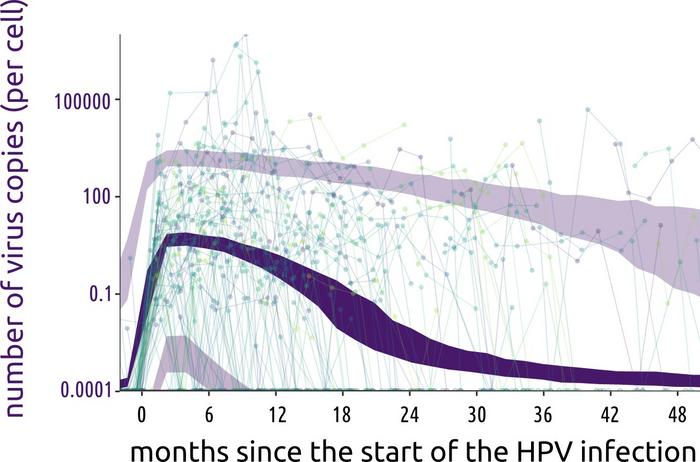
Non-persistent human papillomavirus (HPV) infections reveal significant dynamics of viral load and immune response through an extensive longitudinal study recently published in PLOS Biology. Researchers led by Samuel Alizon from the National Centre for Scientific Research (CNRS) in France investigated the patterns of HPV infections among young women, demonstrating crucial insights that could reshape our approach to HPV-related illnesses, including cervical cancers that claim over 600,000 lives globally each year.
The critical focus of this research lies in understanding how acute HPV infections evolve into chronic conditions, particularly since the majority of HPV infections tend to resolve spontaneously within two years. The gathered data suggests a pronounced increase in viral load shortly after infection, which is succeeded by a prolonged plateau, a phenomenon that can significantly influence treatment and preventive strategies against this prevalent infection.
In the PAPCLEAR cohort study, a total of 189 women aged between 18 and 25 years were followed for up to 24 months, where researchers adopted a methodical approach to monitor viral kinetics and immune responses every two months. This regimen allowed for unprecedented temporal resolution, providing a granulated understanding of how HPV infections operate at both the viral and immune response levels over time.
The findings suggest that non-persistent infections exhibit distinct viral load characteristics, particularly a plateau phase starting at about two months post-infection, which can last for an extended period of 13 to 20 months before a steep decline is observed. This plateau is crucial as it indicates a sustained presence of the virus in the body, raising questions about the immune responses triggered during this timeframe and their implications for long-term health outcomes.
Further analysis revealed a compelling connection between the levels of HPV viral load and specific immune cell populations, notably TCRγδ cells, which straddle the line between innate and adaptive immune responses. This correlation underscores the complexity of the immune system’s interaction with viral infections and hints at the possibility of targeted immune modulation as an avenue for clinical intervention.
Despite these groundbreaking observations, the study does face limitations, including instances where participants were already infected at the study’s inception, or instances where follow-ups were truncated. Such limitations hinder broader conclusions concerning the differences between chronic and acute infections, indicating the need for longer-term studies to substantiate these initial findings.
Notably, the authors express a pivotal perspective regarding asymptomatic HPV infections, implying that understanding their dynamic nature is essential to comprehend how these infections transition between acute and chronic states. They stress that HPV infections may correlate with unique immune response patterns localized in the genital area. The implications of these dynamics extend far beyond just individual health, highlighting the necessity for public health strategies that encompass education and vaccination efforts as intertwined components of cancer prevention tactics.
This innovative study not only propels the scientific understanding of HPV but also acts as a catalyst for future investigations into long-term health consequences for females carrying these infections. By enhancing collaborative efforts across various healthcare sectors and promoting research integrity, the scientific community can foster solutions for combating HPV-related health challenges in diverse populations.
Overall, Samuel Alizon and his colleagues have paved a promising pathway in HPV research, presenting critical data that empowers healthcare practitioners and researchers. This pursuit of knowledge aims to foster a society where the implications of HPV infections are fully understood and addressed, leading to better health outcomes and reduced incidence of HPV-related cancers.
Subject of Research: People
Article Title: Viral and immune dynamics of genital human papillomavirus infections in young women with high temporal resolution
News Publication Date: January 21, 2025
Web References: Link to the paper
References: Tessandier N, Elie B, Boué V, Selinger C, Rahmoun M, Bernat C, et al. (2025) Viral and immune dynamics of genital human papillomavirus infections in young women with high temporal resolution. PLoS Biol 23(1): e3002949.
Image Credits: Modified by Samuel Alizon from Tessandier et al., 2025, PLOS Biology, CC-BY 4.0
Keywords: HPV, viral load, immune response, cervical cancer, longitudinal study, TCRγδ cells, chronic infection, acute infection, public health, vaccination, PLOS Biology, PAPCLEAR cohort.
Tags: Acute viral infectionCervical cancer preventionChronic HPV infectionHPV vaccinationHuman papillomavirus (HPV)Immune responseInfection kineticslongitudinal studyPAPCLEAR cohortpublic health strategiesTCRγδ cellsViral load dynamics



