

• HOME
  • NEWS
  • EXPLORE
    • CAREER
      • Companies
      • Jobs
    • EVENTS
    • iGEM
      • News
      • Team
    • PHOTOS
    • VIDEO
    • WIKI
  • BLOG
  • COMMUNITY
    • FACEBOOK
    • INSTAGRAM
    • TWITTER
Sunday, May 31, 2026
BIOENGINEER.ORG
No Result
View All Result
  • Login
  • HOME
  • NEWS
  • EXPLORE
    • CAREER
      • Companies
      • Jobs
        • Lecturer
        • PhD Studentship
        • Postdoc
        • Research Assistant
    • EVENTS
    • iGEM
      • News
      • Team
    • PHOTOS
    • VIDEO
    • WIKI
  • BLOG
  • COMMUNITY
    • FACEBOOK
    • INSTAGRAM
    • TWITTER
  • HOME
  • NEWS
  • EXPLORE
    • CAREER
      • Companies
      • Jobs
        • Lecturer
        • PhD Studentship
        • Postdoc
        • Research Assistant
    • EVENTS
    • iGEM
      • News
      • Team
    • PHOTOS
    • VIDEO
    • WIKI
  • BLOG
  • COMMUNITY
    • FACEBOOK
    • INSTAGRAM
    • TWITTER
No Result
View All Result
Bioengineer.org
No Result
View All Result
Home NEWS Science News Biology

New insights into the structure of a killer protein

Bioengineer by Bioengineer
September 28, 2018
in Biology
Reading Time: 2 mins read
0
Share on FacebookShare on TwitterShare on LinkedinShare on RedditShare on Telegram
IMAGE

Credit: RUB, Kramer

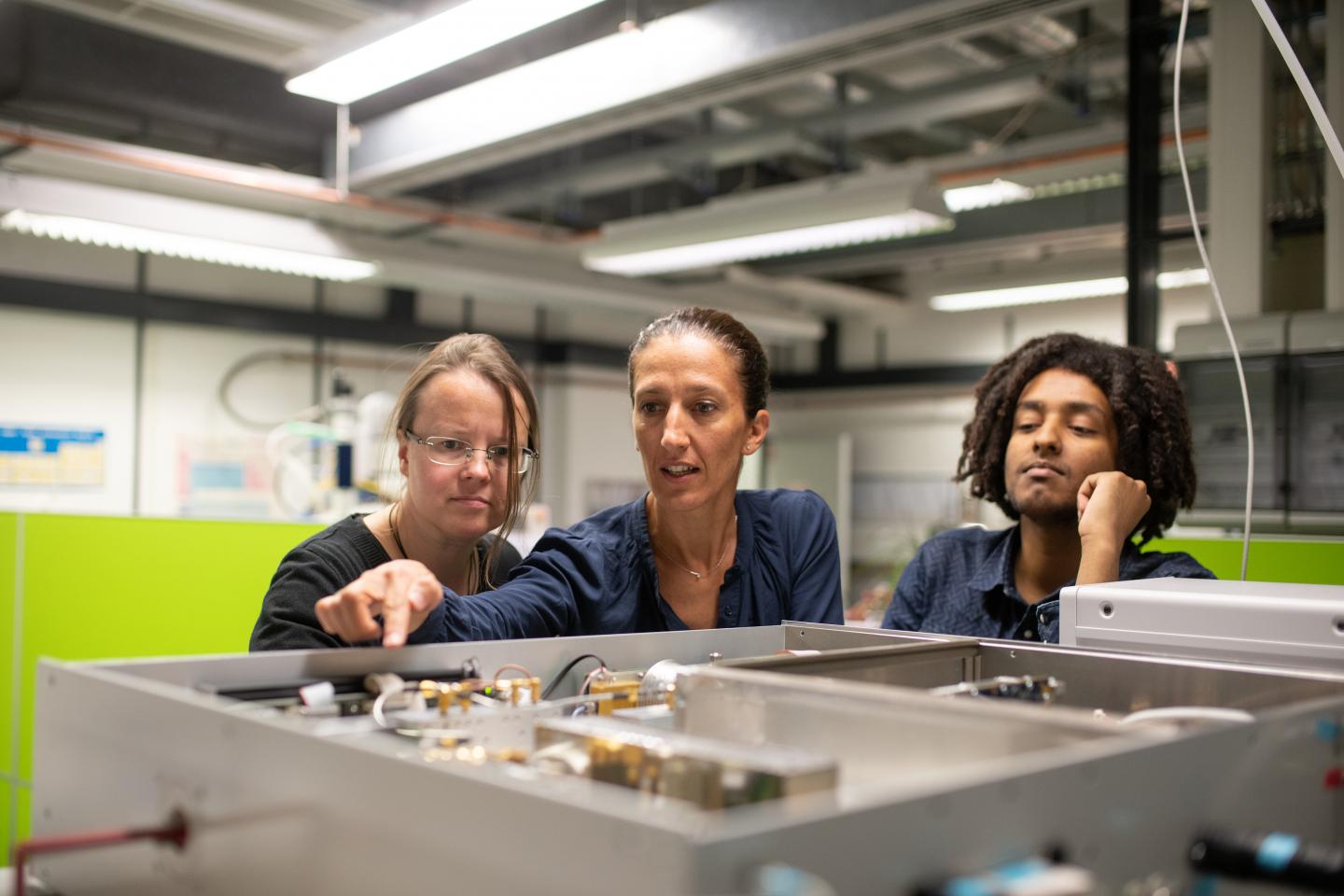
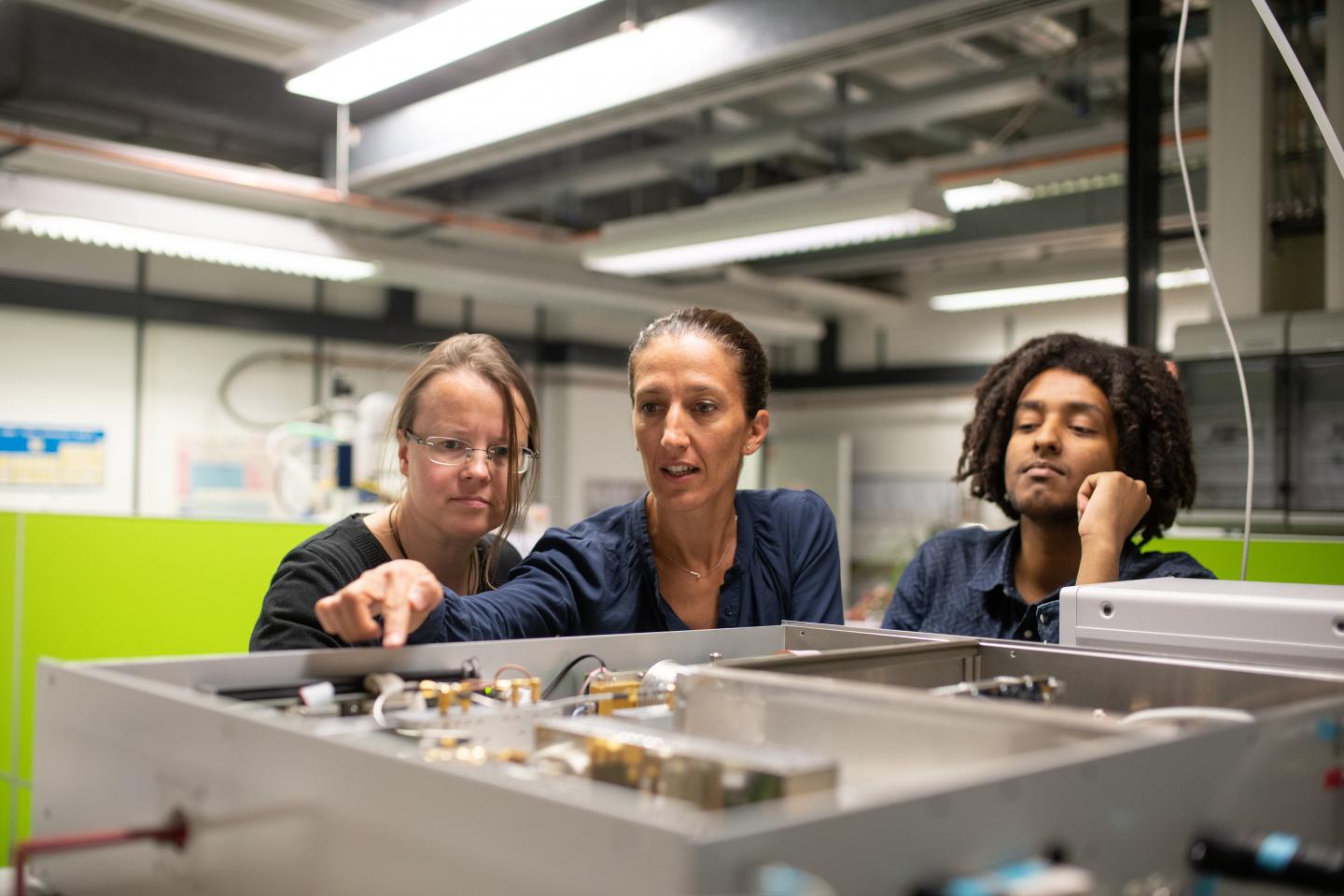
Researchers at Ruhr-Universität Bochum and the University of Tübingen have gained new insights into the structure of the killer protein Bax. The protein induces programmed cell death, the method by which the body disposes of cells that are no longer needed or have been pathologically altered. Since Bax is constantly changing its location in the cell, its structure is difficult to investigate.

The team led by Professor Enrica Bordignon and Dr. Stephanie Bleicken from the Bochum-based EPR spectroscopy working group describes new insights into Bax in the journal Cell Death and Differentiation, published online on 5 September 2018. The work was carried out as part of the Cluster of Excellence Ruhr Explores Solvation, or Resolv for short.

Cell death is essential for life

Every second, around one million cells die in the body as a result of programmed cell death, also known as apoptosis. Disturbances in this mechanism can be life-threatening, as they may trigger cancer or neurodegenerative diseases. A group of proteins, the Bcl-2 proteins, including Bax, play a crucial role in apoptosis. "These proteins are difficult to study because they move from the aqueous cell fluid to the mitochondrial membrane," explains Stephanie Bleicken. "The active form of the membrane-embedded protein, in particular, can only be investigated with a small number of methods."

Most likely structural model identified

The team used various spectroscopic methods to investigate Bax. They recorded both the structure of the membrane-embedded form of Bax and its interactions with the solvent, i.e. water or lipids. The researchers then compared these data with previously published information on the topology of the protein and examined which results were compatible with each other. "We evaluated all of the existing structural models and identified the most likely topology model for the active structure of Bax in the membrane," summarises Enrica Bordignon.

To induce apoptosis, Bax creates a hole in the membrane of the mitochondria, which represent the power stations of the cells. The researchers from Bochum also hope to use other methods to investigate the protein directly on the membrane of isolated mitochondria. In addition, they want to analyse the interaction of Bax with the surrounding water molecules at temperatures such as those found in the body in greater detail; Enrica Bordignon's group has developed the necessary methods for this as part of Resolv.

###

Media Contact

Stephanie Bleicken
[email protected]
49-234-322-1891
@ruhrunibochum

http://www.ruhr-uni-bochum.de

Original Source

http://news.rub.de/english/press-releases/2018-09-28-spectroscopy-new-insights-structure-killer-protein http://dx.doi.org/10.1038/s41418-018-0184-6


Share12Tweet8Share2ShareShareShare2

Related Posts

Ohio Wall Lizards Overcame Genetic Bottleneck Through Reproduction, Study Finds — Biology

Ohio Wall Lizards Overcame Genetic Bottleneck Through Reproduction, Study Finds

May 29, 2026
Double Agent Unveils Unexpected Revelations — Biology

Double Agent Unveils Unexpected Revelations

May 29, 2026

University of Toronto Scientists Work to Enhance Access to Advanced Research and Biomanufacturing Tools in Resource-Limited Areas

May 29, 2026

CLPTM1L Alters Lipid Rafts to Drive Glioblastoma Progression

May 29, 2026
Please login to join discussion

POPULAR NEWS

  • ESMO 2025: mRNA COVID Vaccines Enhance Efficacy of Cancer Immunotherapy

    319 shares
    Share 128 Tweet 80
  • Multi-Hospital Study Reveals Long Covid Burden Is Twice as High as Current Estimates

    81 shares
    Share 32 Tweet 20
  • Common Food Preservatives Associated with Elevated Blood Pressure and Increased Heart Disease Risk

    56 shares
    Share 22 Tweet 14
  • AI-Powered Atlas Uncovers Extensive Whole-Body Damage Linked to Obesity

    53 shares
    Share 21 Tweet 13

About

We bring you the latest biotechnology news from best research centers and universities around the world. Check our website.

Follow us

Recent News

Impact of Immigration Restrictions on the US Healthcare Workforce

Study Reveals Cancer Diagnostic Delays Linked to Population-Based Screening Using Cell-Free DNA Multicancer Early Detection Test

Innovative AI Technique Predicts Radiation Dosage Prior to Treatment in Advanced Prostate Cancer

Subscribe to Blog via Email

Enter your email address to subscribe to this blog and receive notifications of new posts by email.

Join 82 other subscribers
  • Contact Us

Bioengineer.org © Copyright 2023 All Rights Reserved.

Welcome Back!

Login to your account below

Forgotten Password?

Retrieve your password

Please enter your username or email address to reset your password.

Log In
No Result
View All Result
  • Homepages
    • Home Page 1
    • Home Page 2
  • News
  • National
  • Business
  • Health
  • Lifestyle
  • Science

Bioengineer.org © Copyright 2023 All Rights Reserved.
